
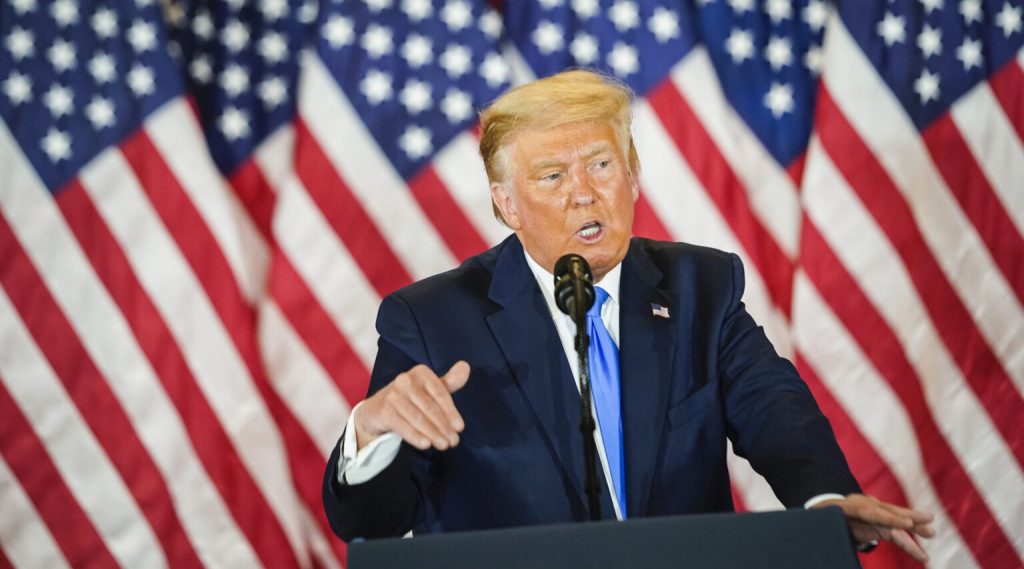
I’ve been listening to “The Trump Tapes,” Bob Woodward’s 20 raw interviews with Donald Trump. The conversations, which led to Woodward’s latest book, “Rage,” go on for 8 hours. I listened to them so you won’t have to.
Woodward clearly loves having intimate access to Trump, who was then running for re-election to the presidency. He loves the access so much that he uses every seduction technique known to reporters and other human beings.
He uses seduction and flattery so he won’t lose the one-on-one access to Trump, even though there’s almost nothing Trump tells him that isn’t known to anyone who’s been paying attention all along. What holds a listener, though, is Trump’s insistent tone, his grievances, his delusions, and his dodging.
“Hearing Trump speak,” says Woodward, in an aside, “is a completely different experience to reading the transcripts or listening to snatches of interviews on television or the internet.”
He’s right. What’s clear in the listening, though, is Woodward’s frustration. How can he get the president to focus on the questions when Trump’s so clearly got his own agenda, and it’s only partly tethered to reality? Trump is mercurial, bombastic, self-aggrandizing, narcissistic, evasive, and repetitiously absurd.
“I’ve done more for the blacks than any president except the late, great Abraham Lincoln,” he declares repeatedly, in those precise words.
The “late, great Abraham Lincoln?”
Who describes Lincoln in such a show-biz way? Ed Sullivan? (“And now, from our stage, the late, great…”) Does he imagine we’ll confuse Lincoln with some other guy named Abe, who’s still living?
Who knows? But this much is clear: Trump pitches the same absurd declaration of his contributions to Black people three times in one slice of a single interview, each time announcing it as though he hadn’t done so mere minutes earlier.
He does this with all manner of topics: Hear a question, press the Appropriate Response button and hope nobody notices the repetition.
And he makes this preposterous claim about helping African-Americans while, in public, he calls Black Lives Matter demonstrators “fascists” and “Marxists” and “a symbol of hate” as they protest the police killing of the unarmed Black man George Floyd.
Trump tries to rewrite history on all manner of topics. Ask him about his indifferent response to Covid, and he says he’s the only one who understood the danger. This, while every health expert is telling Woodward that Trump seemed utterly inattentive to their warnings.
“We have it under control,” he tells Woodward as the Covid death toll across America reaches 140,000.
Ask him about Nancy Pelosi or Hillary Clinton or Joe Biden, and he answers with nicknames he considers witty and any sentient adult considers juvenile. And then he skips off to boast about polls showing he’ll win the 2020 presidential election despite the “fake news.” He loves to use that phrase, but only about a hundred times in each interview.
“Nobody’s done the things I’ve done,” he tells Woodward.
That part’s true enough.
But, at the exhausted conclusion of 20 interviews, here’s Woodward’s interpretation: “Trump has enshrined grievance and division as a governing principle of his presidency.”
Wait, didn’t we already know that?

Michael Olesker’s latest book, “Boogie: Life on A Merry-Go-Round,” was recently published by Apprentice House. It’s the life story of Baltimore legend Leonard “Boogie” Weinglass, an original “Diner” guy who grew up to create the Merry-Go-Round clothing chain and contribute millions to charity.

As he gets ready to leave for California, Rabbi Daniel Cotzin Burg looks back on his time in Baltimore and his 10 years writing for Jmore.

Michael Olesker pays tribute to WJZ’s retiring Marty Bass, a longtime fixture on local TV screens.

The Orioles' weak defense plays a major role in the nightly carnage, writes Michael Olesker.