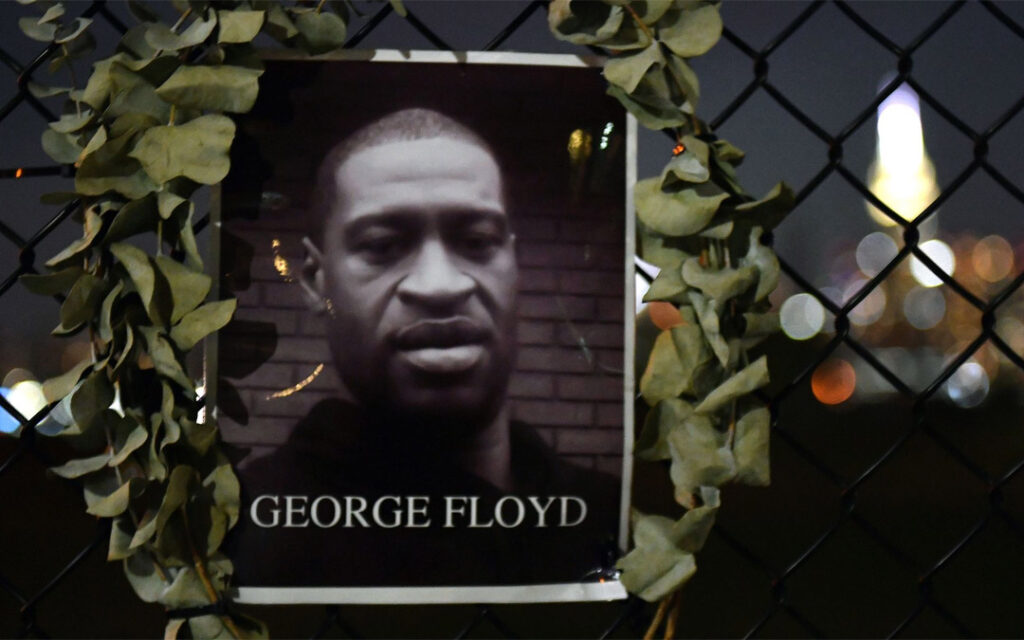
By Esther D. Kustanowitz and Asaf Shelev
Across the nation, people whose lives were transformed by the murder of George Floyd on May 25, 2020, are planning to mark the one-year anniversary of his death.
Floyd’s family is working to rebrand the date as a “Day of Enlightenment” because of the number of people awakened to issues of racial injustice by seeing video footage of Floyd die under the knee of a Minneapolis police officer. Concerts and public events will honor his legacy.
And in a landmark gathering for Jews of color to be held this weekend, hundreds of Jews will tap into a millennium-old tradition and recite the Mourner’s Kaddish for Floyd.
According to the Hebrew calendar, Thursday is the one-year anniversary of Floyd’s murder, the time when Jews typically observe the yahrzeit of a loved one’s death by reciting the mourning prayer alongside a quorum of other Jews.
On May 14-16, the quorum will take place online during the Jewish People of Color National Shabbaton, a groundbreaking convening for Jews of color at a time when Jewish institutions and communities are grappling with how to make sure they are included.
The plan for the Shabbaton, a virtual retreat that takes place over Shabbat, started before Floyd’s murder, but the tragedy made doing so all the more critical, according to the event’s lead organizer, Dr. Harriette Wimms, an African-American clinical psychologist who lives in Mount Washington.
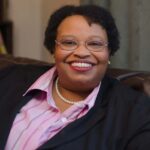
“We felt as Jews of color on this anniversary, it was important to lift up the racial justice work that’s being done across the country and to also lift up George Floyd’s memory,” said Wimms, who goes by “Harriette Mevakeshet” in Jewish spaces and is a rising kohenet, or Hebrew priestess, studying at the Kohenet Hebrew Priestess Institute.
In addition to the commemoration ritual, the Shabbaton will feature a slate of community-building programs for Jews of color, their families and their supporters. The agenda includes yoga, art, Torah study and facilitated conversations about topics such as healing from trauma, LGBTQ identity, and what white allies and multi-racial families can do to support Jews of color.
Participants will have a chance to hear from speakers who include longtime leaders Ilana Kaufman, executive director of the Jews of Color Initiative in San Francisco, and Sabrina Sojourner, a cantor and educator from Rockville, as well as young organizers such as Yoshi Silverstein, a Chinese-American Jew based in Cleveland.
As the Jewish community reckons with racism and strives to make its institutions more inclusive, the infrastructure for serving the diversity of Jews is growing. The upcoming Shabbaton is not a one-off event but part of an ongoing commitment by Wimms and others to come together as the Jews of Color Mishpacha Project, an initiative that uses the Hebrew word for family.
“The goal of JOC Mishpacha is to give Jews of color the opportunity to be in community with one another and learn, build relationships and build a network for folks to utilize as they need,” said Rachel Faulkner, a steering committee member who lives in Washington, D.C. “There are Jews that practice, observe and identify in different ways, and racial identity is one of the ways in which the community is diverse.”
Estimates of the number of Jews of color vary because of debate over the definition of the term and a shortage of surveys that ask Jews about their racial and ethnic identities. The most comprehensive such survey was just published and found more diversity among younger Jews, suggesting a shift in the U.S. Jewish population. An estimated 15% of Jews under 30 identify as Hispanic, Black, Asian or multi-racial, compared to 8% among Jews of all ages.
Recognition of this growing diversity is reflected, at least to some extent, in the behavior of major Jewish institutions, which have been hiring diversity officers and funding racial justice initiatives, especially in the wake of Floyd’s murder. The UJA-Federation of New York and the Charles and Lynn Schusterman Family Foundation donated to support the Shabbaton. Funding also came from the Jews of Color Initiative, which itself has attracted more money and attention over the past year.

It’s harder to track changes at the local level, but conversations about the need for inclusion and representation have been happening at many suburban, largely white synagogues, according to Dr. Andrew J. Miller, chair of the social justice advocacy committee for Pikesville’s Chizuk Amuno Congregation and a professor at the University of Maryland, Baltimore County.
“These conversations are just beginning,” Miller said, “and the growth of institutions created by Jews of color to give them a stronger voice may help in engaging the primarily white institutions.”
Wimms said it’s still automatic for many to assume that anyone who looks Black or Asian isn’t Jewish. Building up a diverse leadership with the Shabbaton and other efforts, she said, will not only help Jews of color feel included, but could also help decrease the level of bias in the wider community.
“We are part of the community, but rarely have white-skinned Jews seen Jews of color leading services,” said Wimms, a member of Hinenu: The Baltimore Justice Shtiebl who in 2016 became a bat mitzvah at Chizuk Amuno. “White allies need to witness Jews of color davening, and leading and building spiritual space.”
For information about the National Jewish People of Color Shabbaton and related programming, visit jocmishpacha.org.
Esther D. Kustanowitz and Asaf Shelev write for the JTA global Jewish news source. Jmore staff contributed to this report.
The BCO, founded in 1984, will perform the works of Frank Zappa, Beethoven, Mason Bates and Karena Ingram.

For more than 130 years, Sol Levinson & Bros. has been woven into the fabric of Baltimore’s Jewish community.

Led by local Israel-American cellist Amit Peled, the Mount Vernon Virtuosi aims to inspire people beyond musical enjoyment.