To make the syrup, begin by stirring the sugar, honey, water and lemon juice (if using) together in a heavy saucepan over medium heat until the sugar dissolves, about 5 minutes. Stop stirring, turn the heat up to medium-high until the mixture begins to boil, then reduce heat to a gentle boil. Cook about 15 minutes until the mixture thickens, but is still syrupy. Remove from the heat and if using orange blossom water, stir it in now. Let the syrup cool to room temperature while the cake bakes.
To make the cake, preheat oven to 350°F. Lightly grease a 9×13-inch pan.
In a large bowl, whisk together the semolina, flour, nuts, baking powder, baking soda and cinnamon until well blended. Set aside.
In a large saucepan, mix the oil, water, honey, sugar, cinnamon, zest and salt. Heat over medium, stirring often. Remove the saucepan from the heat just as it begins to boil. Using a wooden spoon, stir in the flour mixture, about ⅓ at a time, until it is totally absorbed and the batter is well blended. It might seem like the last bit can’t get mixed in, but it will in the end. The resulting batter will be thick and dough-like.
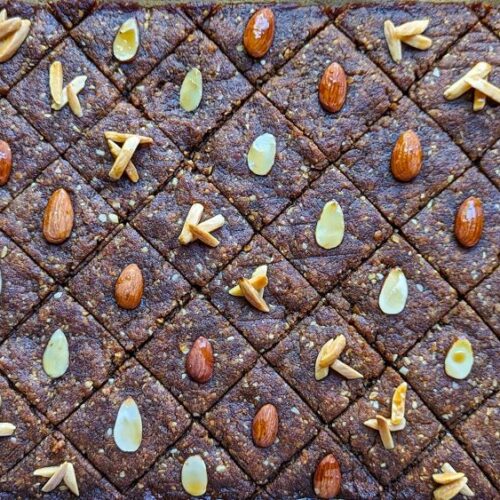
Scoop the mixture into the greased pan and gently pat to flatten the batter with your hands so it is spread evenly and the edges are straight and even. (An offset spatula can be used to help to smooth the surface evenly and make sharp, clean edges.) Score the cake into small diamond shapes, about 26-30 pieces 1½ inches wide, cutting about half way down. Gently press one almond slice or whole nut on top of each piece in the center. Bake for 40-45 minutes until the edges are just starting to brown.
Take the cake out of the oven, then immediately pour about half the room-temperature syrup slowly and evenly over the hot cake, which will absorb the syrup as it cools. Wait a few minutes, then follow the scoring to cut all the way through the pieces. Pour the rest of the syrup evenly into the cuts and over the whole cake. Tishpishti is best when left at room temperature for several hours or overnight so the syrup penetrates the cake.