
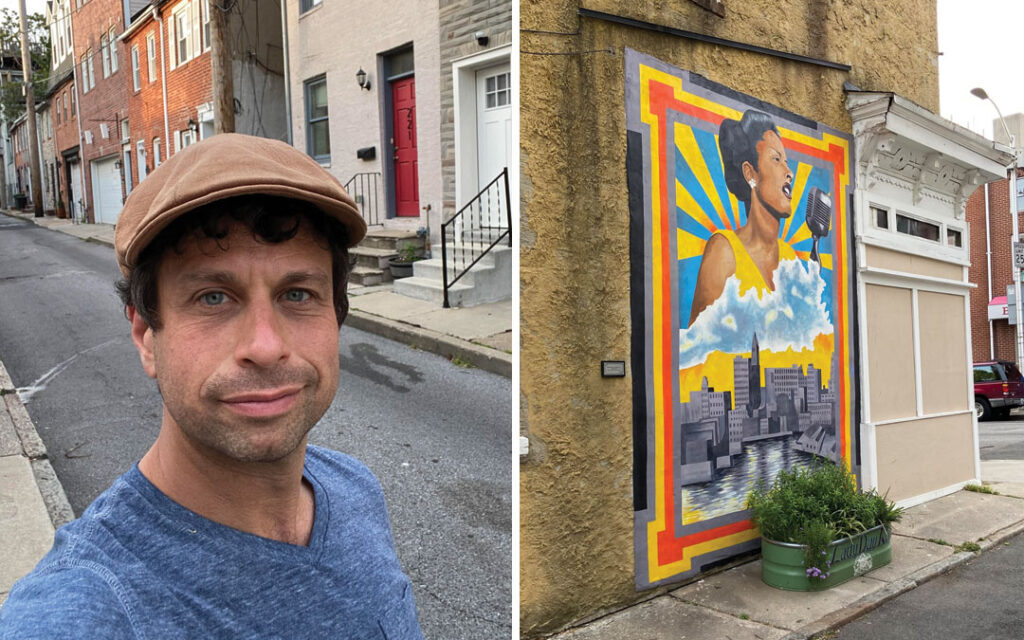
Pilgrimage is about bearing witness to the past, in the present, while gazing into the future
Tisha B’Av is not a pilgrimage festival. Observed this year on July 18, it’s the inverse, a reminder of pilgrimages that were once possible until the Temple was destroyed on this Hebrew date in 587 BCE.
When Jewish communities mark the 9th of Av and mourn the absence of the Temple, we are also lamenting an interruption of Jewish history, the end of a certain way of Jewish being.
Pilgrimage in Jewish tradition was largely focused on the Temple, Solomon’s First Jerusalem Temple or its successor which stood until 70 CE when it was destroyed by the Romans. But since then, we have other experiences of pilgrimage. Chasidic Jews regularly travel to the graves of Chasidic masters or early mystical thinkers, like Rabbi Shimon bar Yochai at whose grave 45 people tragically lost their lives in a crowd crush on Lag B’Omer this year.
Jewish travelers of all kinds make pilgrimages to important Jewish sites around the world, from the first ghetto in Venice or the death camps in Germany and Poland, to Maimonides’ synagogue in Cordoba, Spain, to Independence Hall in Tel Aviv where on May 14, 1948, David Ben-Gurion proclaimed the establishment of the State of Israel, eight hours before the British Mandate of Palestine was due to end.
Pulitzer Prize winner Natasha Trethewey captures, in her poem “Pilgrimage” (2006), the multivalence of journeys to sites of memory:
Here, the Mississippi carved
its mud-dark path, a graveyard
for skeletons of sunken riverboats.
Here, the river changed its course,
turning away from the city
as one turns, forgetting, from the past —
the abandoned bluffs, land sloping up
above the river’s bend — where now
the Yazoo fills the Mississippi’s empty bed.
Here, the dead stand up in stone, white
marble, on Confederate Avenue.
The poem describes a trip to her hometown of Vicksburg, Mississippi, where a battle was fought that marked a turning point in the Civil War. And yet, Trethewey laments the ease with which subsequent generations ignore the painful history of the antebellum South: “We sleep in their beds, the old mansions hunkered on the bluffs, draped in flowers — funereal — a blur of petals against the river’s gray.”
The obliviousness of many current Americans to American history compounds our obliviousness to the ways systemic racism is manifest in our day. Pilgrimage is about bearing witness to the past, in the present, while gazing into the future.
Working toward justice in Baltimore is becoming better acquainted with its history. Recently, I had some extra time after meeting some friends for a drink, so I walked up S. Durham Street where Billie Holiday was raised. After Chadwick Boseman died last year, and my kids were devastated for his next “Black Panther” movie that would not come, we watched Boseman’s “Marshall” and then made an aliyat haregel, a walking pilgrimage, that Shabbat afternoon to 1632 Division St., Justice Marshall’s childhood home, which is less than a mile from our house.
There are numerous African-American historical sites in Baltimore and throughout Maryland. Some are well-known and painstakingly maintained. Others are less distinguished in appearance, but no less important.
A simple rowhome in West Baltimore can remind us of where (to paraphrase the poet) the torrent of Jim Crow, in the capable hands of a young civil rights attorney, began to “change its course.” A visit to Port Discovery Children’s Museum can also be an opportunity to pause and pay homage to abducted Africans who were once sold at auction on that site.
Some of these historic places are easy to find at Explore Baltimore or Visit Maryland. Others require a bit more digging.
Some of these sites instill pride, like the location of The Royal Theatre marquee at 1329 Pennsylvania Ave. where Louis Armstrong, Duke Ellington, Etta James — all the greats — performed. Other sites impart horror, like the 44 places throughout Maryland where white terrorists lynched Black men, women and children between 1854 and 1933, including 15-year-old Howard Cooper in Towson.
Against a tidal wave of states and Republican lawmakers banning classroom instruction on the impact of systemic racism, we must continue to make pilgrimages — to all the places they insist have no relevance to ongoing 21st-century injustices.
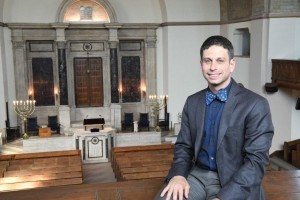
Rabbi Daniel Cotzin Burg is spiritual leader of Beth Am Synagogue in Reservoir Hill, where he lives with his wife, Rabbi Miriam Cotzin Burg, and their children, Eliyah and Shamir. This column and others also can be found on The Urban Rabbi. Each month in Jmore, Rabbi Burg explores a different facet of The New Jewish Neighborhood, a place where Jewish community is reclaimed and Jewish values reimagined in Baltimore.
Journalists bear a responsibility to go beyond the headlines and social media posts to understand the past and present, writes New York University student Lucia Alonso.
The Trump administration's invoking of religion is reminiscent of the words and actions of one of history's most brutal Crusaders, writes Michael Olesker.
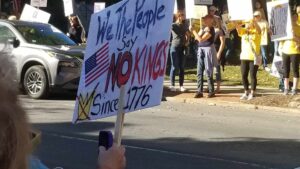
Like thousands of communities around the country last weekend, Pikesville demonstrated its disgust with the policies of the Trump administration, writes Michael Olesker.

Michael Olesker bids farewell to CBS News Radio, one of the most storied media outlets in history.