
On that raw, weepy day the Baltimore Orioles played their last game of baseball at Memorial Stadium, I sat in the upper deck behind home plate with a young social worker named Suzy Ricklen, who later became my bride.
The day was overcast and occasionally drizzly, but it was mostly suffused in sentiment. We were all saying farewell to what felt like our second home. A sense of disbelief touched everyone.
“There are enough things that change in the world,” Suzy said that day. “People come in and out of your life, but you figure buildings will stay.”
Memorial Stadium seemed to have been here forever. It was here for the entire life span of those Orioles and the Colts, and seemed sturdy as Gibraltar.
And yet keep this in mind: Closing day was Oct. 6, 1991. As the scoreboard P.A. system played “Auld Lang Syne” that day, the “modern” Memorial Stadium was only 38 years old.
It was in the scheme of things considered outdated.
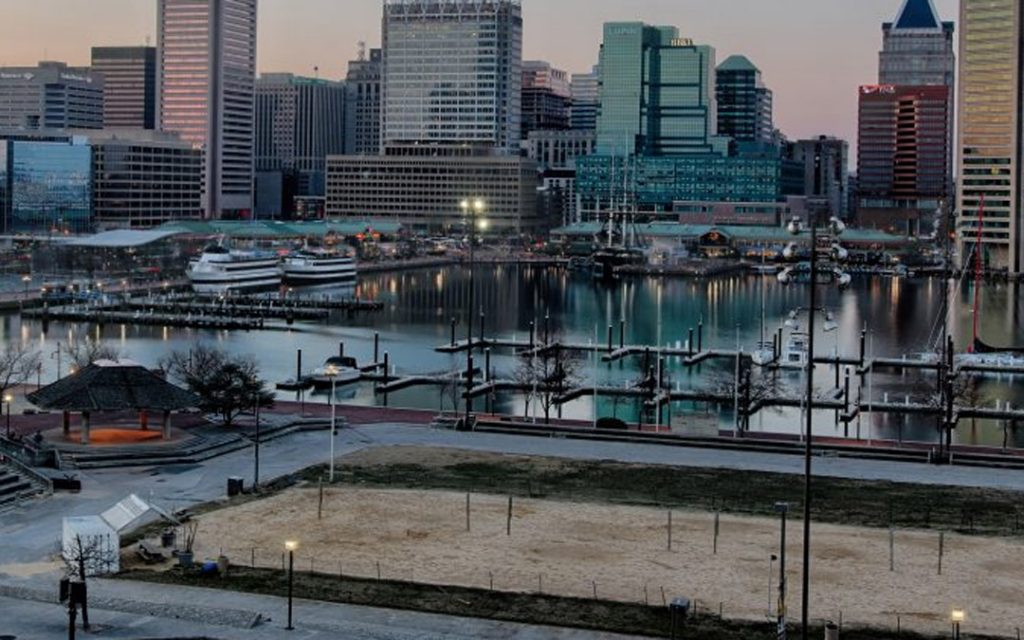
I bring this up now because that other outdated relic called Harborplace is 42 years old, and the great thinkers at City Hall are talking about tearing it down — or severely remodeling it — and starting all over again.
Can we pause for a little perspective, please?
In its current malaise, Harborplace is being tagged as Exhibit No. 1 of the city of Baltimore’s decay. Once it was the glad, beating heart of a renaissance. It outdrew Disney World for a while. It brought in millions of out-of-town dollars to the city’s bank accounts. It offered visible proof that Baltimore’s “Charm City” nickname was based on more than puffery.
A few weeks ago, when Mayor Brandon Scott announced that P. David Bramble of MCB Real Estate had agreed to take the mostly vacant Harborplace buildings out of receivership, it reminded many that the development was once called a “festival marketplace.”
But long ago, the phrase ceased having much meaning.
“Festival,” indeed.
So this being Baltimore, as the new day dawns, we naturally start looking for villains in the tragedy. Partly, it’s sociology. There were young people who discovered the place, especially after dark, and brought a sense of menace. And the people who should have owned up to this — the cops, the sleeping political types at City Hall — failed utterly to get a grip on this, and to realize how the anxiety was building and the crowds were thinning out.
Then, this being Baltimore, with our built-in parochialism, we look for out-of-towners to blame. Harborplace was Jim Rouse’s vision, and his Rouse Company of Columbia deserves great credit for making the dream come true.
When Rouse sold the operation, we remind ourselves, it was mainly a series of out-of-town developers who presided over the decay of Harborplace. Fair enough, they deserve plenty of blame. But the Rouse folks started the trouble, when almost nobody was noticing.
Seeing what early success they had on their hands, the company started raising rents. They did it too fast and too dramatically. The early tenants were Baltimore businesses. They gave the place its real flavor, so that Harborplace wasn’t just a shopping mall by the water.
But when those local tenants couldn’t afford their new rents, they started bailing out. The original charm drifted out to sea. When out-of-town tourists arrived, they discovered there was nothing unique, nothing that said “Bawlamer.” There were the same chain operations they could find in the malls of their own towns.
David Bramble’s a local guy. He knows all of this history, and he knows the need for careful nurturing of downtown projects. His professional track record’s a winner.
Among other projects, MCB Real Estate developed The Rotunda at 40th Street, Northwood Commons shopping center near Morgan State University, and Yard 56, a mixed-use development in Greektown.
There are plenty of people who can share the blame over Harborplace’s demise. But sometimes it’s just time itself. Things change. In the modern context, Harborplace just got old. People come in and out of our lives, and sometimes buildings do, too. And then we start over again, and make it better.

Michael Olesker’s newest book, “Boogie: Life on A Merry-Go-Round,” was recently published by Apprentice House. It’s the life story of Baltimore legend Leonard “Boogie” Weinglass, an original “Diner” guy who grew up to create the Merry-Go-Round clothing chain and contribute millions to charity.

Journalists bear a responsibility to go beyond the headlines and social media posts to understand the past and present, writes New York University student Lucia Alonso.
The Trump administration's invoking of religion is reminiscent of the words and actions of one of history's most brutal Crusaders, writes Michael Olesker.

Like thousands of communities around the country last weekend, Pikesville demonstrated its disgust with the policies of the Trump administration, writes Michael Olesker.

Michael Olesker bids farewell to CBS News Radio, one of the most storied media outlets in history.