
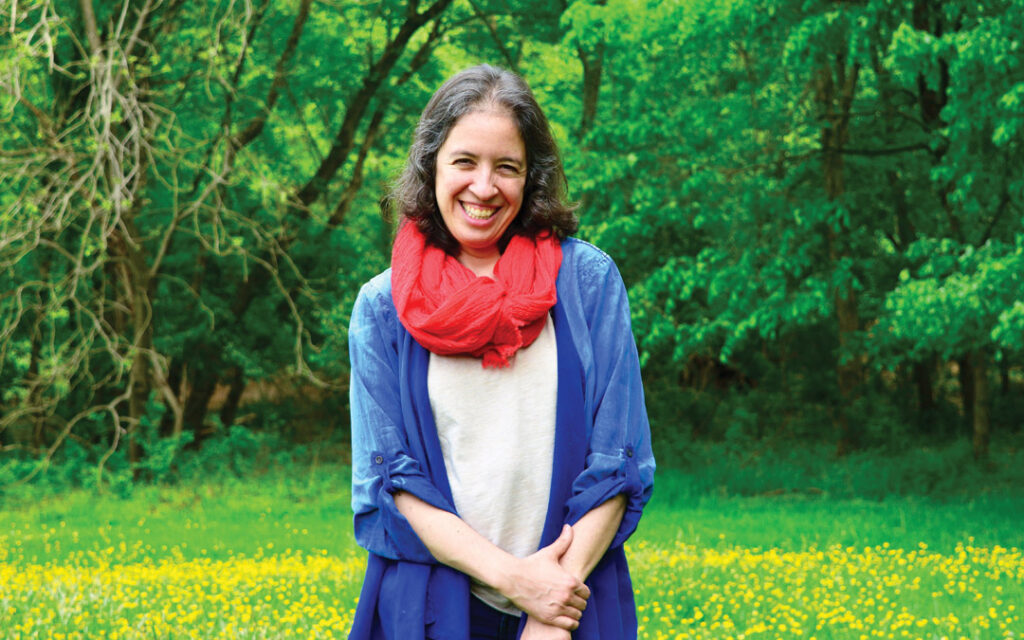
Overcoming Potholes and Detours
Seven years ago, Pamela Ehrenberg, her son and their neighbor were riding on a bus to work and school. Suddenly, their neighbor, who has autism, started shouting at the bus driver, “Stop! Someone fell off a bike!” The driver stopped to make sure the bicyclist was OK. The incident became the starting point for Ehrenberg’s fifth children’s book, “Detour Ahead” (PJ Publishing), a novel for middle grade readers about the friendship between Gila, a girl on the autism spectrum, and Guillermo, a Salvadoran-American boy who is new to the neighborhood. The book was co-written by Tracy Lopez. A Baltimore native who lives in Washington, D.C., Ehrenberg recently spoke with Jmore.
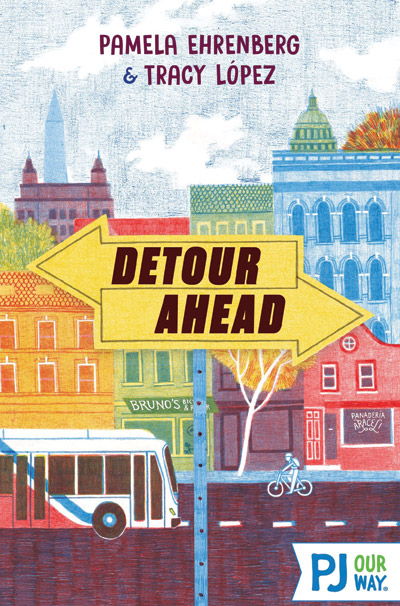
1. What about that incident inspired this book?
It kind of triggered for me the recognition that everyone has different perspectives and ways of seeing the world, and that we need all of them. You don’t know who’s going to make the right call, be the right leader, in an emergency.
2. What’s the book about?
Gila is getting ready for her bat mitzvah, while Guillermo is kind of overcoming his own challenges. He’s new in D.C., having moved with his family from Maryland. And he’s coming into his own as a poet. He has a big poetry reading coming up. So they kind of help each other along. The book is written from both perspectives. Gila writes in prose and Guillermo writes in verse.
3. What were some of your realizations during the writing of this book?
Once I decided that the main character would be a girl [who had autism], I started doing research about neuro-diversity, especially in girls and women. About halfway through, I started seeing parallels from my own experience. I was really shy as a kid and spent a lot of time just learning and watching how to act in different situations. I went for testing and learned that most likely I have a non-verbal learning disorder. Of all the things I’ve written, nothing else has ever sent me down that kind of path before.
4. Over the course of your career, have you seen a change in Jewish children’s literature?
Jewish kid-lit is in a very different place. There’s always been a wonderful, supportive community of Jewish authors and illustrators, along with Jewish librarians, synagogue librarians and others in the Jewish book universe. But I think there’s more awareness of the wider array of Jewish stories out there to be told and the need for Jewish representation in children’s books.
5. What’s it been like to be a ‘PJ Our Way’ selection?
It’s been great, just seeing their commitment to getting stories out there that some publishers may not feel they can financially take a chance on. I think the PJ model of, ‘We’re going to start from what books need to be out there,’ and make that commitment is really good.
A Baltimore native and Pikesville resident, Freedman had the distinction of being the longest-serving employee in the history of the State of Maryland.
House Bill 661 is the culmination of a collaborative effort led by Del. Sarah S. Wolek (D-16th), Del. Jared S. Solomon (D-18th) and Sen. Shelly L. Hettleman (D-11th).
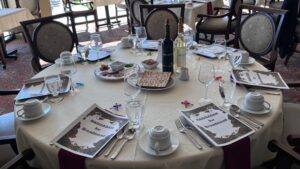
More than 100 Broadmead residents and team members recently gathered to celebrate the festival of Passover with a meaningful seder dinner.
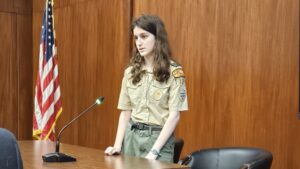
For Beth Tfiloh senior Ada Key, earning the Eagle Scout rank is about giving back and paving the way for girls in scouting.