
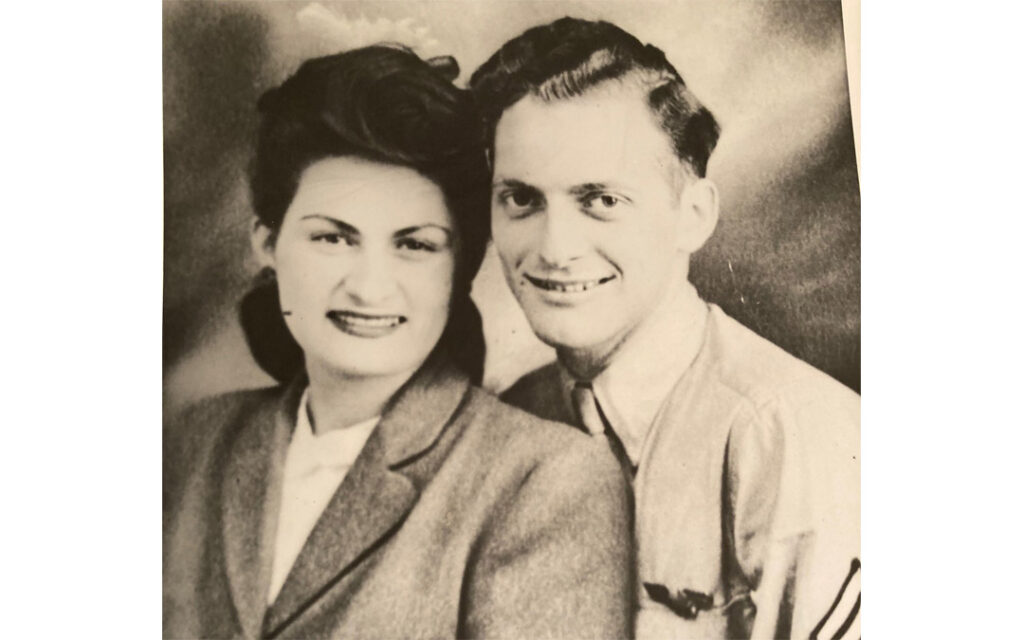
My father turned 100 years old the other day. This is a fact not contradicted by his fatal heart attack 34 years ago. He is alive inside my head every day.
Lionel Olesker was two weeks past his 66th birthday when my brother Mitchell and I found him, sitting in his easy chair with a newspaper lead story of a man he considered the worst president of his lifetime. Good thing Dad never saw Donald Trump coming.
My father grew up in The Bronx and started classes at New York University. But at 18, he dropped out of school the day after Pearl Harbor to join the U.S. Army Air Corps. All over America, millions of young people were signing up the same way. But it took months for his call-up papers to come while he waited restlessly.
“Don’t worry,” his mother, my grandmother Esther, told him in her thick Eastern European accent, “they could win the war without you. Don’t be in such a rush.”
When his orders came to report to basic training, Esther told him, “And don’t do any fighting when it rains.”
A year later, stationed in New Orleans, my father called my mother in The Bronx and told her to take the train down and get married. They’d known each other since they were kids, when she was the new girl on the block. He introduced himself by throwing a snowball and hitting young Selma Loebman in the face. In The Bronx, this is known as foreplay.
Stationed in Foggia, Italy, during the war, he flew 18 combat missions, some over heavily defended German oil refineries. Somewhere along the line, he took out a $10,000 life insurance policy. In 1989, several weeks after his death, my mother was notified about the policy and called me tearfully.
“It says he left all the money to someone named Marietta Trust,” she said. “I don’t know, did your father have a girlfriend named Marietta Trust?” I contacted the Air Force. “It’s a typographical error,” I was informed. “It should say, ‘Marital Trust.’”
We moved to Baltimore after the war so my father could pick up his schooling. We lived in the Latrobe Housing Projects for four years, on the G.I. Bill, and then moved out to Northwest Baltimore where my father took up commercial real estate.
He led an honorable life. He was president of the Liberty Jewish Center brotherhood. One year, he headed a statewide campaign to fight muscular dystrophy. He played competitive handball a few times a week. And before they closed his coffin, my brother and I slipped a pair of handball gloves in, “in case a game breaks out up there, you shouldn’t be unprepared.”
My father was a man of ferocities: about politics, about government, about all the things he read in the newspapers he devoured every day. The way some fathers call their sons for small talk, mine would call to vent over the latest political outrage.
The phone would ring and there he was, minus any greeting, snapping, “Have you read the morning paper yet?”
Sometimes, he’d joke about his war years. In my early 20s, he’d tell me, “You know, when I was your age, I’d already won a war.”
When John Kennedy was president, my father would jokingly boast, “He and I served in the war together,” happily skipping past Kennedy’s time in the Pacific while my father was flying bombing missions over Europe.
It was practically impossible to get him to talk seriously about the war. It was years after his death that I went to a cousin’s graveside funeral in Atlantic City where my father’s parents and other family members are buried.
Some were there who’d known him since childhood. We stood in a light snow, which was beginning to cover family headstones.
“You know,” a couple of cousins said, “your father was a hero in the war.”
No, I didn’t know. And, to this day, I’m ashamed that I never made him tell me, so I could let him know how proud I was. And still am.
Michael Olesker’s latest book, “Boogie: Life on A Merry-Go-Round,” was recently published by Apprentice House. It’s the life story of Baltimore legend Leonard “Boogie” Weinglass, an original “Diner” guy who grew up to create the Merry-Go-Round clothing chain and contribute millions to charity.
Journalists bear a responsibility to go beyond the headlines and social media posts to understand the past and present, writes New York University student Lucia Alonso.
The Trump administration's invoking of religion is reminiscent of the words and actions of one of history's most brutal Crusaders, writes Michael Olesker.
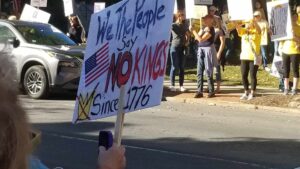
Like thousands of communities around the country last weekend, Pikesville demonstrated its disgust with the policies of the Trump administration, writes Michael Olesker.

Michael Olesker bids farewell to CBS News Radio, one of the most storied media outlets in history.