
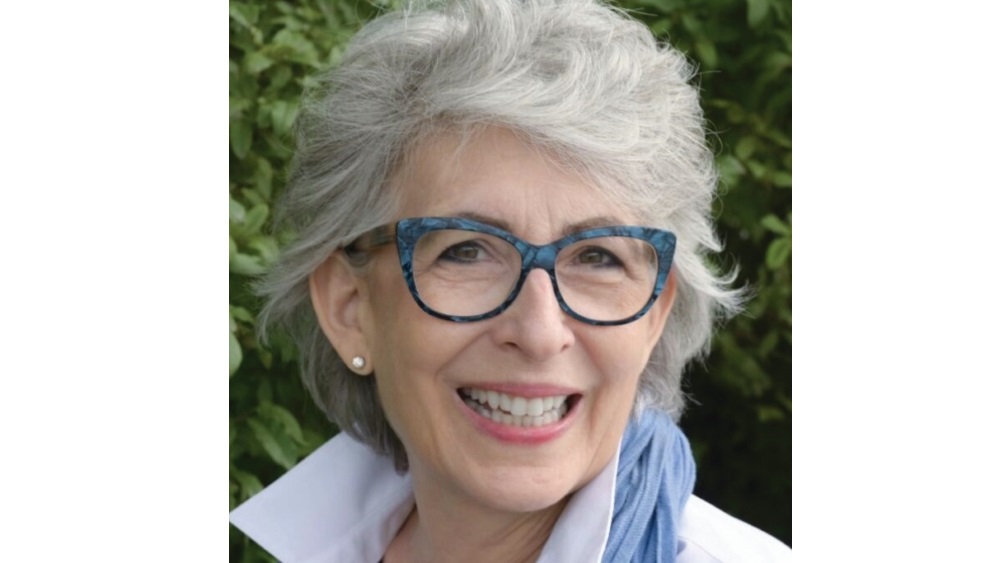
Pikesville resident Marlene Trestman never planned to write a book. A busy wife, mother and grandmother — as well as a former special assistant to the Maryland Attorney General — Trestman certainly didn’t plan to write two of them.
But one thing led to another and Trestman’s first book, “Fair Labor Lawyer: The Remarkable Life of New Deal Attorney and Supreme Court Advocate Bessie Margolin” (LSU Press), was published in 2016.
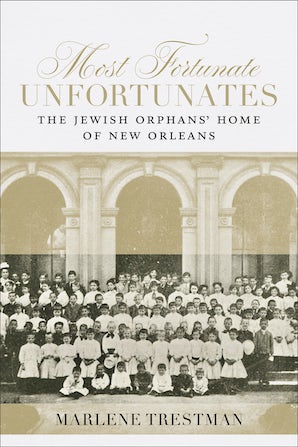
Her second book, “Most Fortunate Unfortunates: The Jewish Orphans’ Home of New Orleans” (LSU Press), was released earlier this month.
“I consider myself the reluctant biographer of Bessie Margolin,” says Trestman. “She was this incredibly important lawyer, and very important to me. I met her when I first got to Goucher [College]. We both grew up in New Orleans and had similar childhood experiences, but 50 years apart.”
When Trestman discovered no one ever chronicled Margolin’s life story, she encouraged others to write about her. But no one was willing to take on the project. “I kept getting responses [like], ‘You’ll have to do it.’”
She decided to write an article instead. “The article got published and won an award. I got grants and fellowships, and then I got the book contract,” recalls Trestman. “It was almost in spite of myself. I said, ‘This sounds crazy for me to try any of this, but I’ll try.’”
While working on the biography, Trestman became increasingly fascinated by the Jewish Orphans’ Home of New Orleans, where Margolin grew up. Founded in 1855 and one of the longest serving Jewish orphanages in the nation, the home was intriguing in its own right.
But Trestman also had a personal connection. After being orphaned at age 11, she and her brother became beneficiaries of the Jewish Children’s Regional Service, the agency formed after the closure of the Jewish Orphans’ Home in 1946.
The title of Trestman’s second book, “Most Fortunate Unfortunates,” reflects the unusually high quality of care that the home provided for orphans.
“These children were incredibly well cared for by the standards of what we would think would be the pitiful surroundings and neglect that would befall [orphans], as well as by any parental standards,” she says. “By 1903, the home, wanting to give the children in its care the best possible equipment to succeed, founded what is today one of the most prestigious, nonsectarian co-ed prep schools in New Orleans — the Isidore Newman Manual Training School. And from its origin, it was to care for the Jewish children in the home first.”
Like the orphans at the home, Trestman and her brother were well cared for after the deaths of their parents.
“We were placed with loving families, both of whom were friends of my mother’s from our Orthodox synagogue in New Orleans,” Trestman says. “So these were not stranger families. To this day, I consider my foster family my family. My foster mother, who died 10 years ago, was my children’s ‘Grandma Lily.’ My brand-new baby granddaughter’s middle name is Lily for my foster mother.”
As a beneficiary of the JCRS, Trestman was eligible to attend what’s now known as the Isidore Newman School. Her education there prepared her for Goucher, law school at George Washington University and a successful career as an attorney.
Although the home was exemplary in many ways, Trestman’s research uncovered some disturbing information about the school and its benefactors.
“The Union occupied New Orleans after the Civil War as enemy territory,” she says. “Trying to understand what life was like for the kids in the home during those times required me to understand a lot about race relations in the big picture. Most startling was the number of philanthropists who enslaved people. Particularly in New Orleans, economies were based on the backs of people who were enslaved. There’s no way of getting around how horrific that is.”
Trestman also learned about a sexual abuse incident at the home in 1886.
“As surprising as it was to learn of this incident at the hands of a superintendent in the home, I was equally surprised how transparent the home’s board was. Within days, it published news of its investigation and what had happened in the home, not only in the local press but through all the Jewish press outlets across the country,” she says. “[The home] came to reckon with this in a very public way immediately. As bad as the situation was, I was quite impressed with that.”
While “Most Fortunate Unfortunates” focuses on institutions and social service agencies in New Orleans, Trestman says the book has wider implications.
“[The book] has so many themes that resonate today and across important historic issues,” she says. “You will see in the book the evolution of dependent child care, of social work as a profession, of education and the nature of philanthropy.”
For information and to purchase Trestman’s books, visit marlenetrestman.com.

Many of this year's new children's books for Passover portray the holiday theme of opening one's seder table to guests.

With his new book "The AfterWork," Akchin explores finding fulfilment and meaning after concluding one's professional career.

Kicking off the 38th William and Irene Weinberg Family Baltimore Jewish Film Festival will be the Israeli comedy-drama "The Ring."

Emma Snyder, owner of The Ivy Bookshop, offers recommendations for must-read titles for adults and children.