

Countless times, people have shared with me that Jewish mourning rituals just “make sense.” The customs — from shiva to kaddish and yizkor —provide mourners with a fitting framework to express grief and honor a loved one.
Many, however, aren’t aware that the custom of placing a headstone at a burial site can offer a similar deep and meaningful experience. Our tradition lists three names for the headstone (see Gesher Hachaim 1, p. 342). Each name expands, in its own way, on the richness of this custom and its service to us in honoring the memory of a loved one.
The first of the three titles, matzevah, appears in the Torah: “Now Yaakov had erected a monument in the place where God had spoken with him” (Bereishit 35:14).
The title comes from the Hebrew root yatzav, which means to raise or stand up. A central reason for erecting a monument is to offer respect to a special person or an event, to “raise up” their memory and honor. Consider, for instance, monuments in public areas or plaques honoring special people.
As we erect our loved one’s matzevah, we pay tribute to their accomplishments, the strength of their character, and all the goodness they brought into the world. Through the headstone, we “raise up” awareness to their life contributions. This may also be a reason Jews place stones at the site of the deceased. With each added stone, we add one another dimension to this tributary monument.
A second name for the headstone is nefesh, which translates to soul. This definition appears in the mishnah. For instance: “With the leftover money collected for a deceased person they build a monument on their burial place” (Shekalim 2:5).
Why do we refer to the headstone monument as a soul? The Talmud teaches that the soul hovers over the body after death. We therefore create a house for the hovering soul by placing a headstone at the place of burial.
This idea as well can offer strength to the mourner. It teaches that our loved one’s soul is still with us. Mystical tradition understands this in a literal manner. The soul of our loved one has not vanished from the world. We can connect to it through spiritual actions such as prayer, Torah learning and reciting kaddish.
Others explain this psychologically: our loved one “hovers” over us because they live on inside of us. The memories and good experiences we shared with them in the past, along with the lessons they taught us, have helped shape our lives in the present. We therefore continue to carry them with us wherever we go.
The name matzevah points our attention to the past by honoring the legacy of our loved one. The title nefesh directs our energy to the present, reminding us that we aren’t alone. The final name, tziyun, propels us to action in the future. Tziyun, meaning a sign or a marker, appears in the words of the prophets.
For instance, Yechezkel (39:15) speaks of a sign indicating where a body is buried: “And when they that pass through shall pass and see a human bone, they shall build a sign next to it until the buriers bury it.”
One reason Jews mark the burial site is that, according to Jewish law, priests (kohanim) are prohibited from entering a graveyard or walking over a grave. We mark the grave to protect them from doing so. Another reason Jews mark gravesis to distinguish the burial plot from any other regular plot of land. We want to note to all passersby to not treat this area lightly. A Jewish soul is buried here! We must remember to treat this parcel of land with reverence and respect.
A practical lesson the mourner can draw from this is just as we separate this space from other spaces, so, too, must we mark in our lives the legacy our loved one left behind. We must show those around us that our loved one’s mark in the world is still strong. We do this through living a life based on their morals, lessons and values. Our loved one’s memory not only lives on inside of us; through our actions we ensure their memory will “be for a blessing” going forward.
Jewish tradition offers many customs in our time of mourning to help us grieve and process loss. The placement of the headstone serves these same functions. Through the headstone, we honor the past, draw comfort in the present, and find direction looking forward as we begin rebuilding our lives once more.

Rabbi Dr. Eli Yoggev serves Beth Tfiloh Congregation in Pikesville.

Journalists bear a responsibility to go beyond the headlines and social media posts to understand the past and present, writes New York University student Lucia Alonso.
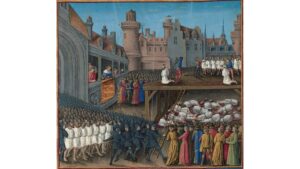
The Trump administration's invoking of religion is reminiscent of the words and actions of one of history's most brutal Crusaders, writes Michael Olesker.

Like thousands of communities around the country last weekend, Pikesville demonstrated its disgust with the policies of the Trump administration, writes Michael Olesker.

Michael Olesker bids farewell to CBS News Radio, one of the most storied media outlets in history.