
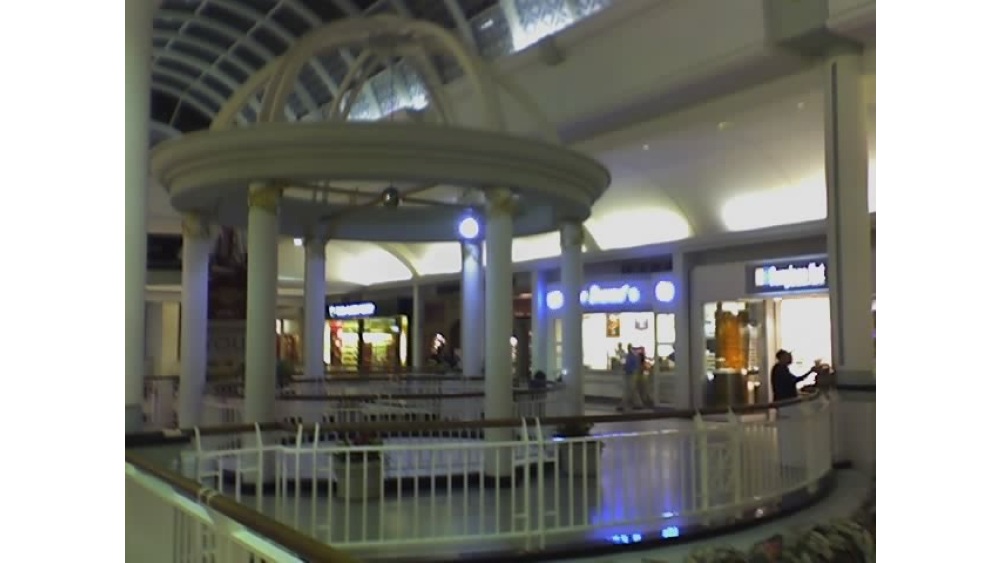
The big story in the Baltimore Banner this weekend was headlined, “Towson Town Center was a destination, but nearly 25% of its storefronts are now vacant.”
It’s a solid piece of reporting full of facts, figures and comments from people who work at the mall, shop there or have stopped going there.
Nice work by reporters Bria Overs and Rona Kobell.
But there’s a fundamental question left unanswered: Has the reporting come too late to save the place?
The problems outlined in the Banner’s piece have been hovering in the air for nearly a decade. As the Banner reports, there are now 43 vacant storefronts at the mall.
Such a thing doesn’t happen overnight.
Partly, this is just one example in a modern American journey. As 20th-century Baltimoreans fled to suburbia, they deserted the big department stores along downtown’s Howard Street, which for years was the throbbing heart of all local retailing.
Shoppers got themselves nice and cozy inside malls, where there was no more trudging through rough weather. The new malls were air-conditioned and heated, and they had impregnable walls. Shoppers felt safe in these places.
For a while.
Esquire magazine once declared that suburban shopping malls were spreading across the country “like fungi, unstoppable in their growth and unbeatable for their earning power. By the mid-Seventies, there were more than 15,000 shopping malls in America.”
Today, the Banner reports, there are about 1,200 across the country — and another 300 are expected to close by 2028.
Will Towson Town Mall be one of the deaths? It’s premature for any gathering of mourners, but the signs aren’t great.
Online shopping has cut deeply into mall traffic across the entire country. And that’s just for openers.
In its weekend piece, the Banner reports problems routine to aging malls, including out-of-order escalators during the Christmas shopping season, and water stains and dirt obscuring skylights.

More problematic is evening traffic of groups of young people, in their teens and 20s, some raucous, some looking to do a little shoplifting. They’ve intimidated other shoppers. This, despite a mall rule (often ignored) that weekend teens need adult accompaniment during evening hours.
It’s part of a familiar pattern: whether these teens are a genuine threat or just look like it, word of mouth takes on a life of its own and whispers: It’s not safe there.
Even if it is safe.
Those kinds of fears cut deeply into the popularity of Harborplace, once a city’s pride and now its afterthought.
But America’s been dealing with such a problem ever since the first post-war juvenile delinquents. Around here, they once wore black leather jackets with the collars up, and their hair swept back in jet streams, and we called them drapes.
They didn’t have malls to inhabit, but they had street corners in residential neighborhoods, and they helped provoke the beginning of the great exodus to suburbia.
Now it’s the malls facing such intimidation. Remember when Owings Mills Mall was the hottest thing around? People used to say, “You haven’t been there yet?” They’d say it in the same way people once said, “You’ve never been to Paris?”
It was that classy.
And yet, Owings Mills had a couple of high-profile crimes, and the whole thing came apart a decade or so ago. Today, it’s been reinvented with big-box places such as Costco and Lowe’s. And the parking lot is absolutely packed.
Even the biggest, seemingly indestructible places have lifespans. Memorial Stadium lasted less than 40 years. Harborplace, at its peak, less than that. Even now, who knows how it’ll be reinvented.
In its various shapes and guises, Towson Town Mall has been here since 1959. That’s two-thirds of a century, a pretty good run. And it ain’t dead yet.

A former Baltimore Sun columnist and WJZ-TV commentator, Michael Olesker is the author of six books, including “Journeys to the Heart of Baltimore” (Johns Hopkins University Press) and “Michael Olesker’s Baltimore: If You Live Here, You’re Home” (Johns Hopkins University).
Commemorations of the Holocaust must transcend the past to include concerns about the present and future, writes Menachem Z. Rosensaft.

Someone needed to tell Donald Trump that his appearance at a UFC fight over the weekend was not a good look, writes Michael Olesker.
Journalists bear a responsibility to go beyond the headlines and social media posts to understand the past and present, writes New York University student Lucia Alonso.
The Trump administration's invoking of religion is reminiscent of the words and actions of one of history's most brutal Crusaders, writes Michael Olesker.