
By Grace Gilson
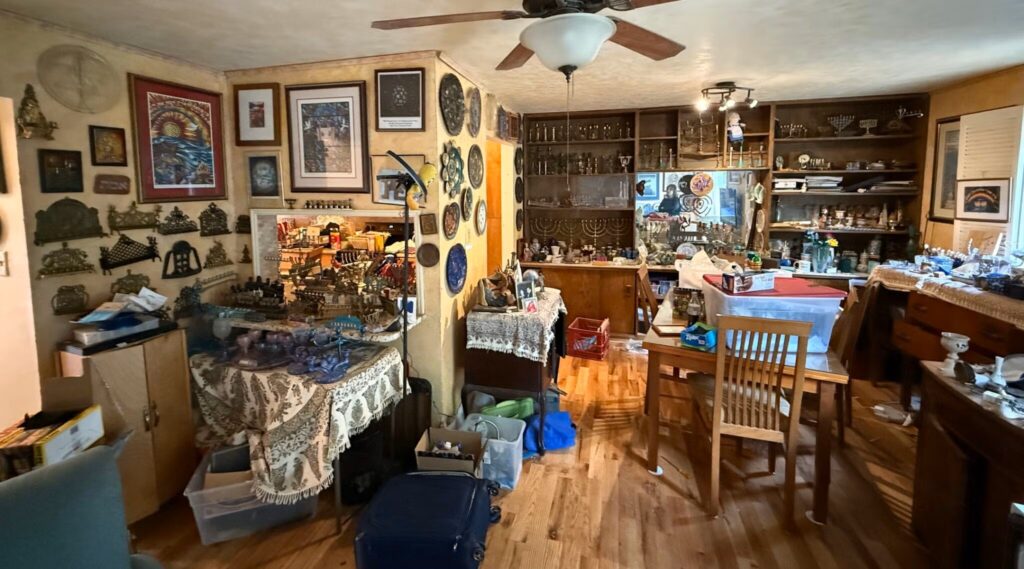
Sitting in her late mother’s home last February in the Montgomery County community of Derwood, Rae Ann Kaylie said all of the tchotchkes, trinkets and Judaica décor felt a bit overwhelming.
More than 50 menorahs adorned the shelves. A dozen seder plates were meticulously hung alongside a trove of Jewish art on each wall. Countless dreidels, kiddush cups and shofars filled every nook and cranny of the 1,100-square-foot home.
There were so many hamsas hanging near the entrance, Kaylie joked, “Whoa, Mom, what on earth? Like, how much evil eye do we have in here?”
For 35 years, Kaylie’s mother, Deborah Potash Brodie, amassed a collection of more than 200 Jewish ritual objects, which she used as a hands-on classroom for her Hebrew school students with special needs. Among the collection, Brodie obtained a Torah from eBay, which her students used to practice for their b’nai mitzvah.
“She wasn’t the one who was like, ‘Oh, don’t touch it. You’re going to break it,’” said Kaylie, who lives in Laurel. “She was like, ‘Touch it, here, take a bunch,’ and that was really cool about her entire collection.”
Known as “Bubbie Cookie” to her family, Brodie didn’t build the collection alone. Her longtime partner, Jay W. Brill, whom she met in 1986 through a personal ad in a local Jewish publication, was alongside her throughout the journey, traveling with her to all 50 states to sell Jewish jewelry and creating together a computerized Hebrew-learning program.
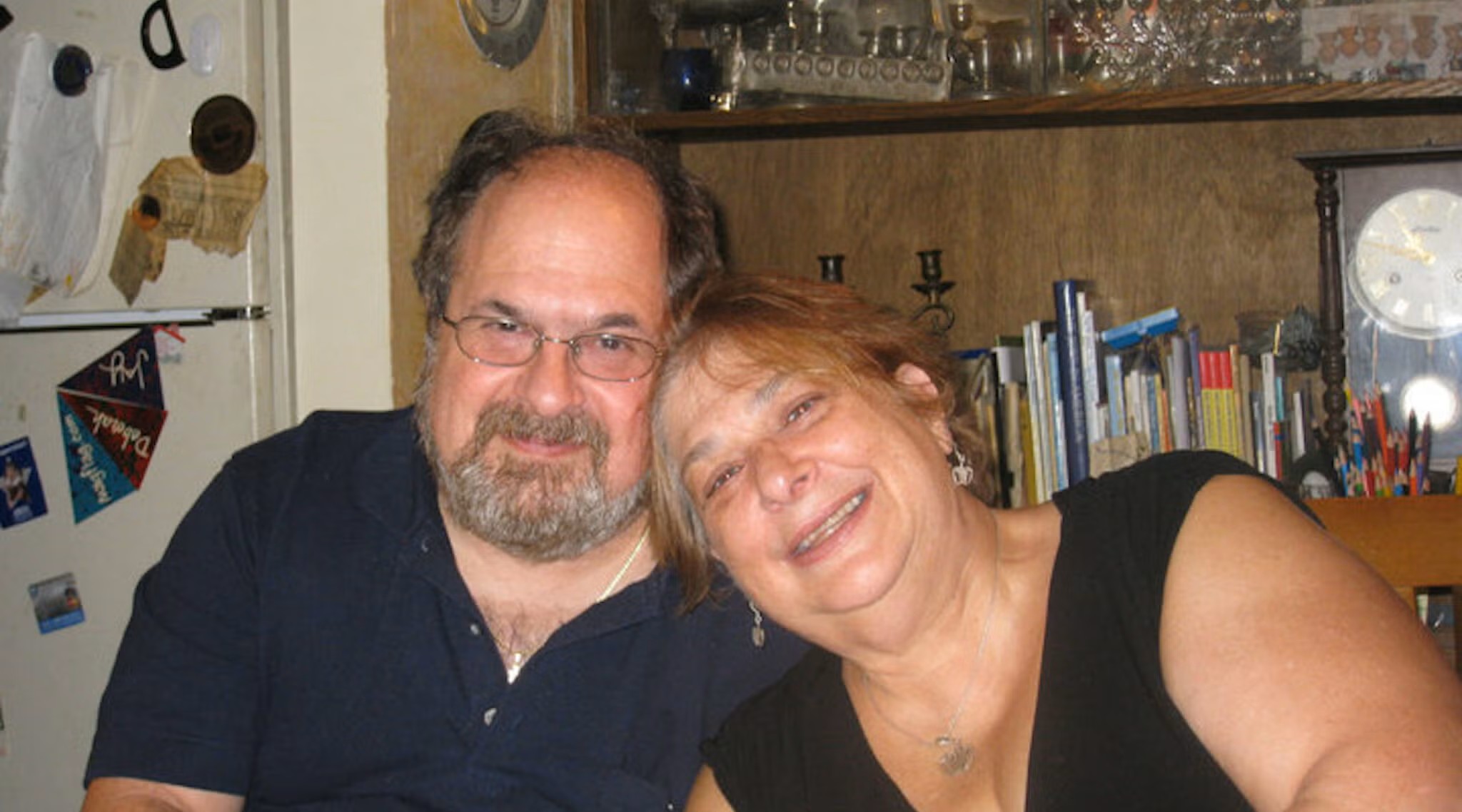
Over the years, the couple attended both B’nai Shalom and Shaare Tefila Congregation, two Conservative synagogues in Olney. Toward the end of their lives, they attended Chabad of Olney, whose spiritual leader, Rabbi Bentzy Stolik, officiated their funerals.
But after Brodie, 76, and Brill, 74, died last February just 19 days apart, Kaylie said she and her family were faced with a painful question: What would happen to the couple’s lifetime of Jewish devotion in their absence?
“We all picked something we wanted, but then, you know, you don’t want to sell it, you don’t want to make any money off of it,” Kaylie said. “It was just trying to figure out, what can we do to further her passion, her vision?”
Sharing the Love
Kaylie said the answer arrived through Instagram.
Last month, Kaylie sent a message to Nick Fox, who operates a social media series titled “Millennial Inheritance,” writing, “Hey, you want to see a lot of menorahs?”
Since last October, Fox has documented dozens of inheritance stories across his social media channels, featuring people grappling with their late parents’ vast collections of Breyer horse figurines, salt-and-pepper shakers and Christmas decorations.
While Fox said the mission of his page is not necessarily to help people find homes for inherited collections, Kaylie’s story felt different.
As he viewed images of Brodie and Brill’s home, Fox, who is Catholic, said he immediately flashed back to childhood memories attending his classmates’ bar mitzvahs and receiving souvenir hamsas from their trips to Israel.
“It was the fact that [Kaylie] was actively grieving and really had no idea what to do, and the fact that I was raised how I was, where I was, that I had a knowledge of what this stuff was and what it meant,” Fox said.
Just days later, Fox posted a short video for his 200,000 followers featuring snippets of the sprawling collection along with a call to help find it a permanent home that would “love it the way Rae Ann’s mom did.”
As the post garnered hundreds of comments offering ideas for the collection’s future — and tributes to Brodie’s contributions to Jewish education — it also made its way through the Jewish community in the Washington, D.C., metropolitan area.
The morning after the post, Jonathan Edelman, collections curator for the Lillian and Albert Small Capital Jewish Museum in the nation’s capital, said he woke up to dozens of messages from people urging the museum to find a home for the collection.
“It was so meaningful that so many people in the broader community — and who have never stopped in our museum — tagged us and said, ‘This should be the home of this sort of wild story and this amazing collection,’” Edelman said.
By the following weekend, Edelman travelled to Brodie’s home to meet with Kaylie to view the collection himself.
“It was incredible, floor-to-ceiling Judaica like I’d never seen in anyone’s home before,” Edelman said. “It wasn’t just thrown on a shelf. It was so thoughtfully laid out. I mean, [Brodie] had seder plates and chanukiyot hanging on the wall, which is no easy task to do. … It felt like a museum-quality display. It was really impressive.”
Edelman reported back to the museum, which opened in June of 2023, that he believed he stumbled upon an “incredible opportunity” to launch its inaugural education collection.
Now, the museum plans to house the entirety of Brodie and Brill’s collection in its second-floor education and program space, the Community Action Lab, where visitors will be able to interact with the Judaica firsthand, just as Brodie encouraged her students to do in her home.
The museum also plans to photograph the collection so it is accessible online, and lend individual pieces to schools and organizations in the area for educational purposes.
“It means so much for us to honor her mother’s memory by doing the work that she dedicated her life to,” Edelman said.
Best-Case Scenario
While Fox said he was not surprised by the outpouring of support and suggestions from the Jewish community, he said other Jews who inherit large quantities of Judaica should not look to Kaylie’s story as a roadmap.
“This is absolute best-case scenario, but it also makes it so very unique, because there aren’t going to be a lot of collections that museums usually are going to take on,” Fox said.
Fox encouraged people that inherit Judaica collections to consult with their local synagogues or Jewish community centers to see if they might have a use for them.
Reflecting on Fox’s decision to spotlight her mother’s collection, Kaylie said he was a “guardian angel. … He didn’t have to do that. It’s because of him that we’re able to have my mom’s legacy be how we could have wanted it.”
Edelman said he expects the collection to be installed in the museum sometime this summer, where it will be displayed alongside a plaque honoring “Bubbie Cookie” and “Zayde Jay,” names the couple were referred to by their families.
For Kaylie, imagining future museum visitors handling her mother’s kiddush cups and menorahs felt “exactly how she would have wanted it.”
“When we lost Bubbie Cookie, we said the legend of Bubbie Cookie was over,” Kaylie said. “Now, for the legend and the legacy to move on, it’s unreal. I can’t even articulate it. It’s just amazing.”
Grace Gilson wrote this article for the JTA global Jewish media source.

Weekend Backpacks is partnering with Heritage | MileOne Autogroup for the largest corporate volunteer engagement and donation initiative in the organization's history.

Pikesville residents David and Wendy Hefter recently joined Jewish motorcyclists from around the world to raise money for victims of the Oct. 7th terrorist attacks in Israel.

Enjoy some live music this fall, with a range of performances from The Ultimate Prince Tribute to Journey, classical and more.

For Aja Cohen, founder and chief creative officer of Transcendent Active, a modest activewear brand, the company is a reflection of her entire journey -- fashion, faith, movement, motherhood and identity.