
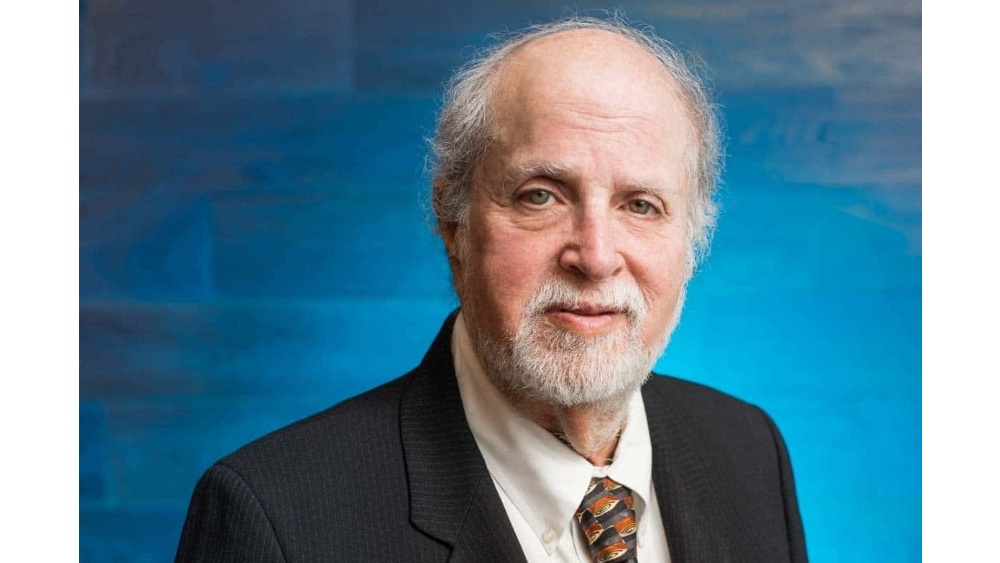
Two-thirds of a century ago, when they were classmates at Forest Park High School and boothmates at the old Hilltop Diner, the future movie director Barry Levinson and the future attorney Donald Saiontz were everybody’s pretty good bets to go nowhere with their lives.
Now, Saiontz slips away, at 83, after a long illness and leaves behind an immensely successful law firm, Saiontz & Kirk, a familiar TV ad slogan, “If you have a phone, you have a lawyer,” and stories he told Levinson that became part of such legendary Baltimore movies as “Diner” and “…And Justice for All.”
All those years ago, when they were growing up in post-war Northwest Baltimore, who could have imagined such remarkable success for either of these guys?
Not Saiontz or Levinson, that’s for sure.
But Saiontz went on to graduate from the University of Baltimore Law School in 1966. And, in 1975, with partner Harvey Kirk, they started Saiontz & Kirk.
They were among the country’s first law firms advertising extensively on TV. They established free consultations and a 24-hour injury hotline. Under their stewardship, the firm won an estimated $750 million in compensation for clients involved in car accidents, personal injury and medical malpractice.
And by the way, Levinson did all right, too.
As he moved to California and worked his way into television and movies, he and Saiontz stayed in touch.
Two years before production of “…And Justice for All,” Levinson called Saiontz and said, “I’m gonna do a lawyer movie. Gimme some of those funny lawyer stories you have.”
He didn’t want Perry Mason stuff. He wanted real-life stories. He wanted to do for the legal profession what “M*A*S*H” did for the war profession.
For two years, the two corresponded. Saiontz sent out tapes of his crazier times in court, and Levinson sent back scripts largely based on some of those tapes, which Saiontz would critique and send back.
In 1979, the day before “…And Justice for All” opened here, Saiontz welcomed Levinson to his St. Paul Place law office to reminisce a little and brace themselves for the film’s premiere.
Levinson didn’t direct the movie, but he and Valerie Curtin wrote it, and it starred Al Pacino. By this time, Levinson had made it big working on “The Carol Burnett Show” and with Mel Brooks in the movies.
“Did you ever imagine this kind of success?” I asked him that day.
“Never,” he said. “At Forest Park, in a class of 460, I finished 460th.”
“Worse,” said Saiontz, who also pronounced himself no great classroom scholar.
“School,” Saiontz said, “anybody could get by with a minimum amount of work. Anybody could get A’s with studying. We were all basically intelligent guys who didn’t care. So we rebelled against the system. Barry didn’t learn how to write by going to class. He learned by going to the Hilltop Diner.”
“Three o’clock in the morning,” Levinson said.
Though Baltimoreans of a certain generation know some of the background stories, few know Saiontz’s contributions.
And fewer knew the insights Saiontz offered Al Pacino, the star of “… And Justice for All,” trying to get into the psyche of the lawyer he played in the movie.
“We’re in his hotel room,” Saiontz remembered, “and Pacino starts doing lines. He says, ‘Look at this final argument [in the script]. How would I be feeling at this moment?
“And all of a sudden, he gets up, and he’s [prominent defense attorney] Edward Bennett Williams. He starts telling me off like I’m the jury, he’s doing the whole scene up there in his room. Then, like a balloon, he ran out of words. Words, to him, were like candy to a kid.”
As one of the original Hilltop Diner guys whose stories helped inspire Levinson’s “Diner,” Saiontz was a great repository of stories.
When he heard of Saiontz’s death last week, veteran TV anchor Richard Sher said, “He was one of the funniest guys around, hilarious, hysterical and sarcastic to a fault.”
Those teenage Diner guys had their own sarcastic shorthand, which became part of the Bawlamer jargon: “Matters.” “Choice.” “Toast.”
Once, recalling those late nights at the diner in the 1950s, when the football Colts were Baltimore royalty, Saiontz remembered, “There were only two topics of conversation at the diner. The Colts, and sex. And usually, it was about the Colts. Because you didn’t have to lie about them.”
A former Baltimore Sun columnist and WJZ-TV commentator, Michael Olesker is the author of six books, including “Journeys to the Heart of Baltimore” (Johns Hopkins University Press) and “Michael Olesker’s Baltimore: If You Live Here, You’re Home” (Johns Hopkins University).

When we create a world with a warm and loving connection, even when someone beloved is gone, that relationship is carried on, writes Pamela R. Weissman.

The Baltimore resident taught at Johns Hopkins for five decades.

A Rockville resident, Feinberg was a familiar face in MoCo politics for several decades.

The Orioles this season have proven that money can't buy happiness, writes Michael Olesker.