
By Shari Ungerleider
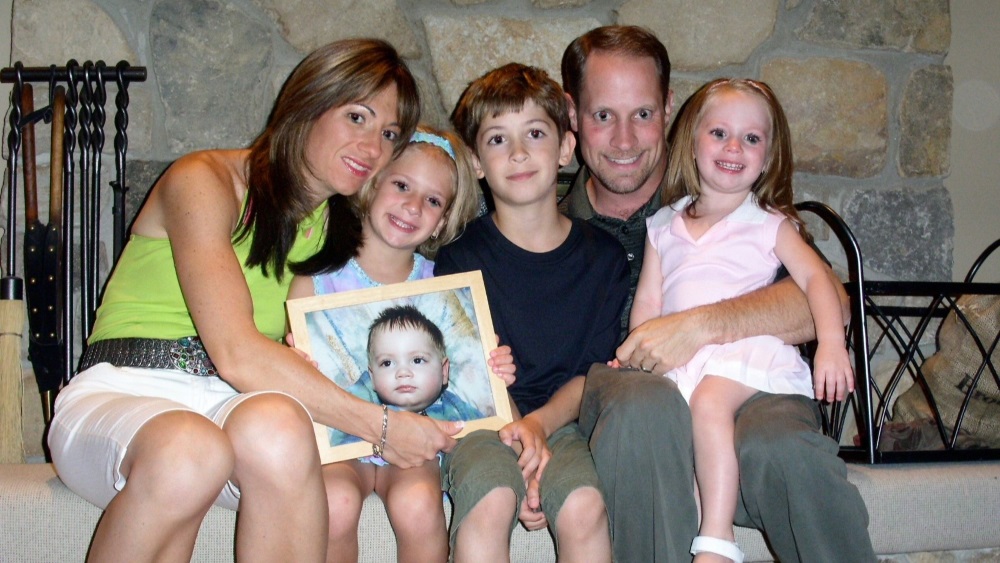
When I gave birth to our first child Evan in August of 1994, my husband Jeff and I felt so blessed with our healthy and beautiful baby. We joyfully watched Evan develop normally over the next six months and had the normal hopes and dreams for his future.
But at some point, we started to become concerned when noticing Evan was not developing at the same pace as other children his age. We witnessed our friends’ children beginning to roll over, sit up, crawl, stand, walk, talk and interact with each other.
Evan was not able to do any of this; he just watched and smiled. But soon his smile began to lessen, and his observing became a distant stare. Evan was not even able to sit up by himself without falling over. We also started to notice that he was having difficulty eating.
When he was 10 months, we took Evan to the pediatrician for what we thought was a standard well visit. But this turned out to be the beginning of our nightmare.
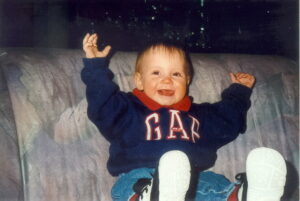
After several months, visits to numerous doctors and endless tests, Evan was diagnosed with Tay-Sachs disease. This news not only devasted but shocked us since, as an Ashkenazi Jew, I was tested for Tay-Sachs and told I was not a carrier. I immediately contacted my OB/GYN who, when re-examining my records, discovered I had actually tested positive as a Tay-Sachs carrier.
As the disease progressed quickly, Evan was unable to move on his own, suffered multiple seizures daily and had respiratory difficulty, requiring us to suction him regularly. He eventually became blind and deaf. We had a feeding tube surgically inserted so Evan would be able to stay properly nourished and medicated. He had to undergo several hours of physical therapy every week so his muscles would not atrophy.
We wanted to care for Evan at home so we could spend as much time with him as possible and not take a moment of his life for granted. We wanted to create a lifetime of memories with Evan in the short time he had left.
We spent our days taking him to the park, pool, beach and zoo. He was constantly surrounded by people who loved him.
Evan lost his battle with Tay-Sachs when he was almost 4½ years old.
Knowing Your Options
Today, we have three other healthy children. With each of my other pregnancies, I updated my carrier screening for the additional diseases that were added to the testing panel.
Knowing that Jeff and I were both carriers of Tay-Sachs disease, we were able to make family planning choices that enabled us to have healthy children. We chose to get pregnant naturally and have the fetus tested via a CVS (chorionic villus sampling) test performed at 10 weeks.
I also had two other pregnancies; one was a miscarriage and the other was affected by Tay-Sachs, so my husband and I decided to terminate that pregnancy. From the bottom of my heart, I believe that every couple should be able to make educated decisions based on accurate genetic information.
We are so blessed to have our other children. However, it does not take away or replace the tremendous loss we feel every day for Evan. I constantly imagine what it would be like for us as a family if Evan were still alive.
In 2008, the U.S. Senate voted unanimously to designated September as Tay-Sachs Disease Awareness Month.
To honor Evan, I decided to turn our tragedy into something positive so other families would be spared the suffering we experienced, by raising awareness about the importance of carrier screening with genetic counseling.
That is where Jscreen comes in. JScreen is a beacon of hope, providing accessible and informative genetic testing and counseling via at-home saliva kits.
JScreen’s ReproGEN test, tailored for individuals aged 18-45, screens for more than 200 genetic diseases, including Tay-Sachs and Cystic Fibrosis. Empowering prospective parents with informed family planning information is the core of this comprehensive approach.
Tay-Sachs disease remains a formidable foe, inflicting progressive neurological damage, blindness, seizures and untimely death. JScreen’s dedication to raising awareness and offering accessible testing fuels their mission to help families avoid the devastation caused by Tay-Sachs and other genetic diseases, and plan for healthy futures.
JScreen is dedicated to preventing genetic diseases and hereditary cancer. Headquartered in Atlanta at the Emory University School of Medicine, theJScreen initiative provides convenient at-home access to cutting-edge genetic testing technology, patient education and genetic counseling services. JScreen believes the combination of education, access to premier genetic screening technologies and personalized, confidential support are the keys to preventing devastating diseases.
I am often asked, “When is the right time to do genetic testing?” and my answer is any time before a pregnancy, so people have the information they need before family planning. Some choose to test before dating someone or getting engaged, and not continue with the relationship if they are a carrier couple of the same disease.
For couples who want to know their options, a genetic counselor will discuss using assisted reproductive technologies (such as IVF with pre-implantation genetic testing or egg/sperm donation with a non-carrier donor) to ensure they are not passing along the disease to their future children; getting pregnant naturally (with the option to test the baby early in the pregnancy and decide about continuing the pregnancy if the baby is affected); and not having biological children and adopting.
For information, please visit JScreen.org.
A resident of Wayne, New Jersey, Shari Ungerleider is an outreach coordinator for JScreen, a non-profit dedicated to genetic screening and education. She is co-founder of the Evan Lee Ungerleider Foundation, which raises funding for Tay-Sachs research as well as supports carrier screening. The foundation is part of the National Tay-Sachs and Allied Diseases Association, New York Chapter, where Shari was a past president and served on the board for over 20 years.
Colorectal cancer rates are climbing among young people and Ashkenazi Jews.
The donation will be directed to help foster research conducted by faculty at the University of Maryland School of Medicine and to advance innovative treatments.
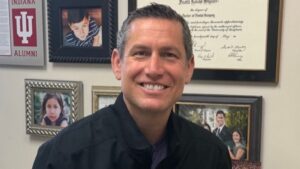
The founder and owner of Catonsville Dental Care, "Dr. B" maintains a spirit of optimism that inspires friends, colleagues and patients.
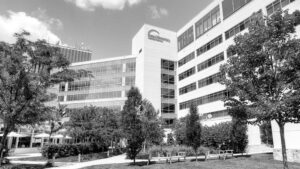
The Northwest Baltimore hospital was recognized for its initiative to strengthen safety, enhance care coordination and build a deeply engaged workforce.