

This story was sponsored by and produced in partnership with The Charles Bronfman Prize, an annual prize presented to a humanitarian whose innovative work fueled by their Jewish values has significantly improved the world. This article was produced by JTA’s native content team.
By Larry Luxner
From an early age, Eric Rosenthal was passionate about human rights and the Jewish concept of tikkun olam, repairing the world.
He ascribes his interests to his Jewish roots and upbringing in Tunisia, Ivory Coast, Niger and Italy, the remote postings where his father’s career as a U.S. government aid official took the family.
When Rosenthal started on his own career path to become an attorney in Washington, D.C., in the early 1990s, he identified one group of people he felt were being left behind — those with disabilities.
“This is one of the greatest overlooked human rights problems in the world today,” Rosenthal said. “Tens of millions of people in the world today are still locked up, out of public view. The challenge is enormous.”
He eventually launched his own nonprofit, Disability Rights International, which documents abusive practices around institutionalizing adults and children with disabilities, and campaigns to end institutionalization of children altogether. It also sues in international courts to protect victims of abuse and ensure their full inclusion in society.
Rosenthal says he was inspired to become an activist on this issue by the grassroots efforts of activists in the 1970s and ‘80s.
“It was the disability activists, the parents of kids with disabilities and the civil rights lawyers, that made change happen, that inspired me,” Rosenthal said. “When I entered law school at Georgetown University, I wrote a paper about how human rights laws applied in such institutions as well, and how the world needed to address these terrible abuses. Back in law school, I dreamed up a plan to use international law to close down the snake pits of the world.”
For his first job after law school, Rosenthal went to Mexico to investigate abuses by the military against indigenous people. At a psychiatric hospital in Mexico City, he saw inmates surrounded by barbed wire, hosed down rather than given showers and forced to fight over scraps of food. Later, he traveled to Hungary, where he observed children in orphanages locked in cages.
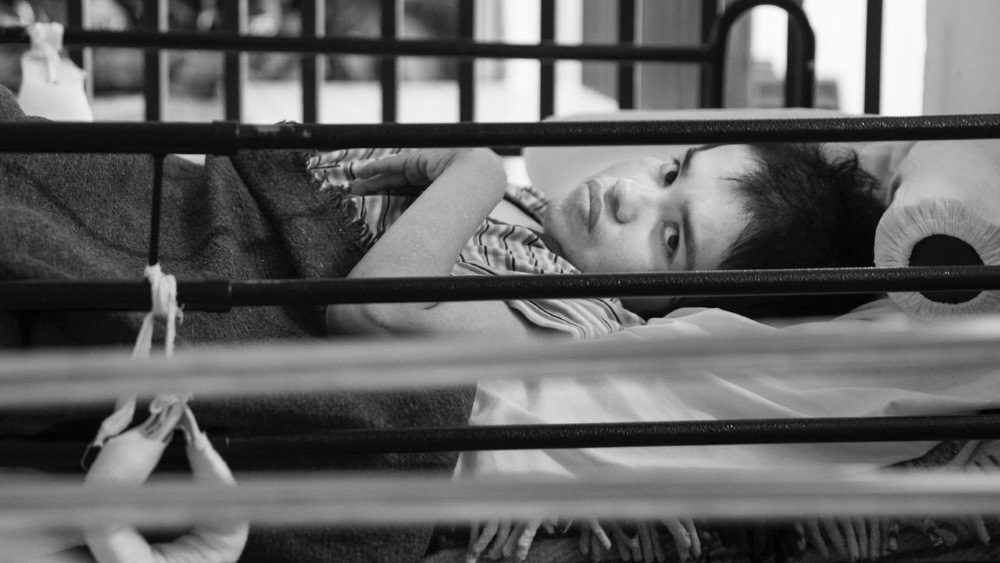
(Chris Jhun via JTA)
“The staff didn’t even refer to them as human beings,” he said. “I learned that when people are unaware that those with disabilities have rights, they’re unaware they have anything to hide.”
Rosenthal says he found little interest in abuse of the disabled among mainstream organizations concerned with human rights abroad. So he launched Disability Rights International in 1993 and began bringing the world’s attention to their abuse using a combination of public advocacy and lawsuits.
“I realized that if I didn’t do it, no one would,” he said.
Today the Washington-based organization has offices in Ukraine, Mexico and Britain, and helps bring international attention to abuses worldwide. In 2013, Rosenthal won the Charles Bronfman Prize for his work. The $١٠٠,٠٠٠ annual award recognizes a Jewish humanitarian under age ٥٠ whose work “is grounded in their Jewish values and is of universal benefit to all people.”
For the last two years, Rosenthal, now 60, has focused a lot of attention on Ukraine. Over 100,000 children are currently trapped in Ukrainian institutions, according to Rosenthal, and have been subject to even more serious human rights abuses since Russia invaded Ukraine in February 2022.
“People with disabilities are especially at risk in times of war and other emergencies,” he said. “But international donors and humanitarian relief groups too often overlook those people. If you have a kid with a disability in Ukraine there’s very little support, so families are under great pressure to institutionalize their children.” Rosenthal said Jewish values help guide his work.
“The one line in the Torah that always meant the most to me was the commandment to protect the stranger, because we ourselves were strangers in the land of Egypt,” Rosenthal said. “You can view that literally, because we work to defend the rights of people we consider strange, people who never quite fit in — those with mental disabilities who are often kept out of mainstream society.”
Rosenthal’s work is not limited to abuses overseas. In Washington, Disability Rights International is working to advance the International Children with Disabilities Protection Act of 2023, a far-reaching piece of legislation that would establish an office in the State Department to assist disability and family organizations abroad and promote policies that help disabled children avoid institutions and make the transition to independent living. The bill won Senate approval last year and has been introduced in the U.S. House of Representatives, but has not yet been passed.
“We will need a good strong push from disability activists and other supporters,” Rosenthal said. “But if we get this thing through Congress, it will have a massive worldwide impact on our issues.” 
This story was sponsored by and produced in partnership with The Charles Bronfman Prize, an annual prize presented to a humanitarian whose innovative work fueled by their Jewish values has significantly improved the world. This article was produced by JTA’s native content team.

From AI to weight-loss medications, here are the ways that breast cancer diagnoses and treatments are changing.

A former college campus activist, Veksler will speak at Chizuk Amuno on June 8 at the Ruth and Jay Lenrow Visiting Scholar-in-Residence for Combating Antisemitism.

Why not honor your mom by making a donation to a nonprofit that supports women and children?

CCBC Honors scholars are discovering a level of academic rigor and opportunity typically associated with elite four-year institutions.