
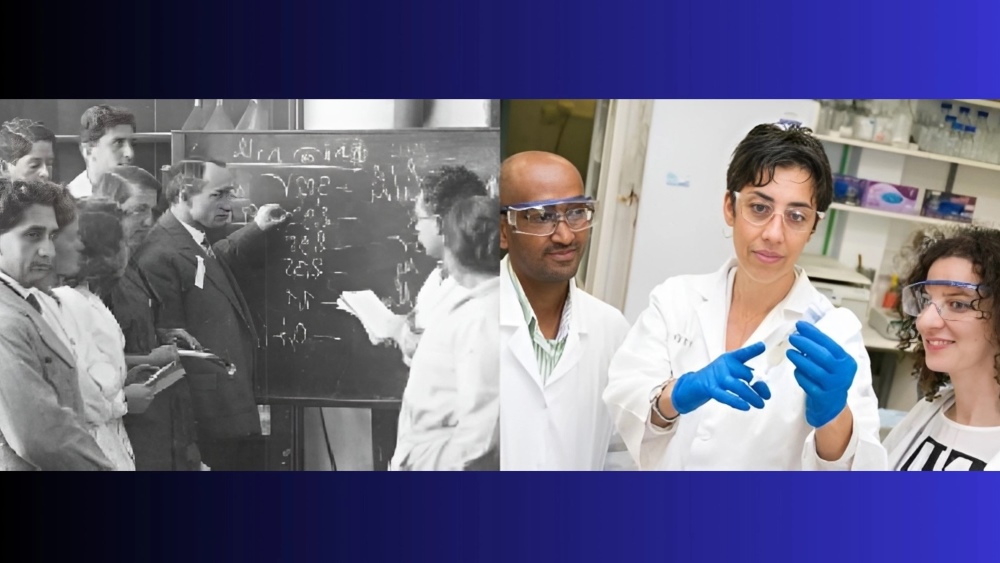
This is a Paid Post from the American Friends of the Hebrew University, a national, not-for-profit organization that connects the passions of Americans to the talent at the Hebrew University of Jerusalem, one of the world’s most distinguished academic and research institutions. JTA’s editorial team had no role in its production.
By Judah Barak
At a ceremony attended by dignitaries from across the region and world on Apr. 1, 1925, the Hebrew University of Jerusalem officially opened its doors.
After decades of thought and over seven years of construction — from the setting of the cornerstones in 1918 to the start of classes in 1925 — the university’s official opening marked the start of a new era, setting the stage for the institution to become a beacon of academic excellence and an internationally-renowned incubator of discovery and innovation.
A century on, the university is linked to new inventions and schools of thought impacting nearly every walk of life — from the foods we plant and eat, the medicines and machines we use to treat diseases, the air we breathe, the nature of political and social discourse — among countless other areas where the university has left its mark.
In looking back on the university’s achievements over the past century, we know that for the people of Israel and her friends and supporters around the world, the institution has become far more than just a center of higher learning and productivity.
Indeed, the accomplishments reached within its many halls and campuses have been instrumental in charting the forward progress of the State of Israel, a nation blessed with tremendous success even in the face of ongoing challenges and existential threats.
Along with the founding of the university, committees around the world were created to support its development. As such, American Friends of the Hebrew University will also celebrate its 100th anniversary in 2025, marking a century of partnering in growth.
To mark the start of this historic year, we took the opportunity to speak to top executives at the university and its American Friends to hear firsthand why this anniversary is so important for Israel, the Jewish people and world at large.
‘A Better Future’
Yishai Fraenkel serves as vice president and director general of Hebrew University. He is responsible for advancing a vision that he anticipates will firmly establish the university as one of the top centers of higher learning in the world.
As CEO of the New York-based American Friends of the Hebrew University, Joshua Rednik oversees an ambitious and continuously expanding development effort manifested by what he describes as the “inextricable bond” between the American community and the university.
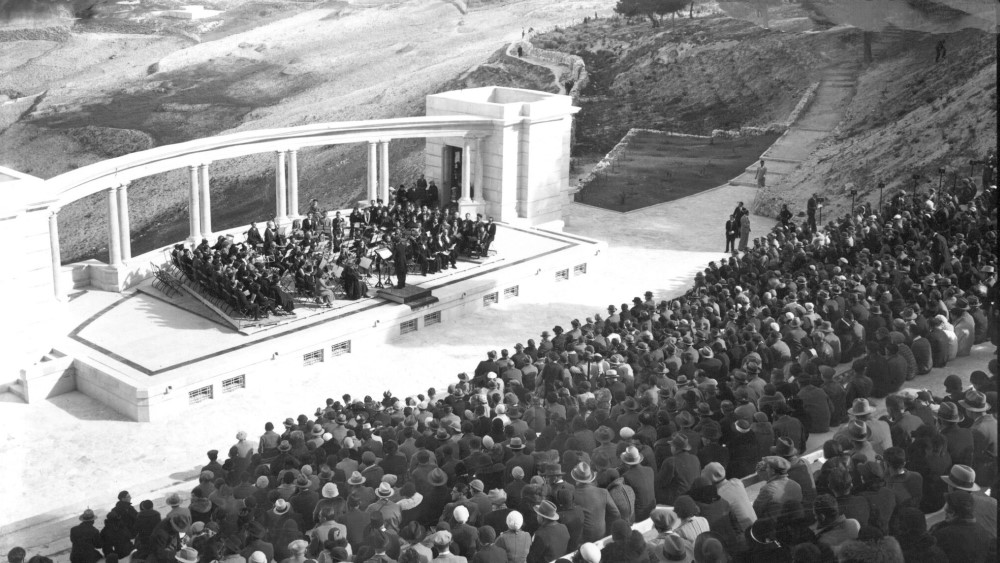
(AFHU via JTA)
Both say that what sets the university apart is how it has become a pillar of Israeli society, with its success being instrumental in both the founding and remarkable growth of the State of Israel and the modern Zionist movement.
Fraenkel points out that the initial concept for the university can be dated back to the First Zionist Congress in 1897. Its founding, more than two decades before Israel declared its independence, “can be seen as the first major project of modern Zionism,” he said.
Rednik adds that it would be shortsighted to view the success of the university as solely an Israeli, or even Jewish, enterprise.
“The vision of the Hebrew University really is about creating a better world for all people,” he said. “Whether it’s through developing better medicines, a healthier and more sustainable environment or any of the countless areas with which the university is involved, it is no exaggeration to say that the daily pursuit is about creating a better future for all people to be able to live and thrive together.”
That pursuit to enhance society is what has helped forge relationships between the university and the international community, driving philanthropic investment in its forward development.
“My experience has been that people view support of the Hebrew University as a fundamental way to achieve two meaningful ends: fulfill their commitments to Zionist ideals and improve the world around us,” Rednik said.
Fraenkel points to specific examples of how the university is charting an academic course that will benefit people far beyond Israel’s borders.
“Our motivating vision is to see Israel as a light unto the nations in areas of science and forward-thinking,” he said. “This manifests itself in essential research in areas including climate science and sustainability but no less so in educating the community on how minority populations can live together or how to advance social justice and greater inclusion.”
Prevailing Challenges
Like the early Zionist movement itself, the university faced many challenges in its early years, and sadly those challenges have remained an ever-present reality even all these decades later. As the university prepares to mark this 100th anniversary, Israel finds itself amidst another deeply tragic and increasingly costly war.

“Sadly, this is far from the first time where we as a university community have been forced to respond to the pressures of war,” Fraenkel. “The cornerstone of Hebrew University was laid while World War I was still raging and we have been here for every moment of tension. But our mission then and today has been to remain resilient and utilize all the means at our disposal to grow and support a diverse and inclusive Hebrew University community, one that reflects the democratic and multi-cultural values of Israeli society.”
Since the beginning of the war against Hamas, more than 7,500 Hebrew University students have been called to military reserve duty, and all-too-many people from within the HU community have fallen or were injured in battle.
That sense of dedication is something which both Fraenkel and Rednik say is the ultimate mark of achievement, and what they believe will carry the University forward over the next century.
“While the miracle of the modern State of Israel might have happened even without Hebrew University, we take incredible pride in the fact that we supported it and were at the heart of making Israel the economic powerhouse and international success that it is today,” said Fraenkel. “The halls of Hebrew University have truly expanded the boundaries of human knowledge and science. As we now look towards this second century, it’s about doing all we have been doing and much more, with the specific goal of becoming one of the top twenty universities in the world.”
For Rednik, the next century is about harnessing what he believes firmly is the university’s greatest resource — its people.
“Without the right people teaching, researching, and leading an institution, nothing else matters,” he said. “Everywhere you turn in Israel, you will see leaders and achievers who trace their paths directly back to the University. I am very confident that if we continue to focus on our people and maximizing their potential, in 100 years’ time humanity will look back at this moment and be able to state with certainty that the Hebrew University was instrumental in creating a better world.”
To learn more about Hebrew University’s & AFHU’s Centennial programming, please click here.
This is a Paid Post from the American Friends of the Hebrew University, a national, not-for-profit organization that connects the passions of Americans to the talent at the Hebrew University of Jerusalem, one of the world’s most distinguished academic and research institutions. JTA’s editorial team had no role in its production.

More than 100 Broadmead residents and team members recently gathered to celebrate the festival of Passover with a meaningful seder dinner.

Journalists bear a responsibility to go beyond the headlines and social media posts to understand the past and present, writes New York University student Lucia Alonso.

Despite security challenges and limited flights, hundreds have made aliyah in 2026.

At Knit & Nosh, one of several VolunTeams run by the Macks Jewish Connection Network, young adults get together to knit scarves and hats for neighbors experiencing housing insecurity.