

The recent news of the passing of singer Connie Francis, at age 87, reminded me of my late father-in-law.
No, he didn’t personally know Connie Francis and wasn’t a particularly big fan of her oeuvre (his musical tastes were more inclined toward the big band era). And no, the “Who’s Sorry Now” singer — born Concetta Rosa Maria Franconero in Newark, New Jersey — was definitely not Jewish.
But in the same way that I’ve always taken a quirky interest and pride in the reportedly Jewish lineage of Elvis Presley, my father-in-law was quite fascinated by Francis’ affinity and facility for Yiddish and Hebrew tunes, particularly her 1960 album “Connie Francis Sings Jewish Favorites” featuring such mamaloshen standards as “My Yiddishe Momme,” “Tzena, Tzena, Tzena” and “Oyfn Pripetshik.”
“For a nice little Italian gal from Jersey,” said my soft-spoken father-in-law, a Chicago native and fluent Yiddish speaker, “her pronunciation isn’t half bad.”
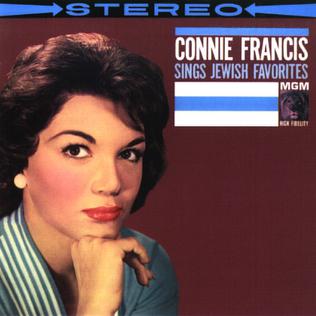
In his own way, I think my father-in-law – the son of Eastern European immigrants — saw Francis’ collection of Jewish classics as an affirmation of how far the Jewish community had come in America. It seemed to indicate validation and acceptance in the New World.
To a certain extent, we all do that, such as when many Jews talk about the pervasiveness of bagels these days or cite passages from Adam Sandler’s “The Chanukah Song” as evidence of our community’s contributions to culture and arrival in America.
Throughout her long career, Connie Francis was often mistaken as Jewish. As author and music and culture critic Seth Rogovoy reported in 2018 in The Forward upon the singer’s 80th birthday, Francis was characterized by one online media source as “a Jewish singer from New Jersey.”
Of course, media outfits should always double- and triple-check themselves, but the mistake was reasonably understandable.
Francis came up through the old Borscht Belt circuit (aka, “the Jewish Alps”), and a lot of her biggest hits in the late ’50s and early ’60s — “Everybody’s Somebody’s Fool,” “Stupid Cupid,” “Where the Boys Are,” “My Heart Has a Mind of its Own” — were penned by the great Jewish songwriters of the Brill Building scene, such as Neil Sedaka and Howard Greenfield.
It should also be noted that even though raised Catholic, Francis grew up in a Jewish-Italian enclave of Newark’s Ironbound community and became fluent in Yiddish at an early age.
“I was brought up in Newark,” she once told an interviewer, according to Rogovoy. “If you weren’t Jewish, you needed a password to get in. Also, I read Leo Rosten’s book, ‘The Joys of Yiddish.’”
Francis also apparently enjoyed poking fun at her frequently misreported Jewish faith and ethnicity. “I’m one-tenth Jewish … on my manager’s side,” she used to say.
Most young folks today have never heard of Connie Francis, even though she was the top-selling female recording artist of her era. (It should be noted that her 1962 deep-cut “Pretty Little Baby” recently made the Billboard charts, thanks to the magic of TikTok.)
Bob Dylan and the Beatles eclipsed the likes of Francis, Frankie Avalon and other singers of that time. Almost overnight (and arguably rightly so), they were rendered unhip and well past their expiration date by a new generation of music lovers.
Even the upbeat, infectious “Lipstick On Your Collar” can’t get Francis inducted into the Rock and Roll Hall of Fame.
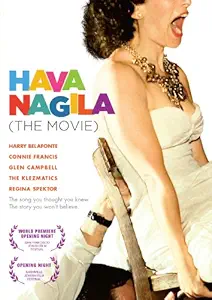
Still, Francis continued recording and performing publicly for decades, and “Hava Nagila” was a mainstay of her vast repertoire. In fact, Francis was featured in the wonderful 2012 documentary “Hava Nagila: The Movie,” about the genesis and ubiquity of the Jewish wedding/b’nai mitzvah reception standard, by award-winning Jewish filmmaker Roberta Grossman.
Still, for my father-in-law, it wasn’t “Hava Nagila” but Francis’ moving rendition of the Hebrew song “Eli, Eli,” from a poem by Hungarian-born Jewish writer and resistance fighter Hannah Senesh, that truly pulled at the heartstrings. In my mind’s eye, I can still see him playing that track for me in my old living room, with his head tilted back and eyes glazed, and saying, “Yes, that girl certainly could sing.”
She sure could.

The Trump administration's invoking of religion is reminiscent of the words and actions of one of history's most brutal Crusaders, writes Michael Olesker.

Like thousands of communities around the country last weekend, Pikesville demonstrated its disgust with the policies of the Trump administration, writes Michael Olesker.

Michael Olesker bids farewell to CBS News Radio, one of the most storied media outlets in history.
Editor-in-Chief Alan Feiler kicks off Jmore’s celebration of 250 years of Jewish history in Maryland with the legacy of Jacob Lumbrozo.