

By Theia Chatelle
When opening the grave of Theodor Herzl’s paternal grandfather last month in the Serbian village of Zemun, leaders of the World Zionist Organization and the Israeli Foreign Ministry were stunned to find the crypt empty.
Shimon Leib Herzl, who died in 1879, was not buried beneath his headstone. Officials kept digging to the side of the grave of his wife, Rivka, and found his remains there, according to Yizhar Hess, the WZO’s acting chairman, who was present at the exhumation.
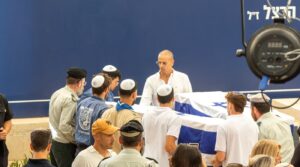
On Wednesday afternoon, Aug. 5, with Israeli Prime Minister Benjamin Netanyahu and President Isaac Herzog in attendance, Herzl’s grandparents were reinterred on Jerusalem’s Mount Herzl.
“The long journey of the Herzl family, from foreign soil to the soil of Zion, ends here today on Mount Herzl,” Netanyahu said. “The vision has arisen and become reality. Zionism has won.”
The reburial came 77 years to the Hebrew date after Theodor Herzl, the founder of modern political Zionism, was laid to rest on the Jerusalem hillside bearing his name. In one of its first acts, the Knesset voted on Aug. 10, 1949, to bring his remains from Vienna to Israel.
The WZO says the ceremony completes the last unfulfilled clause of Herzl’s 1903 will, which instructed that his body be transferred to the Land of Israel along with the coffins of his father, his sister Pauline and several close relatives.
“Having a chapter of his will that was not fulfilled is something that needed to be fixed,” Hess said.
He credited the effort to Yaakov Hagoel, the organization’s chairman, who he said worked on the exhumation project for four years.
The transfer was ready to proceed two years ago but didn’t because of the Oct. 7, 2023, Hamas attacks and subsequent war in Gaza.
“We could not bring them back because the hostages were not home yet, and we felt there are more urgent things than to bring Herzl’s grandmother and grandfather to Israel,” said Hess. “Now that the hostage affair is done, we felt it’s the right time.”
In a statement, Hagoel said the WZO was closing a historic circle by reconnecting the family’s roots to the land to which Herzl had devoted his life.
“When Zion brings her children home, she also brings home their forebears,” he said.
Diplomats and officials from across the Zionist institutional world filled the Mount Herzl plaza on Wednesday. Seated near the family plot were Knesset Speaker Amir Ohana, Deputy Supreme Court President Noam Sohlberg, Police Commissioner Danny Levy, the Serbian ambassador to Israel, and Sheikh Muwaffaq Tarif, spiritual leader of Israel’s Druze community.
An honor guard carried the two caskets and set them on a pedestal before the crowd. The mood was somber and defiant.
Herzog used his remarks to argue that the day was about inheritance rather than ceremony.
“Dreams are not bequeathed in writing,” he said. “They pass at the Shabbat table, they pass in the living room, they pass in the story a grandfather tells his grandson.”
The Jewish section of the Zemun cemetery is small. The two headstones – Rivka Herzl and the one bearing her husband’s name — were only 65 feet apart, Hess said. He believes Shimon Leib Herzl’s headstone was most likely toppled at some point and reset carelessly.
Shimon Leib Herzl was born in Zemun in 1805, the son of a rabbi. He served as gabbai in the Sephardic synagogue where Rabbi Yehuda Alkalai was the spiritual leader
Decades before the First Zionist Congress in 1897, Rabbi Alkalai argued that Jews could not wait for the messiah’s arrival to create a Jewish state, that they should buy land and petition the Ottoman sultan themselves.
Today, Rabbi Alkalai is thought of as one of the forerunners of Zionism. Whether his ideas were the impetus for his congregant’s grandson, the eventual visionary of the Jewish state, has never been definitively established.
“[Herzl’s] grandfather was in touch with Rabbi Alkalai, one of the first people to speak about Zionism in the Orthodox world back then, to make Judaism not only a religious thing but also a national thing,” said Oded Feuer, who directs the WZO’s Herzl Center. “And his grandfather was in his synagogue.”
Hess said Herzl mentioned his grandfather more than once in diaries and letters. (Although born in what is now the Hungarian capital of Budapest, Herzl’s bris was held in Zemun.)
The Herzl most people know today is the German-speaking, assimilated Viennese journalist and attorney who discovered Jewish nationalism at the trial of Alfred Dreyfus, the French army officer falsely convicted of treason in an antisemitic affair at the turn of the 20th century.
Hess said that portrait is out of date. “Calling Herzl an assimilated Jew is a mistake in many ways,” he said.
Herzl was raised in a household where Jewish tradition was, in Hess’s words, alive and well. He was raised secular but that was a way of upholding the tradition, not leaving it, said Hess. He said Herzl’s bar mitzvah is proof. It was held at a synagogue in Budapest that was associated with the Hungarian Neolog movement, which permits music on Shabbat but seats men and women separately.
The Herzl family plot on Mount Herzl has been filling in for 77 years. Theodor Herzl was reinterred there in 1949. His parents, Jeanette and Jakob, and his sister, Pauline, were brought as well. The bodies of his two eldest children, Pauline and Hans, came from Bordeaux in 2006.
The remains of Herzl’s grandson Stephen Norman — who died by suicide in Washington, D.C., in August of 1946 after learning of his family’s murders during the Holocaust — followed in 2007.
One member of the family is still missing. Trude, Herzl’s youngest daughter and Stephen Norman’s mother, died at the Theresienstadt concentration camp in 1943. Her remains were never recovered.
This week’s ceremony at Mount Herzl comes at a pivotal moment when the concept of Zionism is contested abroad and internally within the Jewish diaspora.
“Zionism is again being attacked from all sides,” Feuer said. “And the first answer to those attacks is within ourselves. Strengthening our Jewish identity will help us give answers, though not everyone who attacks is willing to get an answer.
“You can look at the Herzl family as the story of a Jewish family in the diaspora in Europe,” he said. “The old grandfather was Orthodox, somewhere in the Balkans, in Serbia. And then starts the traveling of the Jew, the wandering Jew. His kids moved to central Europe, and they maintained a connection with Judaism but in a different way, more secular.”
Theia Chatelle wrote this article for the JTA global Jewish media source.
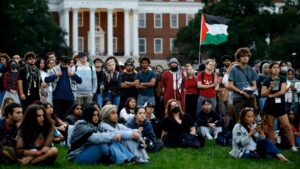
The narrative against Israel's legitimacy took years to build, writes Baltimore-based branding expert Sharon Nevins.
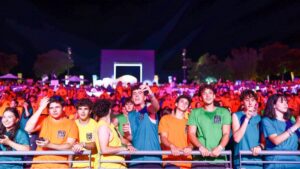
Part musical festival, part celebration and part networking event, the first Big Tent gathering since 2023 brought together high schoolers from across North America and Israel.

The family's gift focuses on expanding baseball clubs across Israel and building Israel's first indoor baseball facility in Tel Aviv.

Since the Oct. 7th terrorist attacks, Israel has become a global leader in therapeutic clowning.