

The worst thing to happen to journalism in the year of 2017 wasn’t President Donald Trump with his allegations of “fake news,” or even his taunting of honest reporters as enemies of the American people.
Whenever this president makes such statements, he marks himself as a charlatan appealing to people who are easily bamboozled. The entire country’s IQ drops 10 points with every such presidential utterance.
Still, the worst occurrence in journalism this year was the death of Jimmy Breslin early last spring. The best description of Breslin, the great New York newspaper columnist, came from another newspaper legend, the late Jack Newfield.
Breslin was “Charles Dickens disguised as Archie Bunker,” Newfield said.
He meant that the gruff Breslin wrote about people otherwise ignored by most of the human race. Before Breslin, the big-name newspaper columnists were those such as Walter Lippmann and Arthur Krock. They spoke to nobody below a secretary of state.
Breslin said those kind of columnists “sit in their offices and write term papers.”
The year ends, and we should remember Breslin rummaging through police precincts and courthouses and street corners. He had an instinct for figuring out bullies, too, including Donald J. Trump.
We could use him right now.
Here’s Breslin nearly three decades ago, when Trump was just beginning to tell lies in public. Trump took out full-page ads in the New York newspapers, falsely accusing four African-American kids of mugging a young lady jogging in Central Park. Trump wanted the four kids executed.
“Beware,” Breslin wrote, “the loudmouth taking advantage of the situation and appealing to a crowd’s meanest nature. … Such violent language sounds as if it were coming from someone who walks around with bodyguards.”
Those kids were exonerated many years ago – but Trump still hasn’t apologized.
For those who imagined Trump a classy real estate mogul back then, Breslin wrote, “His profits come from crap games and slot machines in Atlantic City, the bulk of that, the slot machines, coming from old people who go down there with their social security checks.”
But let’s not dwell too long on Trump.
This is about Breslin, who got away from us last March, at 88, after half a century of writing thousands of newspaper columns and a couple of dozen books.
We need his kind of reporting today – the kind that goes beyond official hearings in fancy boardrooms and examines, instead, how ordinary people’s lives are affected by those in power.
I had a few drinks with Breslin one night at the old downtown Hilton bar at the tail end of the Watergate era, when the Washington Post’s Woodward and Bernstein had just helped expose Richard Nixon’s crimes and American newspapers still imagined they had a bright future.
“I never had an easy day in the newspaper business,” Breslin said. He sat there with his tie undone, his shirt open, his hair all over the place.
“This is the worst year in the history of newspapers,” he said. “They talk about the Watergate scandal, but hell, it was only two guys, nobody else. All the big shots are strutting around, really proud, pounding their chests over Watergate. But what did they do? Without the Washington Post, it’s nowhere.”
Today, we have different political investigations. So the TV photographers set themselves up in Capitol Hill hearing rooms, and the analysts perch in their studios.
But it’s up to actual reporters, getting beyond the formal hearing rooms, digging through legal records, cultivating sources along the police precincts and the courthouses and the streets, to get past the formal pronouncements.
That’s where Jimmy Breslin was at his best. That’s where, at the end of a year filled with lies and distractions from the politically powerful, we miss him most.
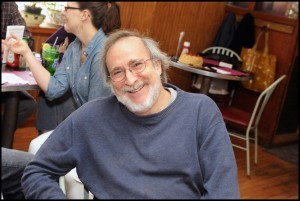 A former Baltimore Sun columnist and WJZ-TV commentator, Michael Olesker is the author of six books, most recently “Front Stoops in the Fifties: Baltimore Legends Come of Age” (Johns Hopkins University Press).

Jmore Editor-in-Chief Alan Feiler remembers Temple Emanuel's longtime spiritual leader, who passed away earlier this week at age 91.

Camp and youth group experiences have the ingredients for true, deep, lifelong transformation, writes Rabbi Jessy Dressin.

Proposed legislation in Israel would transfer authority of the entire Kotel to the Chief Rabbinate, writes Rabbi Robyn Fryer Bodzin.
In Italy, the Jewish Brigade's flag has unfairly become a flashpoint in today’s battles over Zionism and anti-fascism, writes Dr. Ginaluca Fantoni.