
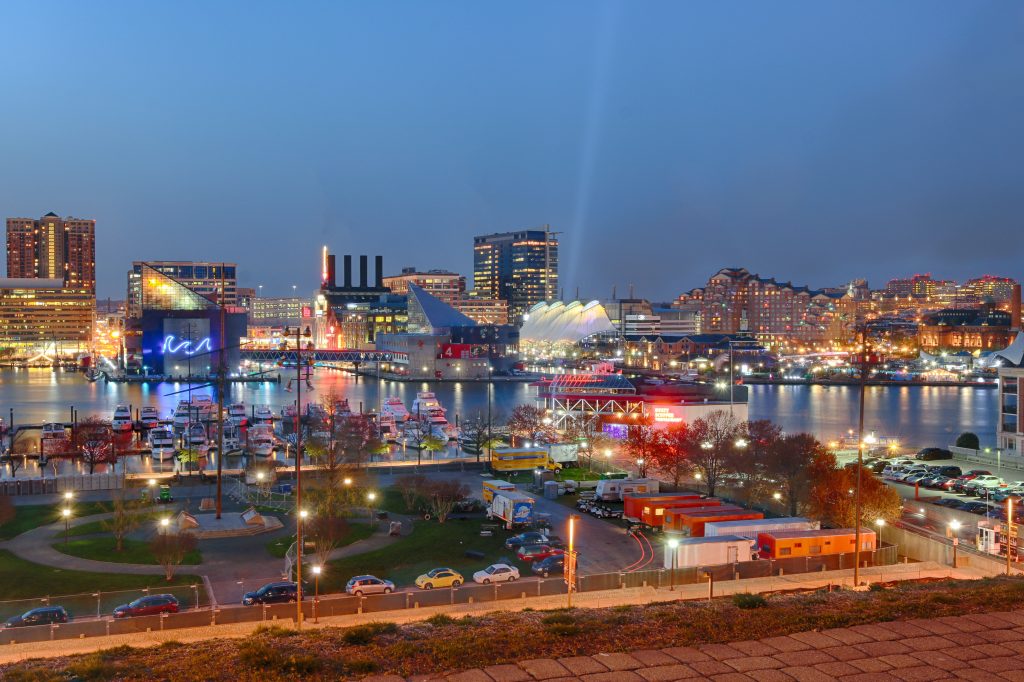
In the aftermath of the May 25 disturbances at the Inner Harbor, what are we left to tell ourselves about feeling safe in the heart of the city of Baltimore?
If we’re smart, we focus on a few facts instead of insinuation.
The police say there were about 400 young people contributing to some level of disturbance around Light and Pratt streets. Some of it was dangerous, and some of it was sheer noise and people rushing about, which can translate as danger. There were no reports of serious injuries.
But six juveniles were arrested. There was destruction of property. There was assault and disorderly conduct. There were reports of theft, and of some teens running across people’s cars.
Less easy to quantify is the level of fear, anger and anxiety felt by the vast majority of thousands of people, including children, who were gathered in the area and were not among the troublemakers.
Let’s not call this a riot, because it wasn’t one. But let’s admit it’s a serious concern for any community, much less one still dealing with the psychological after-effects of the Freddie Gray riots of 2015.
And so, in the aftermath of the latest trouble, a few nagging questions arise, such as:
- Why are we talking about Baltimore Police Sgt. Mike Mancuso?
- Why are we talking about State Sen. Jill Carter?
- Why are we talking about the American Civil Liberties Union’s concept of political correctness?
- Why aren’t we focusing on such central issues as: Why was there trouble that Saturday night, and how do we keep such things from happening again?
- Why do we continue to have so many young people who feel so utterly alienated from their own city — from its glittery, successful heart, which seems so distant from their own lives — that they feel a need to express anger toward it?
As Mayor Bernard C. “Jack” Young said, “Really, it’s a parenting question. Are the parents talking to their young people to let them know that downtown belongs to you, too, the Inner Harbor belongs to you, too, but you go there and act with common sense and decency and not go down there to disrupt and fight and create mayhem down at the Inner Harbor. It’s just not acceptable.”
Instead, we focus on sidebar issues.
Sgt. Mancuso, for example. He happens to be president of the Fraternal Order of Police Lodge 3. In the midst of the May 25 disturbance, he wrote on Twitter, “Some are criminals.”
To our officers at the Harbor tonight:
— Baltimore City FOP (@FOP3) May 26, 2019
Protect each other and don’t fall into the trap that they are only kids. Some are criminals! Keep the current policies and Consent Decree in mind. If ordered to arrest put the name of the on-scene Commander in all reporting.
Mike Mancuso
This set off all kinds of outrage.
Sen. Carter called Mancuso’s characterization “contemptible and utterly unacceptable,” and attached “racism and inhumanity” to it, even though Mancuso made no mention of race.
In a Facebook post, the ACLU of Maryland declared Mancuso’s remark “UNACCEPTABLE.”
On what grounds? When there are arrests being made, and property destruction, theft and assault, what word do we call the perpetrators?
If the answer is that they hadn’t yet been charged with any crime when Mancuso made his remark, that point is well taken. But some people out there were clearly committing crimes, which clearly makes some of them “criminals.”
We have hundreds of people causing a disturbance, and we’re shouting angrily at each other over nomenclature?
I’d like to hear someone worry about how to describe all those thousands of people who were there that night and were not committing crimes. Here’s one word we can call them: Terrified.
To get into an argument over asingle characterizing word is to sidestep the real issue here.
Why are we talking about what we should call them — instead of talking about why this continues to be such a problem in this city, and why we have so many young people who feel so alienated and angry? And what do we do to include them in the city’s good life and stop such trouble from happening again?
A former Baltimore Sun columnist and WJZ-TV commentator, Michael Olesker is the author of six books. His most recent, “Front Stoops in the Fifties: Baltimore Legends Come of Age,” was reissued in paperback by the Johns Hopkins University Press.
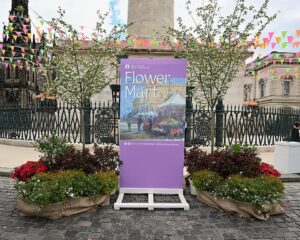
Last weekend's Flower Mart once again demonstrated that there's nothing to fear about downtown Baltimore, writes Michael Olesker.
A junior at Roland Park Country School, Katie Grossman writes about a recent experience that spurred her to take action to fight antisemitism.

At a time when many Jews fear appearing Jewish in public, seeing Judaism depicted correctly onscreen is reassuring, writes Jewish content creator Rabbi Yael Buechler.

Cruel, inappropriate, egomanical, outrageous and bullying are all attributes that pass for presidential these days, writes Michael Olesker.