

Moshe Englander remembers when his mother, Edith, first moved to assisted living. She had gone to convalesce at Weinberg Park following hip replacement surgery.
Her husband, Sidney, was already living there. Unfortunately, he passed away a week and a half after Edith arrived.
“I remember my mom said to me at the time, ‘I’m here. Why should I go back to an empty house?’” recalls Englander.
For eight years, Edith lived at Weinberg Park.
“In the beginning, my mother was alert and could get around with a walker. Then she was diagnosed with dementia and began to deteriorate. Weinberg Park adjusted her care accordingly, bending over backward to make sure she was happy and never had to move to another facility or nursing home.”
For Englander, the move to assisted living was made easier by his mother’s attitude. But for many families, it’s not so simple.
It’s not easy for parents and children to reach the conclusion that it’s time for assisted living says Shoshana Zuckerbrod, a social worker with the Patient Care Connection Program at Jewish Community Services, an agency of The Associated: Jewish Community Federation of Baltimore. But, when they reach that conclusion, it’s important for them to approach this major lifestyle change in the right way.
“Don’t come in and say, ‘This is what we are doing,’” Zuckerbrod says. “Instead, begin by planting the seed about why this move is important for their health and safety.”
In addition, finding the right person to make the case is critical. It might not be the adult child. “If you know a parent listens to a sibling or grandchild more, enlist their help,” she says.
One of the best approaches to getting buy-in is to check out the facility with one’s parent during an activity they would enjoy. And says, Zuckerbrod, “If you know someone in assisted living having a positive experience, visit their living space and talk to them.”
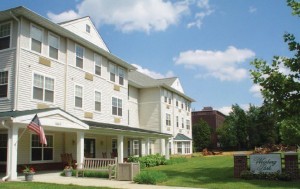 Picking the right assisted living facility should include a tour. And one of the things families should pay attention to is the atmosphere, says Penina Berman, housing asset specialist at CHAI: Comprehensive Housing Assistance, Inc., an agency of The Associated.
“When touring facilities, ask yourself if you could live there. And pay attention to the friendliness of the staff, the entire staff,” Berman says.
Berman also recommends asking about staff turnover, the number of hours a nurse is
on duty and the size of facility. “Sometimes, your family member can get more personal attention in a smaller facility,” she says.
And, of course, one should consider what programming a parent might like.
For example, at Weinberg Park, which is owned by CHAI, much of what they do is based on Jewish traditions. There are Shabbat meals, with gefilte fish, matzoh ball soup and roast chicken. And, for those who are interested, the Jewish holidays are celebrated.
For Englander, the Jewish traditions, from megillah reading at Purim to meals in the Sukkah were important to his mother, a Holocaust survivor. But most important was the care.
“The staff loved my mother and always made her feel comfortable. My family have such gratitude for the love and care they gave my mother, all the way to the end.”
Learn more at weinbergpark.com

The recently renovated campus at 5700 Park Heights Avenue will now serve as headquarters of the federation and several of its constituent agencies.

At Knit & Nosh, one of several VolunTeams run by the Macks Jewish Connection Network, young adults get together to knit scarves and hats for neighbors experiencing housing insecurity.

In honor of Women's History Month, The Associated talked with Pam Platt, Stephanie Baron and Leah Schottenstein Schulman about what drives their giving and the values that guide their leadership.

February is Jewish Disability Awareness, Acceptance and Inclusion Month (JDAIM). Supporting individuals with disabilities is a year-round priority for The Associated network.