
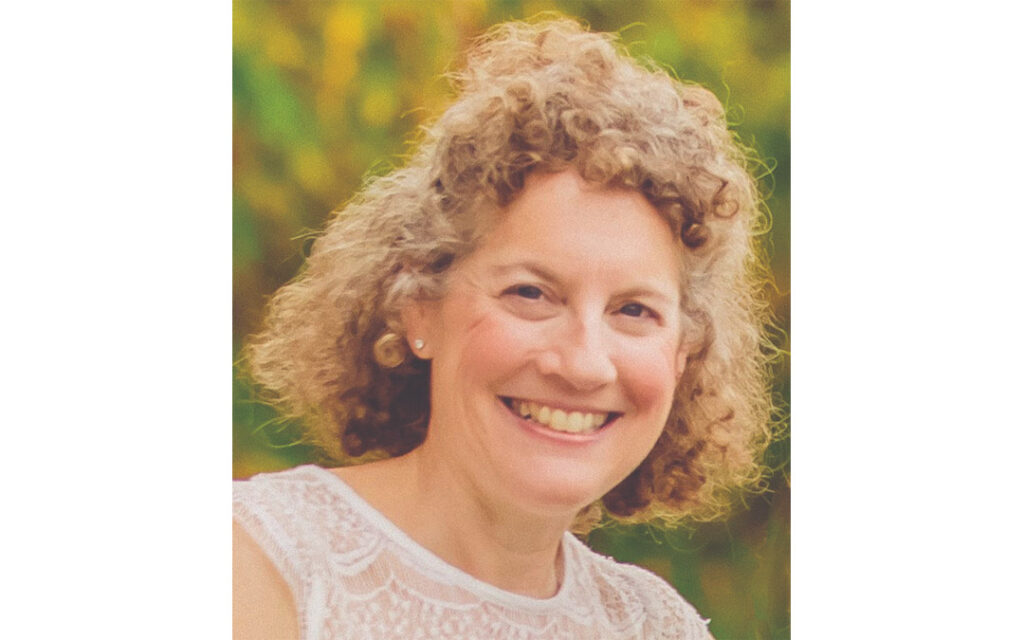
On her first day of teaching at a Catholic school in Baltimore, Diane Gensler says she received an anti-Semitic note.
She has since spent seven years teaching in private and public schools, in addition to developing educational software and writing/managing online curriculum.
But the Catholic school experience shaped her so much that she decided to make it the subject of her first book, “Forgive Us Our Trespasses: A Memoir of a Jewish Teacher in a Catholic School,” which was recently published by Apprentice House and is now available on Amazon and Kindle and in bookstores.
Jmore columnist Michael Olesker wrote of Gensler’s book, “This is a sweet, insightful account of the life of a school teacher who’s simultaneously going through both professional and cultural challenges and approaches the new job with an open mind and an open heart. It’s nicely written and well observed, and I felt as if I were going through the daily life in a Baltimore classroom with all of its challenges and little pleasures and large frustrations.”
Jmore recently spoke with Gensler, who lives in Owings Mills with her husband and their three children.
Jmore: Why did you decide to write this book?
Gensler: I started jotting down notes so that I would have a record of my experience, if only to pass down to my children. My notes turned into paragraphs, which turned into pages until I realized I had a book.
Besides your first day ‘welcome,’ what challenges did you face at the Catholic school?
Teaching itself has tremendous challenges, which can include all the time and effort it takes for planning, grading, chairing clubs, interacting with parents, attending workshops and conferences, and more. If you add to that the reluctance of many staff and parents to having me aboard, you get an idea of the situation I was facing.
Did you try to transfer?
I didn’t think it would be fair to anyone if I just picked up and left, so not only did I stick it out but I taught there a second year.
What advice do you have for other teachers in similar situations?
Hopefully, people can find something positive in bad situations as I did. I’ve read a lot about anti-Semitism and everything said that we have to fight back. Yet, I wouldn’t want to advise someone to do something that could put him or her in jeopardy or worsen their situation. They should consult with family, friends and professionals, and make the decision that is best for them.
What did you learn from your students?
My students helped me improve as a teacher, and I enjoyed my time with them tremendously. I learned that everyone should be exposed to people of different races, creeds, cultures, faiths, etc. And I learned a lot about the Catholic religion.
What do you think they learned from you beyond the curriculum?
Some of them had never met a Jewish person before, so I hope they learned to be more accepting of people who are different.
What did you learn about yourself?
I learned that I am more resilient than I thought. Later, I also realized that I believed so much in the importance of a good education that I was willing to withstand all the problems I encountered for my students to get that education.
How have your experiences influenced how you are raising your own children?
Although our religion is a big part of our lives, we send our children to public schools so that they are exposed to people with different backgrounds.
Did teaching at a Catholic school inform you as a Jew?
Teaching at the Catholic school made me realize how big a part Judaism is to my identity. I am very involved with Beth Israel Congregation, Hadassah, the Baltimore Jewish Writers Guild, the Jewish Genealogical Society and the JCC. My involvement with interfaith or cross-cultural events is a part of my involvement with the Jewish community at large. There are many programs that aim to bring all people together. I’m also involved with parent-teacher associations, which bring together people from diverse backgrounds.
What do you want readers to take away from your book?
I want readers to be inspired by the story, to ‘pay it forward’ and be a vehicle for promoting solidarity, unity and acceptance all over the world.
Why is diversity so important?
Accepting our differences, learning about each other, communicating and understanding the perspective of others can only help us come together and heal on many different levels. I believe fostering a climate of tolerance and love and appreciation starts with an early education. We need to educate children in their formative years before any prejudices, stereotypes, hatred or other negative mindsets develop.
How could the education system be improved?
When we transition from virtual to in-person learning, class sizes need to be reduced as much as possible, and teachers should get the help and support they need.
Caryn R. Sagal is a Baltimore-based public relations consultant and freelance writer.
Emma Snyder, owner of The Ivy Bookshop, offers recommendations for must-read titles for adults and children.
Schwab currently serves as president of Cumberland's historic B'er Chayim Congregation.

The Jerusalem Orchestra East & West, which arranged the program for young musicians, blends Western orchestral music with Middle Eastern traditions.

Pikesville resident and entrepreneur Luna Rosendorff discusses what she's seeing these days in the world of contemporary interior design.