
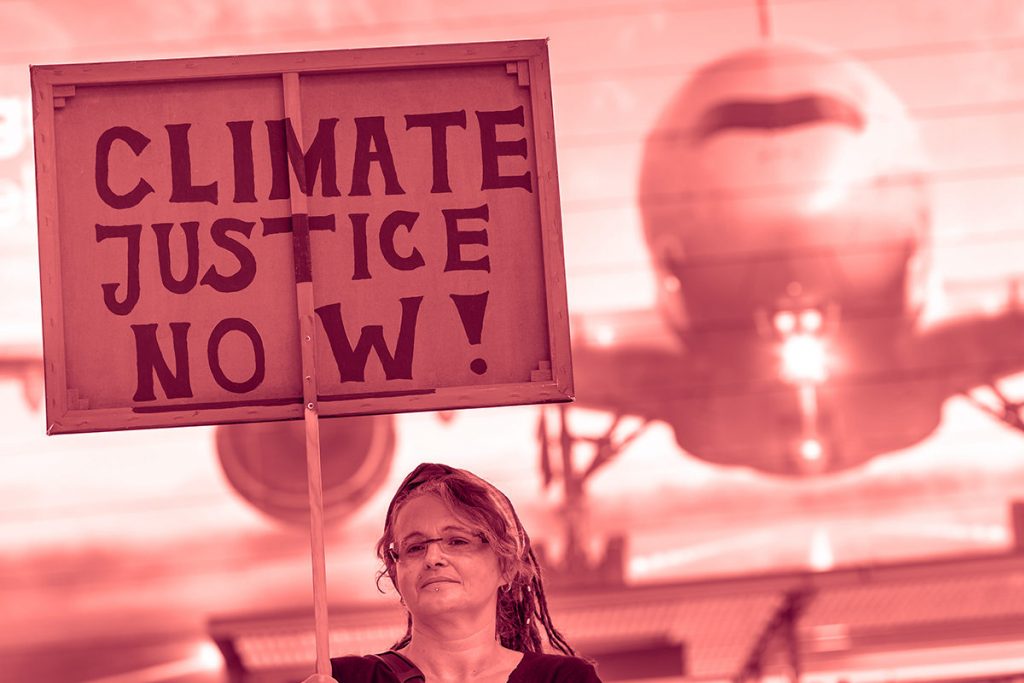
A few months ago, I was talking to my 25-year-old daughter about her future. She said something that stopped me in my tracks.
“I don’t expect to live a long life,” she said.
“What are you talking about?” I asked, alarmed by her statement.
“I mean I hope I do but with what’s going on with the planet, I don’t know how long I’m going to be here,” she said matter-of-factly. “And even if I am, I don’t know what will happen to the children I hope to have.”
This disturbing conversation got me thinking. I’m extremely concerned about climate change. The fact that there are still people around the globe who question the overwhelming scientific evidence that the earth is warming, that human beings are mostly to blame and that the situation is unsustainable, baffles and infuriates me.
Yet, the idea that my daughter — a bright, well-educated young woman who pays attention to politics and world events –believes her own lifespan will likely be affected by climate change? That was something I’d never seriously considered.
I wondered, “Do other young people feel similarly?” I wanted to find out. So I reached out to three of my daughter’s peers to get their perspectives.
Here’s what they told me.
‘Is It Selfish to Have Kids?’
Leah Meyers is a 19-year-old sophomore at Towson University, majoring in sociology and anthropology with a minor in criminal justice. A Baltimore native, she currently lives in Pikesville. Meyers is chair of the social justice committee at Towson Hillel. Last year, she interned at the Baltimore chapter of Repair the World.
Meyers said my daughter’s words resonated with her.

“I think that’s a lot of the thought process I’m hearing among my peers because when we discuss climate change, it feels like a lot of the climate change policies and laws that will affect the future are being written by people who don’t have as much stake in the future,” Meyers said. “Maybe I’ll be fine but looking to the future, a lot of us are asking the question, ‘Is it selfish to have kids? Is it selfish to continue trying to build this world when we don’t know how much longer the world is going to be around?’
“We’ve seen there are actionable items and there are things that can be done. Realistically, we have the technology, we have the necessary information to be able to build sustainable communities and shift over from fossil fuels.
“I think that climate change and environmental issues are social justice issues, especially when you look at who’s being impacted and where the harm is being done at this point. Even in Baltimore, with the BRESCO [Baltimore Refuse Energy Systems Co.] incinerator, they’re literally just burning and fossil fuels are going into the air. Not only is that bad for the environment, but it’s impacting the lives of people who live there.
“I read an article that was talking about West Baltimore and how they can’t use one of the schools there [because industrial fumes are so bad]. They don’t have a basketball team, not because nobody wants to play basketball but because they all grew up in this environment where they all got asthma so they literally can’t play. We don’t need to be burning trash and we don’t need to be creating as much trash. But once we do, there are more sustainable ways to get rid of it that don’t put fossil fuels, toxic fumes into the environment. It feels super overwhelming, but we can do it. We have the tools. We have the resources.”
Meyers said her advice to young people is “don’t get overwhelmed by how drastic and intense this issue can feel, because being overwhelmed leads to shutting down and that leads to no action. If everybody takes small steps, that’s awesome. Just turn your lights off, don’t litter and focus on trying to use reusable articles. Don’t support mass fashion; shop second-hand if you can. See who’s profiting from your money. Do you support the values of the company? Think about how much you’re consuming, because as a people, we are consuming way more natural resources at a faster rate than the planet can regenerate. There has to be hope.”
‘Like An Exam’
Pratik Shukla is a 24-year-old graduate student at the University of Maryland, Baltimore County. Shukla moved from India to the United States to attend graduate school and is working toward a master’s degree in computer science. He is actively involved in UMBC’s Hillel and a member of the school’s environmental task force.

Shukla believes that the subject of climate change has become excessively politicized.
“People really need to start working on it rather than like hosting debates,” he said. “It’s not up to an individual. It takes a group of people to cope with climate change. Working together, as opposed to just individual people recycling their bottles or something like that. If I stop using plastic and there are still many companies that manufacture plastic, people are still going to use it.
“When I go on the internet and search about the topic, I still find a lot of people debating over [climate change]. There are sites saying that it’s not real, and some say it’s very real and it’s very close to us. Sometimes, people also argue that people are just making this up for politics.
“I think a lot of people, like 70 years old-plus, don’t think it’s a big deal.
“As a student, I can say that it’s like an exam. If I have an exam tomorrow, I have to study for it. I cannot just be tense about it and hope that I do well. I think we are the first generationtaking this issue seriously and acting on it.
“[In India], they’re not taking climate change seriously. In our studies, we study about how climate change is happening in foreign countries, not in our own country. But I see that in India, the condition is going to be very vast. The pollution is too much compared to the U.S.”
‘Climate Change is Very Real’
Leah Rubin, 23, was born in Atlanta but grew up in Pikesville. A 2020 graduate of UMBC, she studied environmental science. Currently, she is a student conservation association intern in Southeastern California’s Mohave Desert. Rubin’s responsibilities include invasive plant removal; rare and endangered plant surveys; restoration site irrigation; fuels reduction monitoring; climate change and floral refuge analysis; and field survey GIS database organization and implementation.
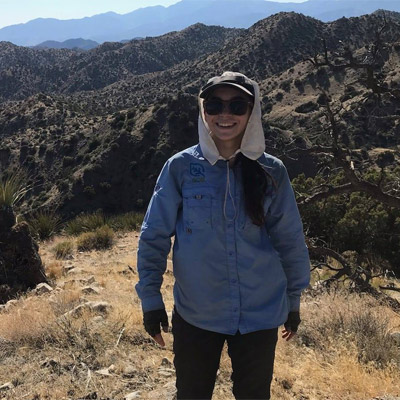
Rubin, who graduated from Krieger Schechter Day School and became a bat mitzvah at Chevrei Tzedek Congregation, said the older generation isn’t taking an aggressive enough approach to climate change.
“I think a lot of people in older generations notice and acknowledge climate change, but in terms of wanting to put an effort into doing something about it, it’s not much,” she said. “It’ll be like, ‘Oh, well, I didn’t eat meat once a week,’ or ‘I recycled my grocery waste today’ versus doing something that has a much more profound impact, like living a plant-based lifestyle or doing a volunteer cleanup or things like that.
“I think adults usually stand back a bit more and they observe and they comment, instead of doing much about it. I don’t know if that comes from complacency or just being set in your ways and not wanting to change.
“Climate change is very real. It’s nothing that can be avoided at this point. It’s very hard [to reverse] because bureaucracies go very, very slowly. People say, ‘By 2050, we’ll have all electric cars,’ but will it be too late by 2050?
“We also have challenges in the desert with green energy. About an hour-and-a-half southeast of me, we have what used to be one of the largest solar panel fields in the country, if not the world. And it was a great idea. And people think that the desert is a great place to do those things because there’s sun everywhere. But what it does is it entirely degrades the habitat that a lot of species reside in and it actually ruins the air quality because they take all of the plants and the vegetation out. And so, there are dust storms all the time. It’s very hard to think of environmental things we can do that don’t impact something somewhere else.”
Rubin said the best thing that people can do about climate change “is probably adopt a more plant-based lifestyle and use less than you normally do because you probably have enough things already. We do have a lot of purchasing power as Americans in a capitalist society. I think we have to use that to our advantage.”
**************
I had time and editorial space to speak with just three young adults about climate change, but I suspect that their impressions and concerns aren’t unusual.
I’m one of those middle-aged people who spends a great deal of time thinking and complaining about climate change. I vote for candidates who say climate change is an issue they plan to take seriously but never seem to be aggressive enough.
I stopped using plastic bottles, drive a hybrid car, use green energy, and recently started composting.
Is that enough? I expect my changes will do little to stop the inevitable progression of climate change. I must do even more. We all must. Our children and grandchildren’s lives depend on it.
A former resident of Baltimore and central Florida, Ritt was active in the Soviet Jewry movement of the 1970s and 1980s.
For more than four decades, Goldman played a vital role in the supervision of elections in the city.

The 16-year-old sophomore succumbed to injuries sustained in a car crash last week in Cockeysville.
Schools in Montgomery County have recently experienced a wave of antisemitic incidents.