
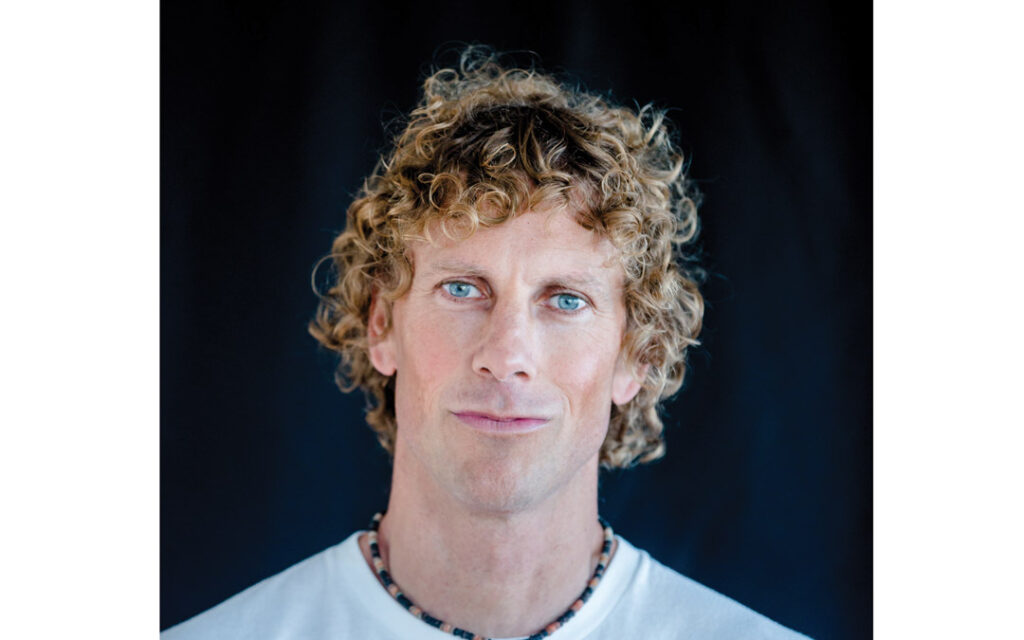
Real estate developer Thibault Manekin writes about how community groups and industries can transform the world.
Thibault Manekin never meant to become a real estate developer. In fact, he says he was adamantly opposed to getting into the family business.
But one day after returning to Baltimore from five years living in South Africa, Manekin, a partner of Baltimore’s Seawall Development, says he had an “epiphany” about how real estate can be a vehicle for social justice and change.
Now, Manekin, 43, is out with a book, “Larger Than Yourself: Reimagine Industries, Lead With Purpose & Grow Ideas into Movements” (New World Library). The book, which features a foreword by community activist and author Wes Moore, describes Manekin’s personal evolution and how he, his father, Seawall co-founder Donald Manekin, and their staff have worked to help communities evolve.
Growing up in a white, affluent neighborhood in Baltimore, Manekin says he was aware of racial and economic divisions from an early age.
When he was about 14, his mother met a homeless Black man named “Charlie.” She brought him home, and Charlie became part of the Manekin family for the next two decades.
Manekin says the experience was eye-opening because of “the lessons we learned from him, the amount that Charlie taught us, never by lecturing us or anything, just by his physical presence and the way that he loved and the way he showed up every day, the way he made us appreciate what we had. A lot of people praise my mom and thank her for the amazing things she did for Charlie. But the reality of it is, Charlie did as much, if not more, for our family.”
After graduating from The Park School of Baltimore and Lehigh University, Manekin sought to pursue a career that would make a difference in the world. He joined an international nonprofit called PeacePlayers that brings together children of different races and ethnicities through basketball. In 2001, Manekin left Baltimore to join the organization in South Africa.
“The majority of the people we met told us what we were setting out to do was impossible, there’s no way you would get a white school from an affluent part of town to take their kids into a very poor Black township,” Manekin says. “We never showed up to any of the programs and said, ‘We have the solution to solve centuries of division and war and racism and sectarianism.’ Our role was to show up and be quietly behind the scenes, with a little bit of an infrastructure, a little bit of knowledge around how the sport gets set up and make sure that the end-users in the community and the team are the ones leading and driving the process.”
Soon, the program was growing by leaps and bounds. “The program really started to explode, and we were running out of money,” Manekin says.
Then, the iconic South African leader Nelson Mandela called. “He said, ‘I’m a huge believer in the power of sports to unite, and I love what your program is doing and want to become your largest supporter,’” Manekin says.
Once Mandela became involved, the organization’s profile grew. Manekin eventually traveled with PeacePlayers to Ireland working to bring together Protestant and Catholic children, and to the Middle East to work with Israelis and Palestinians.
By 2006, Manekin was ready to move on, but he never thought he would end up in Baltimore. Back at his parents’ home, he decided to drive downtown to explore sections of Baltimore known for their poverty and violence.
On the corner of Pennsylvania and North avenues, Manekin says he was struck by the similarity of West Baltimore to the poverty-stricken, crime-ridden townships of South Africa.
“I began to ask myself, ‘What are the creative ways that we can bridge the divides that exist?’” he said. He thought about the “importance of reimagining industries, flipping things upside-down and leading with our purpose over our profit. I came to understand that the real estate industry was ripe for reimagining.”
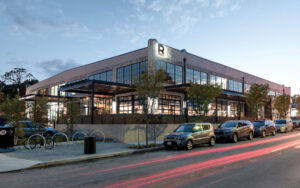
Since its founding in 2007, Seawall has worked on a variety of projects. Many of them are in the North Baltimore neighborhood of Remington, where Seawall developed the Center for Educational Excellence, which offers discounted apartments for teachers and office space for nonprofits.
“My dad says there is no better investment than an investment in the future generation,” says Manekin. “Those teachers who are showing up every day in the classrooms are doing the most important work in our cities. We asked ourselves, ‘Is there any way that we could play some small role and help and make their jobs a little easier? Pay a little bit less in rent, provide them supportive, collaborative space, give them first-class amenities that they couldn’t afford in other apartment buildings?’”
The company’s next project was the creation of a new headquarters for the nonprofit the Center for Urban Families, which works to empower individuals and families in Baltimore through personal and professional success.
Meanwhile, Manekin is focused on promoting his new book.
“I really think, in some small way, the book is going to change the way the world turns,” he says. “Today, we’re seeing the workforce more than ever question why it shows up every day. In large part, it’s a lack of belief in the reason you’re going to work. It’s feeling more like a job than a passion. The book is going to help people find that purpose we’re all always in search for and hopefully help them align that with how they live their lives, the kind of companies they work with and the things they choose to do.”

House Bill 661 is the culmination of a collaborative effort led by Del. Sarah S. Wolek (D-16th), Del. Jared S. Solomon (D-18th) and Sen. Shelly L. Hettleman (D-11th).

More than 100 Broadmead residents and team members recently gathered to celebrate the festival of Passover with a meaningful seder dinner.

For Beth Tfiloh senior Ada Key, earning the Eagle Scout rank is about giving back and paving the way for girls in scouting.

At Knit & Nosh, one of several VolunTeams run by the Macks Jewish Connection Network, young adults get together to knit scarves and hats for neighbors experiencing housing insecurity.