
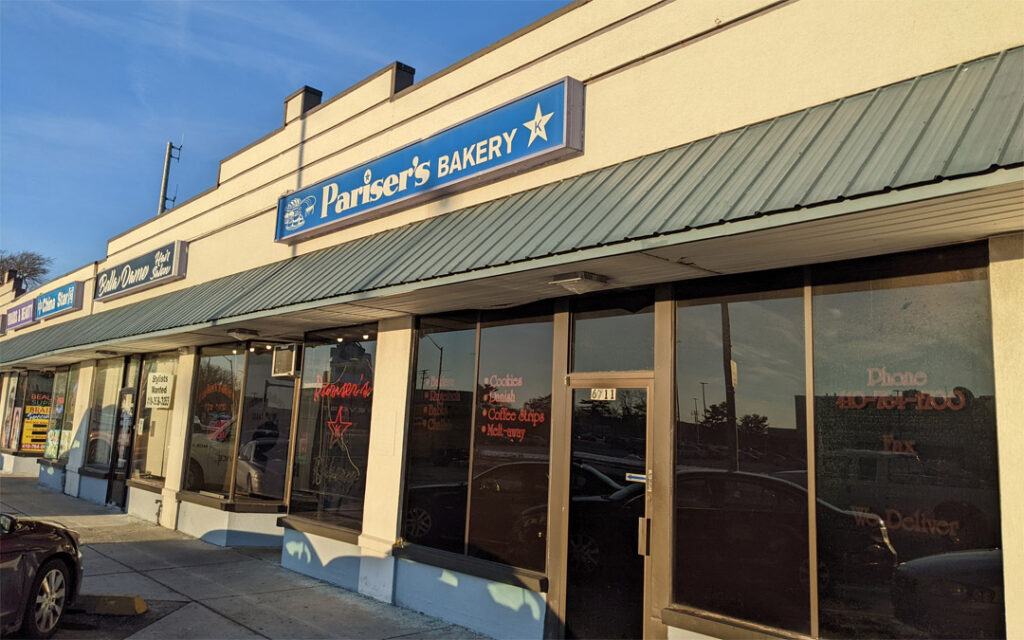
In Jewish Baltimore, the name Pariser’s is synonymous with one of the best and oldest kosher bakery businesses in town. People often wonder who this Pariser guy was, since the bakery has changed hands multiple times in recent decades.
Born in 1870, Adolph Pariser was a Jewish immigrant from Hungary who resettled in Baltimore with his wife, Yetta, and opened a bakery in 1889. He originally peddled bakery goods from a horse and wagon.
His bakery business grew to a storefront on Ann Street and then on Spring Street near Lombard Street, according to a 1989 Baltimore Sun article marking Pariser’s centennial anniversary.
At some point, Adolph Pariser became ill and was unable to work. His son-in-law, Joseph Zerivitz, took over the business, even though he was a grocer and did not have any baking experience.
Joe Zerivitz took Pariser’s wholesale baking business to the next level, according to his grandson (and fourth-generation baker) Marc Zerivitz.
In 1920, Joe moved the business to a large building at 2304 Pennsylvania Ave. The engraved sign at the top of that building still reads “Pariser Bakery.” The bakery had 22 delivery routes in the city, supplying many restaurants, delis and mom-and-pop businesses with fresh rye bread, Kaiser rolls and bagels.
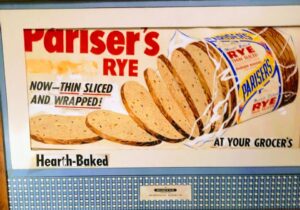
Bread was packed in paper bags in those days. Sliced, wrapped bread was an industry advancement that came along in 1953. Pariser’s began baking sub rolls when they became a supplier for the Harley’s Sub Shop chain.
Business was booming with a fleet of 30 to 40 Pariser’s delivery trucks.
In 1960, Pariser’s purchased the State Baking Co. on York Road. State Baking’s 13 routes were added to Pariser’s business, according to the Sun article. Pariser’s remained a full wholesale operation until 1976.
Rising to the Occasion
Besides his business acumen, Joe Zerivitz was well-known for his civic-mindedness and philanthropic ways. He was a founding member of the Hebrew Free Loan Association.
In addition, he supplied Ner Israel Rabbinical College with loaves of bread and challah at no charge as long as there were students living in the yeshiva dormitory. Every Friday for years, Pariser’s delivered challot for each student.
After Joe’s passing, Marc Zerivitz recalls working at the bakery and going through his grandfather’s old desk. He came across many checks from Ner Israel made out to Pariser’s but never cashed.
After asking his father, Beryl, about the checks, Marc says he was instructed to leave the checks alone because “we don’t cash any checks from Ner Israel.”
Beryl Zerivitz joined the business full-time after returning from military service in August of 1946.
“I was full of energy. I started buying up other bakeries and closed them down. I bought bakeries for their customers,” Beryl said in the Sun article in 1989. “I knew a thousand grocers around town. Pariser’s rye bread and Kaiser rolls were everywhere. We had a tremendous wholesale business. We supplied Hutzler’s, Hochschild’s, Stewart’s, the hotels, the corner groceries. You name it.”
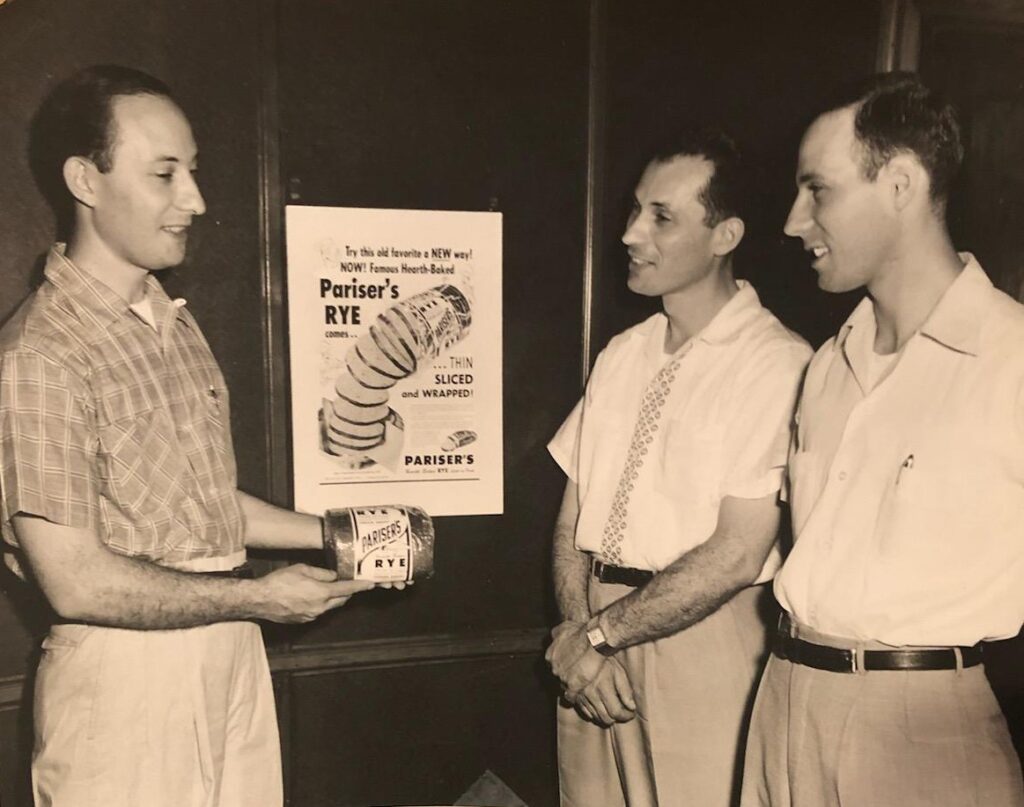
A few years after World War II ended, Joe appointed his three sons as equal partners in the business. Beryl ran the business side, Arnold oversaw bakery operations, and Elliot was in charge of production.
Although Pariser’s used kosher ingredients, Beryl particularly wanted to have the Chof-K certification. To implement this, he sold the business to their non-Jewish attorney every Shabbat.
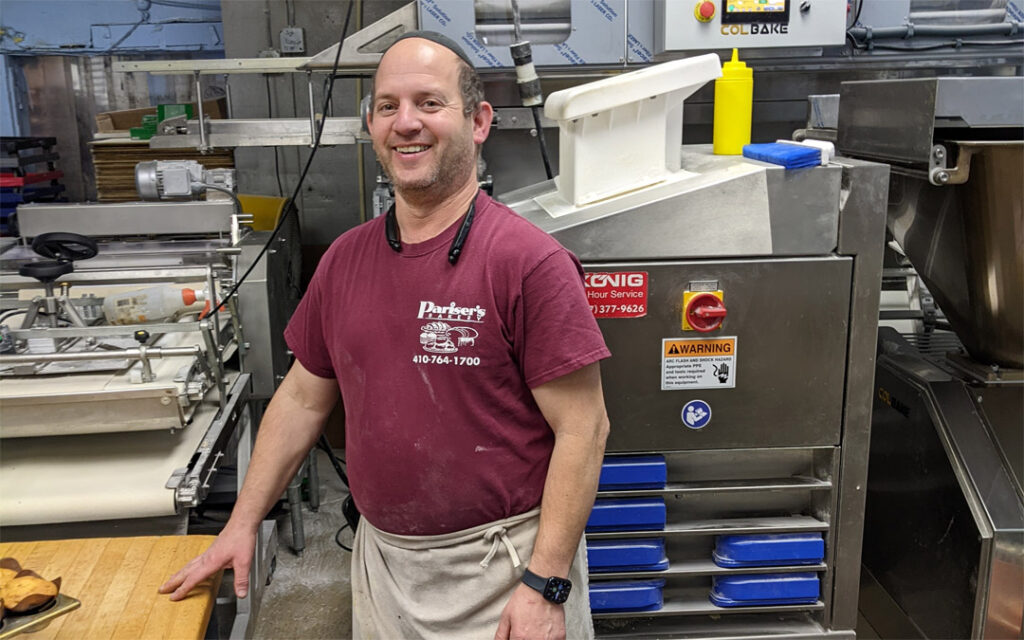
Marc Zerivitz says he began working at the family bakery at the age of eight. His father would wake him up Sundays at 3 a.m., the only day when Beryl personally drove the delivery truck.
“I would sit on a milk crate next to my father in the truck,” Marc recalls with a chuckle. “When I was 10, I would take the bus to the bakery every Saturday morning after shul at Beth Jacob. I would do the same thing after Sunday Hebrew school.”
When he was 17, Marc says he took over delivery routes when a bakery driver was on vacation. With 30-plus delivery drivers, someone seemed to always be on vacation.
“I would miss college at University of Baltimore if I was called in to work,” he says.
On New Year’s Eve of 1970, Beryl called Marc in to work at the bakery. There was a major snowstorm and employees didn’t show up.
“That New Year’s Eve I’ll never forget,” Marc says. “I mixed the dough, ran the machines, shaped the loaves and baked them, packed and delivered bread in the snow. Arrived home at 2 the next morning.”
Moving Uptown
The 1968 riots in Baltimore had a significant impact on Pariser’s business, according to Marc.
“I worked afternoons at the bakery during the time period the riots broke out in Baltimore City,” he recalls. “Pennsylvania Avenue was on fire. When the troops began coming down Pennsylvania Avenue, my father Beryl and uncle Arnold ran outside and confronted the [National Guard] soldiers. They pleaded for protection of the bakery in exchange for baked goods.”
He says 15 armed guards protected the bakery for one week and business continued, with trucks and production moving in and out of the facility. Marc says he once received a military escort from Cold Spring Lane to Pennsylvania Avenue when the troops heard he was going to work at the bakery.
Pariser’s remained on Pennsylvania Avenue until 1976. Between the loss of wholesale customers from the riots and union wages, the business was not sustainable as a wholesale operation.
Beryl heard that Sol Reinberg was retiring and selling his retail kosher bakery in the Brookhill Shopping Center, across from the Reisterstown Road Plaza.
Upon opening the retail side of the business at the new location and changing the name to Pariser’s Inc., the bakery sold cookies, Danish pastries and cakes along with its signature rye bread and kaiser rolls.
In 1977, Marc left Pariser’s to work at his uncle’s wholesale bakery operation in Orlando, Florida. Beryl operated Pariser’s for several more years, retired a few times and finally sold the bakery in the mid-1980s.
Marc eventually moved to Chicago and opened his own wholesale bakery, Z Best Bread, which sold artisanal bread to Whole Foods and other grocery stores.
After passing through a few more ownership hands over the years, Pariser’s today thrives under the stewardship of Israeli-born baker extraordinaire Motti Margalit.
Margalit carries on the torch of this fixture of Jewish Baltimore. Pariser’s has expanded into custom cakes and Israeli-style baked goods, while still retaining the old-world products and charm it was founded on.

Jeremy Diamond is the author of “Tastemakers: The Legacy of Jewish Entrepreneurs in the Mid-Atlantic Grocery Industry,” which is available on Amazon and at The Ivy Bookshop in Mount Washington.
Jacob Applebaum contributed to this article.
Schwab currently serves as president of Cumberland's historic B'er Chayim Congregation.

On this episode of "The Food Enthusiast," Dara Bunjon talks with Lexx Mills, co-creator of Stursi, expertly crafted non-alcoholic cocktails.
A former U. S. Marine, Pat Young has served as a Baltimore County Council member representing District 1 since 2022.
Mansoor Shams is known for carrying around a sign proclaiming, “I’m a Muslim and a U.S. Marine. Ask anything.” Now the Baltimore County Department of Recreation and Parks community engagement and outreach officer is running for Baltimore County Executive.