
By Caleb Guedes-Reed
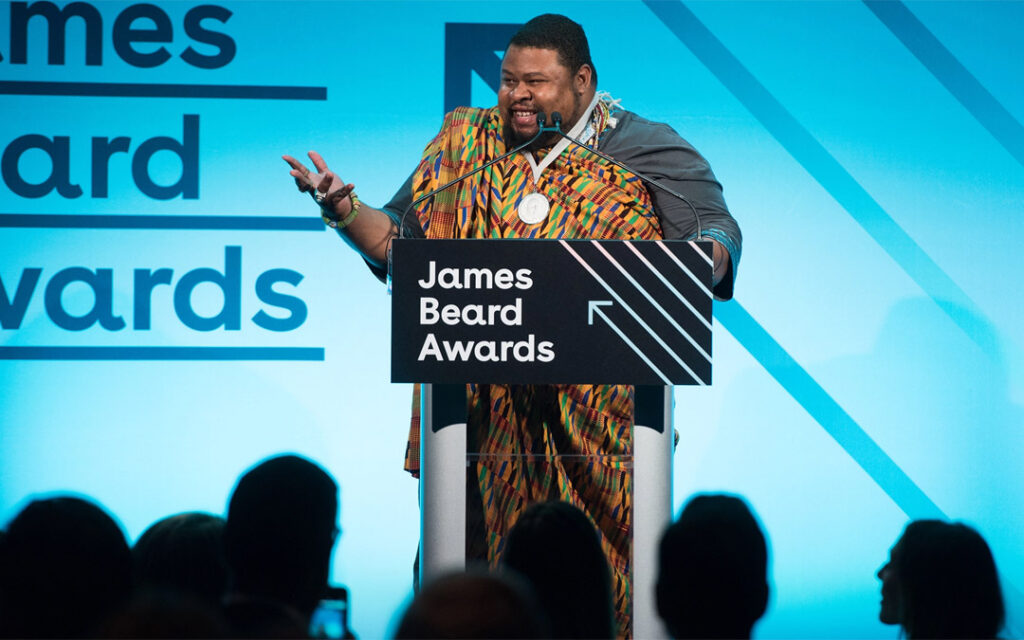
(JTA) — Michael W. Twitty, the noted culinary historian, educator and James Beard Award-winning chef, has released a book of recipes and essays that fuses Jewish and African-American culinary histories.
Twitty, who lives in Silver Spring with his husband Taylor Keith, won widespread praise for his 2018 memoir “The Cooking Gene: A Journey Through African-American Culinary History in the Old South” (Amistad), which also drew parallels between the African-American and Jewish experiences.
On Aug. 11, he spoke about his latest book, “Koshersoul: The Faith and Food Journey of an African American Jew” (Amistad), in Ellicott City at the Miller branch of the Howard County Library System. The talk was presented by the Baltimore Jewish Council and the Jewish Federation of Howard County.
The creator of Afroculinaria, the first blog devoted to African-American historic foodways and their legacies, the 45-year-old Twitty grew up in Washington, D.C., in a nominally Christian household. But he was constantly exposed to Jewish food, with a mother who regularly made challah. He converted to Judaism at age 25 and now keeps kosher.
“[T]here are some things that science cannot explain, it’s a calling, it’s a connection, it’s above us,” Twitty told the Jewish Telegraphic Agency in 2017.
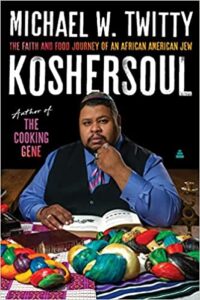
Released Aug. 9, “Koshersoul” is a mashup of the different sides of Twitty’s identity. The book includes 50 recipes with names like koshersoul collards, Louisiana-style latkes and Mrs. Cardozo’s Famous seven-fruit charoset from Suriname. Readers also get essays and insights into both Twitty’s experiences as someone who is both Black and Jewish, as well as histories and stories about how the two cultures intersect.
The book’s cover shows a yarmulke-wearing Twitty in front of various loaves of challah. According to Twitty, each one represents a different part of his identity.
“Challahs are braided, and braiding them together means I’m a whole person,” Twitty said in an interview with ABC News. “The idea that this Jewish bread can also represent all the different parts of me is what I want to convey to the readers before they even open the book at all.”
For more on Twitty’s story — and the culinary reason why he chose to convert in a Sephardic synagogue — read JTA’s full 2017 profile.

Dara Bunjon talks with award-winning author Monica Saigal (Bhide) about her "Modern Spice" cookbook, "Papa's Butter Chicken" children's book, and more.
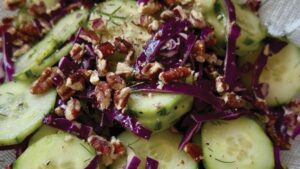
It doesn't get much easier than this cucumber and purple cabbage salad from Elite Jakob, perfect for a warm spring day.

Dara Bunjon talks sustainable farming, chocolate, and more with farmer, chef, educator and chocolatier Mark Mills of Chocolates and Tomatoes Farm in Middletown.

Dara Bunjon talks with cook, writer and television host Monti Carlo about her new cookbook, "Spanglish: Recipes & Stories," and more.