
It’s something you take for granted in Charm City. When you live in a region with the Baltimore area’s caliber of premier health care institutions and resources, you’re no stranger to the many innovative technologies and programs developed year after year. Here is a look at just some of the latest developments at area hospitals.
Every year, approximately 600,000 hysterectomies are performed in the United States for non-cancerous conditions such as uterine fibroids. As any woman who has suffered from fibroids knows, these benign muscle cells — which can grow as large as melons — may cause debilitating pain and excessive bleeding.
But now Mercy Medical Center offers relief through the Acessa ProVu system, a safe, effective and minimally invasive laparoscopic procedure. The system provides an alternative for women with symptomatic fibroids who otherwise would need treatments such as a hysterectomy, laparoscopic myomectomy or uterine fibroid embolization.
The Acessa Laparoscopic Radiofrequency Ablation is the first and only system that uses radiofrequency ablation, laparoscopic ultrasound and guidance mapping to treat women suffering from uterine fibroids. Patients can return home from the hospital on the same day as the procedure.

The procedure’s other benefits include less blood loss — compared to hysterectomies and myomectomies — and a quicker recovery time. Patients typically can return to work within four to five days.
The Acessa procedure’s laparoscopic ultrasound and guidance mapping also allow the surgeon to visualize and treat more fibroids. Clinical studies have reported that the Acessa system’s laparoscopic ultrasound can locate 1.5 to 2 times more fibroids than MRI or transvaginal ultrasounds, which makes it easier for patients to receive treatment for fibroids that may have previously been undetected.
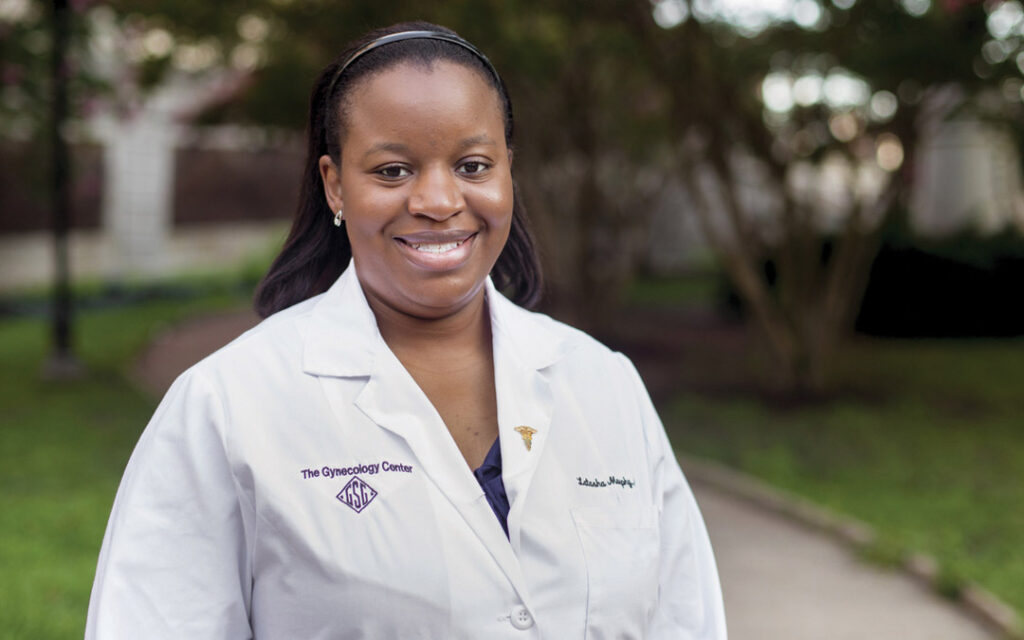
Dr. Latasha N. Murphy, a gynecologist and surgeon in The Gynecology Center at Mercy, says this outpatient treatment involves only small abdominal incisions.
“With this new procedure, we can look at the fibroids and, at the same time, use ultrasound to individually treat the fibroid, while keeping the thermal energy away from the uterine tissue, which means the surrounding uterine tissue is not injured,” she says. “With Acessa, we can provide women suffering from fibroids with more options that fit their needs and lifestyle and can help restore their quality of life. It’s another step in advancing our minimally invasive surgical solutions for the patients we serve.”
A former longtime Baltimore resident, Carol Sorgen is a freelance writer based in Portland, Oregon.

The new plan helps sabbath-observant Jews seeking care in the Emergency Department.

Davy Phrathep, Ph.D., sports and performance psychologist in the Johns Hopkins All Children’s Hospital Center for Behavioral Health offers insights on student athlete mental health and how parents and coaches can support kids’ well-being.

Since the Oct. 7th terrorist attacks, Israel has become a global leader in therapeutic clowning.

The $95 million, 125,000-square-foot outpatient facility will bring together adult and pediatric cancer services under one roof.