
It’s something you take for granted in Charm City. When you live in a region with the Baltimore area’s caliber of premier health care institutions and resources, you’re no stranger to the many innovative technologies and programs developed year after year. Here is a look at just some of the latest developments at area hospitals.
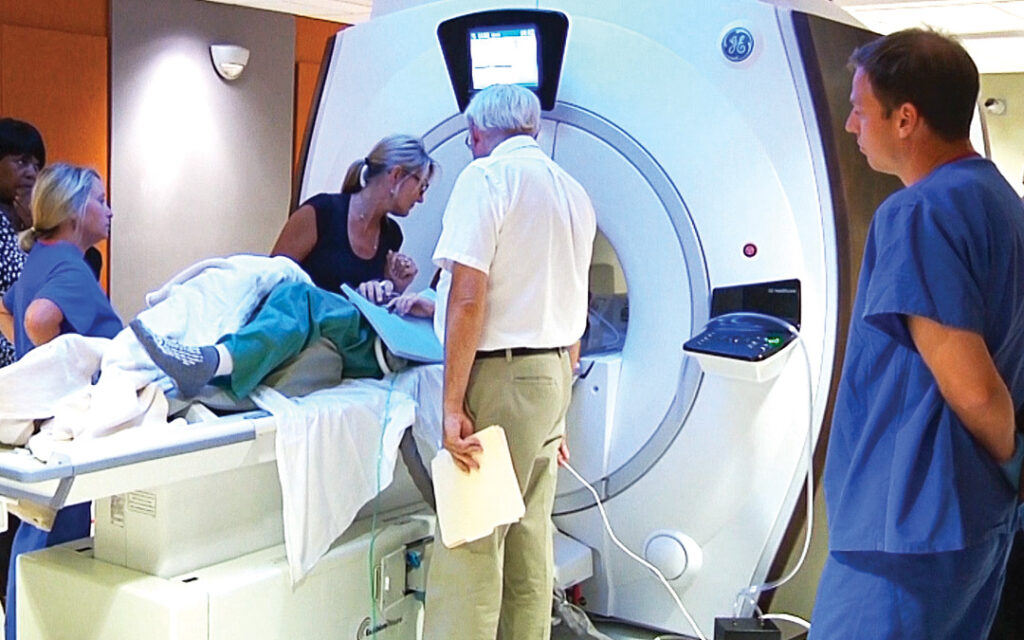
Neurosurgeons at the University of Maryland Medical Center (UMMC) have pioneered a completely incisionless procedure called focused ultrasound that extends the quality and length of life for people with brain tumors, movement disorders, chronic pain and other conditions.
The procedure aims concentrated sound waves at targeted areas in the brain, helping neurosurgeons accomplish what was previously impossible — from penetrating the brain’s blood barrier to administering chemotherapy, to relieving the tremors and involuntary movements associated with Parkinson’s disease.
The procedure is performed without the need for anesthesia or an overnight stay in the hospital. Patients are fully alert while lying in a magnetic resonance imaging (MRI) scanner and wearing an energy-conversion helmet. Then, the attending neurosurgery and neurology teams direct ultrasonic energy through the skull, guided by MRI images that provide a real-time temperature map of the area under treatment.
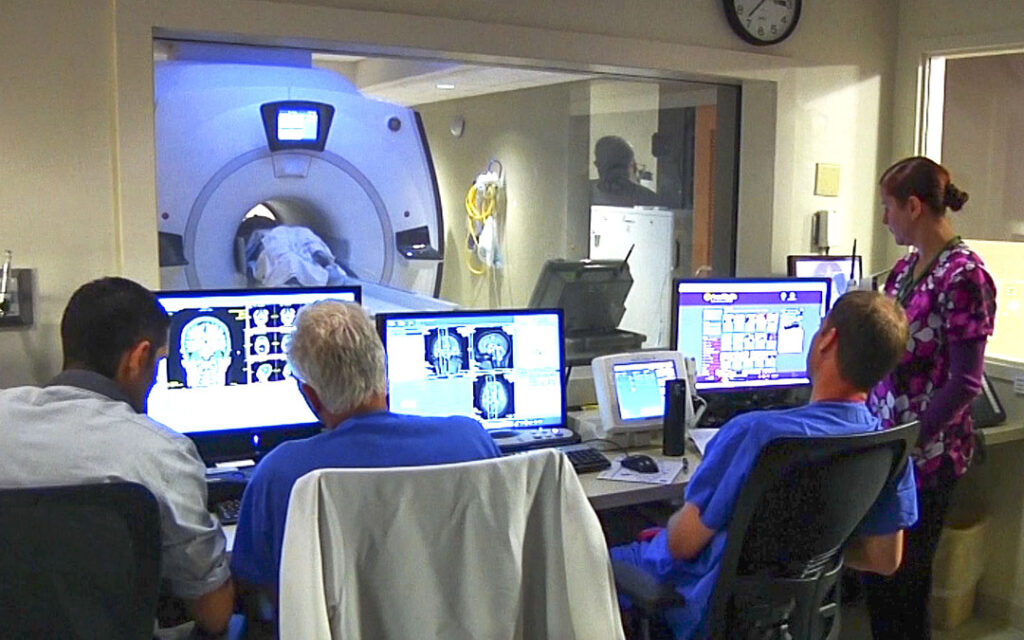
Patients with movement disorders typically experience relief from certain symptoms — such as shaking or rigidity — minutes into the procedure.
Much of the clinical research into focused ultrasound has been led by neurosurgeon Dr. Howard M. Eisenberg, neurologist Dr. Paul S. Fishman and neuroradiologist Dr. Deeraj Gandhi, all with UMMC and professors at the University of Maryland School of Medicine. The three physician-scientists note that one of focused ultrasound’s most important benefits — in addition to alleviating symptoms — is that it eliminates the risk of infection associated with procedures that require incisions.
In additional clinical trials, neurosurgeons have investigated the use of MRI-guided focused ultrasound to open the blood-brain barrier to help speed delivery of chemotherapy to treat deadly brain cancers called glioblastomas. The blood-brain barrier helps safeguard the brain but limits doctors’ ability to deliver effective doses of cancer-fighting drugs to tumors. Dr. Graeme F. Woodworth, chief of neurosurgery at UMMC and chair of the Department of Neurosurgery at the University of Maryland School of Medicine, led the first Food and Drug Administration-approved clinical trial in the U.S. exploring the safety of using this innovative approach, which is showing great promise in extending patients’ lives.
A former longtime Baltimore resident, Carol Sorgen is a freelance writer based in Portland, Oregon.

From AI to weight-loss medications, here are the ways that breast cancer diagnoses and treatments are changing.
John Singer wants to help Marylanders of all economic backgrounds to afford ankle foot orthoses.
Colorectal cancer rates are climbing among young people and Ashkenazi Jews.
The donation will be directed to help foster research conducted by faculty at the University of Maryland School of Medicine and to advance innovative treatments.