
Have you seen the cover story in the newest print edition of Jmore? OK, now take a second look. The cover calls it “Our Future: Saluting 10 leaders under 40.”
But it’s not just the names of our nominees that’s striking.
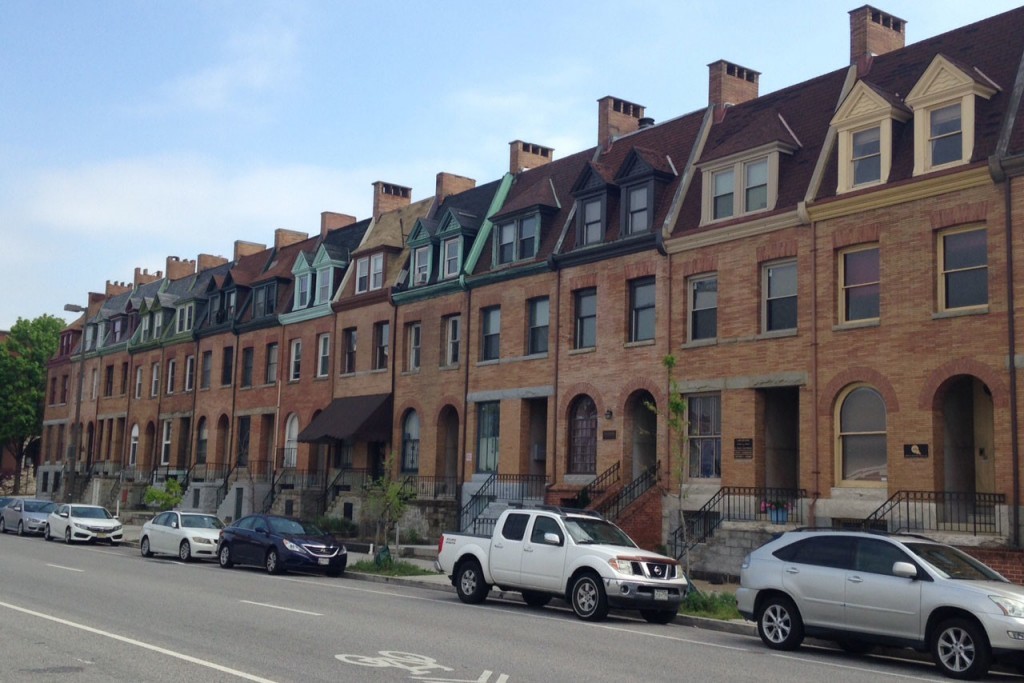
It’s the neighborhoods where they live.
We’re a clannish people, are we not? For much of the 20th century, Baltimore’s Jews huddled around southeast Baltimore’s Lombard Street. We had synagogues galore there, and delicatessens, and public baths and chicken pluckers and bakeries and slicers of corned beef who discussed a little Talmud on the side.
Part of this huddling was the historic notion that “the others” – the gentiles – didn’t want us, that it was best if we all stuck together. Common culture was at work here, but also a sense of self-protection.
In the post-war years, the tribe resettled en masse in Northwest Baltimore, mostly along the broad boulevards above Park Circle. With a twinkle in the eye, we dubbed the Park Heights and Reisterstown Road and Liberty Heights corridors “the Golden Ghetto.”
Then, in the exodus that followed to Baltimore County, we remained tribal. There was Pikesville, there was Randallstown and Owings Mills, there was Reisterstown and beyond.
Not for all of us, but certainly for a lot of us. We may be the wandering Jews, but we’ve tended not to wander too far from each other.
So let’s go back to that list of future Jewish leaders once again – and let’s look at some of the addresses as well as the names.
Molly Amster lives in Ednor Gardens.
Sarah David lives “downtown.”
Jordan Goodman lives in Remington.
Erika Rief lives in Little Italy.
Of the 10, only Rabbi Sarah Marion lists Pikesville as her home, and only Joshua Rosenstein lists Northwest Baltimore. Julia Denick lists Mount Washington – a decidedly mixed city neighborhood – and the other three on the list simply put “Baltimore” as their residence.
So what does this mean? Mathematically, a list of 10 doesn’t mean much. It’s a random snapshot, nothing more.
But when it’s young people on the move, people of ambition, people in leadership positions, maybe it says something.
Maybe it says that while we still feel that ancient pull of the tribe and still want to feel part of a community, that community now extends beyond its traditional borders.
And maybe that’s a reflection of something more – that we’re increasingly comfortable living among “the others,” the gentiles whom we once feared would only shun us if we tried to mix.
And maybe that means while we still have our religious and cultural roots, they’re strong enough that we can branch out in all directions without fear of losing our way home.
 A former Baltimore Sun columnist and WJZ-TV commentator, Michael Olesker is the author of six books, most recently “Front Stoops in the Fifties: Baltimore Legends Come of Age” (Johns Hopkins University Press).
As millions mourn the passing of Stephen Colbert from the airwaves, Michael Olesker looks back on the "institution" of late-night TV.

Michael Olesker pays tribute to WJZ’s retiring Marty Bass, a longtime fixture on local TV screens.
The Orioles' weak defense plays a major role in the nightly carnage, writes Michael Olesker.