
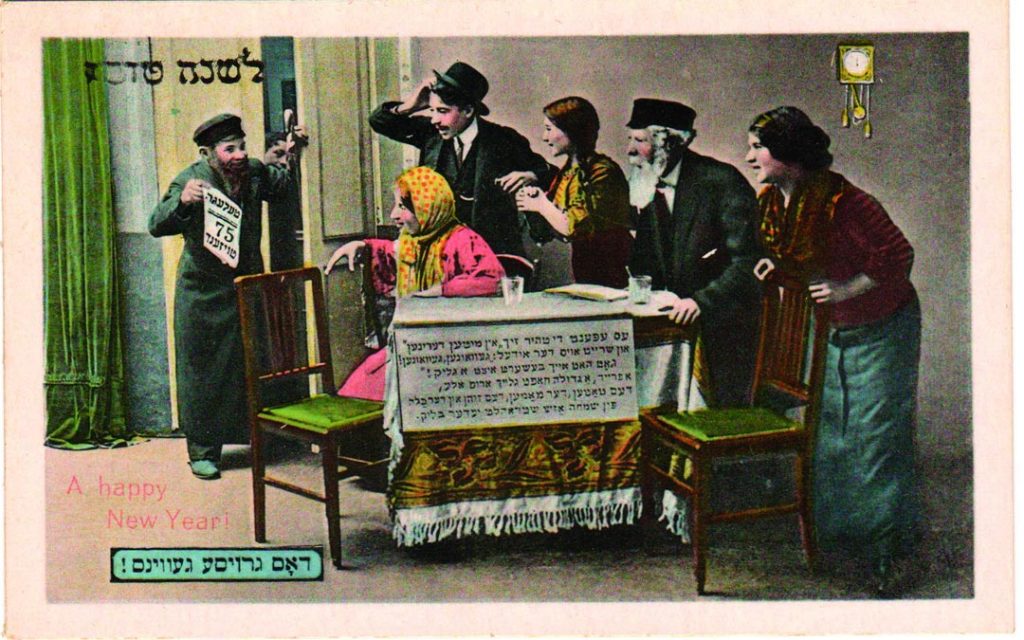
The High Holiday season is upon us!
Rosh Hashanah, the Jewish new year, kicks off the season. It is a time of celebration, gratitude, solemnity and profound introspection, a period in which to observe the completion of another year while also taking stock of one’s life and actions.
The holiday is observed during the first two days of the Hebrew month of Tishrei. (Some Reform congregations only observe the first day of the holiday.)
Rosh Hashanah ushers in the Ten Days of Repentance, also known as the Days of Awe, culminating in the fast day of Yom Kippur, the Day of Atonement. The shofar is traditionally sounded at the conclusion of morning Rosh Hashanah services.
A ram’s horn that makes a trumpet-like sound, the shofar is intended as a wake-up call to prepare for the High Holiday season and commit oneself to teshuva, repentance.
Rosh Hashanah is known as Yom Hadin, the Day of Judgment, on which God opens the Books of Life and Death, which are then sealed on Yom Kippur.
Several blessings are recited before the blowing of the shofar. Approximately 100 blasts are sounded throughout the worship services. The three different sounds are the tekiah (a single, long blast), the shevarim (three shorter blasts that together should be about the same length as one tekiah), and the teruah (nine staccato blasts, also about the same length of time as the tekiah and shevarim).
Besides attending congregational services, Rosh Hashanah traditions include eating a piece of apple dipped in honey to symbolize the desire for a sweet year, and the consumption of other special foods symbolizing the new year’s blessings; offering a blessing to each other with the Hebrew phrase, “L’Shana Tova tikateiv veteichateim,” may you be inscribed and sealed for a good year; and Tashlich, a special prayer to symbolically cast away sins that is recited near a body of flowing water.
At Rosh Hashanah meals, the kiddush prayer and a blessing on the challah (which is round to symbolize the cycle of life) is recited after candlelighting and prayers.
Yom Kippur is the most sacred and solemn day on the Jewish calendar. It is the only fast day mandated in the Torah. During the 25-hour fast, Jews are commanded to refrain from eating and drinking, bathing, having sexual relations and wearing leather. It is traditional to dress in white on Yom Kippur to symbolize personal purity.
From the opening Kol Nidre prayer to the concluding Ne’ila service, Yom Kippur revolves around the theme of repentance to ensure that an individual and community are inscribed in the Book of Life for the coming year. A break-fast is traditionally held at the conclusion of the holiday at which dairy and other light foods are consumed.
Interestingly, the Talmud regards Yom Kippur as a joyous day, writes Rabbi Joseph Telushkin in his best-seller “Jewish Literacy” (William Morrow & Co.), because by the day’s conclusion “people experience a great catharsis. If they have observed the holiday properly, they have made peace with everyone they know, and with God.”
The agriculture-based festival of Sukkot is named after the booths or huts (sukkot in Hebrew) in which Jews are instructed to dwell during this eight-day celebration. The flimsy sukkah — with a roof made of thatch or branches (thus allowing visibility of stars in the nighttime sky) — represents the dwellings of the Israelites during their 40 years of desert wandering after the exodus from Egypt.
Along with Passover and Shavuot, Sukkot is one of the three major pilgrimage festivals on the Jewish calendar.
Jews traditionally decorate and dine in the sukkah during the holiday. To commemorate the bounty of the Holy Land, they also hold and shake four species of plants consisting of palm, myrtle and willow (lulav), together with citron (etrog) while reciting several prayers.
Shemini Atzeret is observed on the eighth day of Sukkot, but is considered a separate holiday of its own and does not require some of the special observances of Sukkot.
Shemini Atzeret features the prayer for rain, officially commemorating the start of the Mediterranean rainy season. The Yizkor prayer remembering the souls of deceased loved ones is recited on Shemini Atzeret (along with Yom Kippur, Passover and Shavuot).
Simchat Torah marks the completion of the annual cycle of weekly Torah readings. The final Torah portion of the year is read in synagogue on Simchat Torah, proceeding immediately to the first chapter of Genesis, serving as a reminder of the Torah’s cyclical and eternal quality.
Simchat Torah is a time of celebration, with processions around the synagogue carrying Torah scrolls and high-spirited singing and dancing. Drinking alcohol is common during this holiday, and children are given candy, Israeli flags and other treats on Simchat Torah. As many people as possible are given the honor of carrying a Torah scroll at services.
L’Shana Tova!
[box]
Dates for this year’s High Holiday season:
- Rosh Hashanah is observed from Sunday night, Oct. 2, to Tuesday evening, Oct. 4
- Yom Kippur begins Tuesday night, Oct. 11, and concludes the following evening, Oct. 12
- Sukkot is observed from Sunday evening, Oct. 16, to Sunday night, Oct. 23
- Shemini Atzeret is observed from Sunday night, Oct. 23, to Monday evening, Oct. 24
- Simchat Torah is observed from Monday night, Oct. 24, to Tuesday evening, Oct. 25
[/box]
Information for this article was culled from several Jewish websites and sources, including myjewishlearning.com and chabad.org.
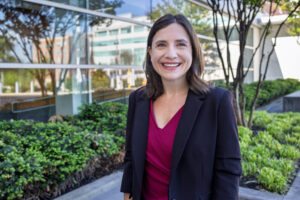
Leslie Simmons, executive vice president and chief operating officer of LifeBridge Health, will serve as interim president of Sinai and Grace Medical while a national search is conducted for Shlossman’s successor.

Schwab currently serves as president of Cumberland's historic B'er Chayim Congregation.
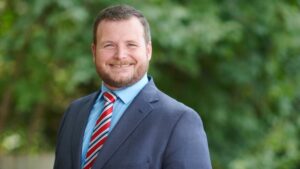
A former U. S. Marine, Pat Young has served as a Baltimore County Council member representing District 1 since 2022.
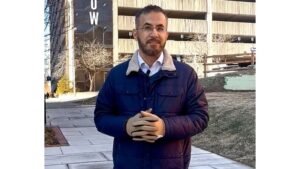
Mansoor Shams is known for carrying around a sign proclaiming, “I’m a Muslim and a U.S. Marine. Ask anything.” Now the Baltimore County Department of Recreation and Parks community engagement and outreach officer is running for Baltimore County Executive.