
Tel Aviv
It’s not every day you see a dog getting a massage. But in this Israeli city, somehow it seems expected.
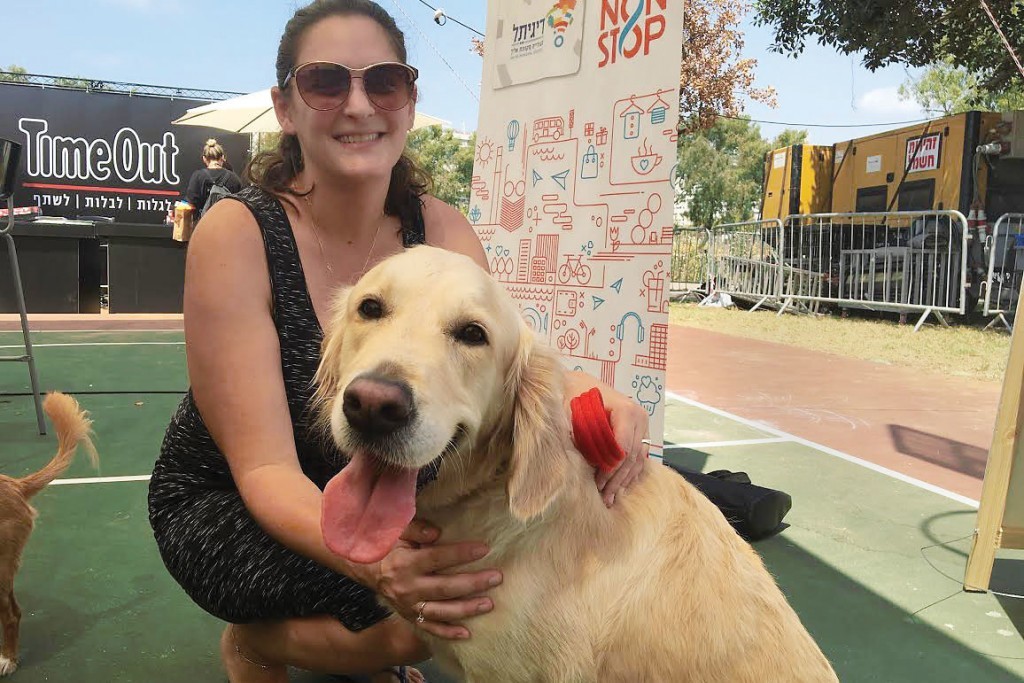
At Tel Aviv’s recent first official dog festival, hundreds of canines took over Yehoshua Park and its dog park. As canine customers wandered among vendors selling dog-related products and services, a DJ kept tails wagging with pop hits.
One of the longest massages of the day went to a luxuriating yellow Labrador mix. Nearby, a pair of well-kept poodles snacked on maki tuna rolls and posed for professional photos. Leashed shoppers sampled organic gluten-free kibble, tried on boutique collars and leashes and eyed bespoke dog tags and local dog-themed art.
Orange Tel Aviv-branded dog bowls were regularly refilled with bottled water.
Meanwhile, the dogs’ owners mingled and forked over the necessary shekels, seemingly unfazed by their reduced role in the whole affair.
Tel Aviv is a dog city. The city estimates it is home to 30,000 dogs, along with 413,000 people. Ahead of its dog festival,
called “Kelaviv” (a portmanteau of kelev Hebrew for dog, and Tel Aviv), Tel Aviv declared itself the friendliest world city for dogs, with the most dogs per capita.
Dogs crowd the streets of Tel Aviv, encouraged by its year-round sunshine and walkability. They’re allowed in most cafes, stores and even high-end restaurants, as well as on city buses and trains and in taxi vans.
Tel Aviv boasts 70 dog parks and four dog beaches. The regular parks and legally dog-free beaches have their fair share of dogs, too, many of them off-leash regardless of regulations.
Florencia Aventuriny, a 27-year-old media manager, and Hod Kashtan, a 31-year old software engineer, each had a dog in tow at Kelaviv. In the month the two Tel Avivians have been dating, their dogs, Sandy and Chuni, have been part of the relationship.
“I grew up with a dog outside Tel Aviv, and it was nice, but not the same,” Aventuriny said. “In Tel Aviv you take your dog everywhere, and he’s part of your community.”
Perhaps more than other urbanites, Tel Avivians demand that their dogs be accommodated. Businesses know that barring dogs means losing business and that they would likely hear about it on Facebook. It helps that Tel Aviv is an informal city, in an informal country, where T-shirts and sandals are appropriate attire at most restaurants, not to mention weddings. Even Hotel Montefiore, a premier local restaurant and hotel, welcomes dogs.
More and more Tel Aviv-based businesses exist specifically to serve dogs. You can’t walk more than a few blocks in the city without coming across a pet store. Many such businesses were at Kelaviv, including high-tech startups like DogMen, a fast-growing dog walking service that sends owners photographs of their dogs on Whatsapp, and Dogiz, an app that helps owners find dog services in their neighborhood and lets them track walks in real time.
Faith In Dogs
Kelaviv was the brainchild of Tal Hollander, a Tel Aviv resident who was in Yehoshua Park with his dog when he was struck with inspiration. He contacted the city, which helped him plan the event over several months.
“Many people had doubts about this,” Hollander said. “How will the dogs behave? That was the biggest question. But I had faith in the dogs, and I was lucky to find a nice girl at the city who wanted to help.”
In 2017, the city plans to launch a service called DigiDog to give pet owners in Tel Aviv personalized updates on pet-friendly events and services, as well as deals from local pet companies. The service will be based on the city’s award-winning Digitel service for human residents.
Dogs also have cultural cache in Tel Aviv. Rescuing them from shelters is a full-blown trend. Several shelters were represented at Kelaviv. And at least two set up shop on the streets of the city every weekend, lining up dogs to be adopted or fostered, or to recruit donations and volunteers. In the Florentine neighborhood in south Tel Aviv, which many call the city’s hippest enclave, the city estimated every third person has a dog.
The rescue dog craze can be seen as part of the larger animal rights movement centered in Tel Aviv. Vegan activism, which in Israel tends to highlight cruelty to animals, is common on the streets of the city and on social media. Activists estimate 4 percent of Israelis are vegans, a higher ratio than in any other country, and new vegan and vegan-friendly restaurants pop up in Tel Aviv all the time.
By flaunting their dog friendliness, secular Tel Avivians also distinguish themselves from Israel’s poorest communities, Arabs and Haredi Orthodox Jews, for whom dog ownership is rare. That’s partly because there are traditional taboos about dogs in both Judaism and Islam, according to Shir-Vertesh.
But don’t tell that to Agriculture Minister Uri Ariel, a member of the religious Zionist Jewish Home political party’s more religious faction, Tkuma. Along a doggy red carpet at Kelaviv where mutts and purebreds could strut their stuff, he was among the politicians who appeared on a series of posters promoting animal adoption.
Andrew Tobin writes for the JTA international news agency and wire service.

The BCO, founded in 1984, will perform the works of Frank Zappa, Beethoven, Mason Bates and Karena Ingram.

For more than 130 years, Sol Levinson & Bros. has been woven into the fabric of Baltimore’s Jewish community.


A former college campus activist, Veksler will speak at Chizuk Amuno on June 8 at the Ruth and Jay Lenrow Visiting Scholar-in-Residence for Combating Antisemitism.