

By Avi Melamed
Donald Trump inherits a Middle East deeply embroiled in violence and instability, a region enveloped by an escalating Iranian-Arab power struggle. The 45th president’s primary goal must be to stabilize the situation in the Middle East.
At the core of that policy must be an unequivocal and uncompromising commitment to restrain the Iranian mullah regime in its aggressive regional policy, and to prevent Iran from further creating instability, which the mullah regime takes advantage of to achieve its goal of hegemony.
Achieving stability and restraining Iran can be achieved through creating and implementing a policy in which the region’s major players — Egypt, Iran, Israel, Saudi Arabia, Syria, Turkey and Russia — operate according to the guidelines “You Win Some – You Lose Some” in the most crucial arenas:
Syria
President Trump should partner with Russia and Turkey to bring about an end to the war in Syria. The arrangement must force Bashar al-Assad to step down and establish a political system that reflects the fact that the majority of Syrians are Sunnis. It also should secure the vital interests of the Alawite minority that has ruled Syria for nearly half a century.
In return for Russia’s help, the U.S. must accept the presence of Russian military bases in Syria. In return for Turkey’s support, the U.S. must help Turkey achieve its goal of preventing a Kurdish autonomy in northern Syria. The agreement to end the war in Syria also must recognize Israel’s need to keep the Golan Heights calm.
If Russia and Turkey — led by the U.S. — strengthen the Sunnis in Syria, this will force Iran to retreat from Syria and hamper Iran’s goal to be the regional superpower.
Iraq
To stabilize and prevent the destruction of Iraq, a U.S.-Iraqi/Shi’ite-Iraqi/Sunni-Iranian-Turkish-Kurdish understanding can be achieved. In central Iraq, the Sunnis are frustrated they are discriminated against by the predominantly Shi’ite government and deprived of political power. U.S. policy should encourage the incorporation of Sunnis into the Iraqi political system that also will reflect Iraqi-Sunni interests. This also will curtail Iraqi Sunnis’ desire to join ISIS.
The U.S. should help preserve Iran’s interests in southern Iraq, an area overwhelmingly Shi’ite where the sacred Shi’ite sites in the cities of Najef and Karbala are located, and where Iran has significant economic interests. In northern Iraq, the U.S. should work to ensure the independent autonomy of the Iraqi Kurds, who are also Sunnis but not Arabs, in exchange for a Kurdish commitment to refrain from supporting independent Kurdish aspirations in Turkey and Iran. Such a commitment will be reciprocated by both Turkey and Iran, who will commit to avoiding hostile activity toward that Kurdish autonomy.
Lebanon
If the U.S. succeeds in stabilizing the situation in Syria, Hezbollah’s ability to dictate and impose Iran’s agenda on Lebanon will be weakened. Lebanese Christians, Sunnis and Druze, and those Shi’ites who do not align with Hezbollah, will be able to shape Lebanon’s identity and future in a way that reflects more accurately the interests of the different ethnic groups and preserves Lebanon’s identity as an Arab state.
Yemen
In Yemen, the U.S. should proactively encourage a political compromise and put an end to the war there through working with the Sunnis, who are the majority, and the Iranian-backed Houthis. The U.S. goal should be decisively supporting Saudi Arabia’s interest to prevent Iran from having a stronghold in Yemen, as well as securing the political interests of Houthi tribes.
Egypt
The U.S. must restore good relations with Egypt that were badly damaged during President Obama’s tenure. Egypt is struggling with major challenges — economic, housing, medical, social, etc. It is in the strategic interest of the U.S. to help strengthen Egypt’s stability.
Militant Islam
Defeating Islamic militant groups requires addressing the roots of that challenge. It will be a long, long battle. The U.S. must develop a comprehensive, multi-pronged policy of cultural, economic, military and political cooperation with the Sunni world.
To successfully address that challenge, the U.S. must ensure that Iran is not a part of this arrangement.
The Arab-Israeli Conflict
The turmoil in the Middle East offers an unprecedented opportunity for progress in the Israeli-Palestinian arena. The most promising path toward a significant and lasting breakthrough is within a framework comprised of regional powers including Egypt, Jordan, Saudi Arabia, the Arab Gulf States and Turkey.
Arrangements and agreements secured and guaranteed by such a constellation of powers and backed by the U.S., Russia and the European Union would have strong odds to endure and could pave the path toward lasting, solid arrangements.
There are signs President Trump and his advisers seem to adopt these recommendations. It is the right direction on the long and winding path toward stability.
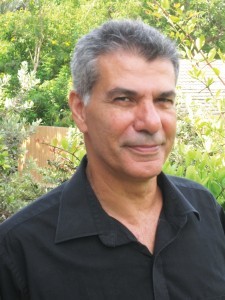 Avi Melamed serves as the Salisbury Fellow of Intelligence and Middle East Affairs for the Eisenhower Institute at Gettysburg College. His website is avimelamed.com and he can be reached at avi@avimelamed.com.

Jewish community activist Jay Bernstein calls on the governor to reprimand Carter, a Maryland State Board of Contract Appeals judge, for sharing age-old tropes against the Jewish community.
Jmore is giving away two pairs of tickets to the Orioles' Jewish Heritage Night on May 26. Enter now for your chance to win.

An appeal to New York's Jewish Museum for help cites President Trump’s record of demolition as a real estate developer and history of preservation failures.

Dara Bunjon talks with Joe Lertch and Mark Robinson, co-founders of The Wine Matrix and co-authors of "The Art of Spice & Wine Pairing."