
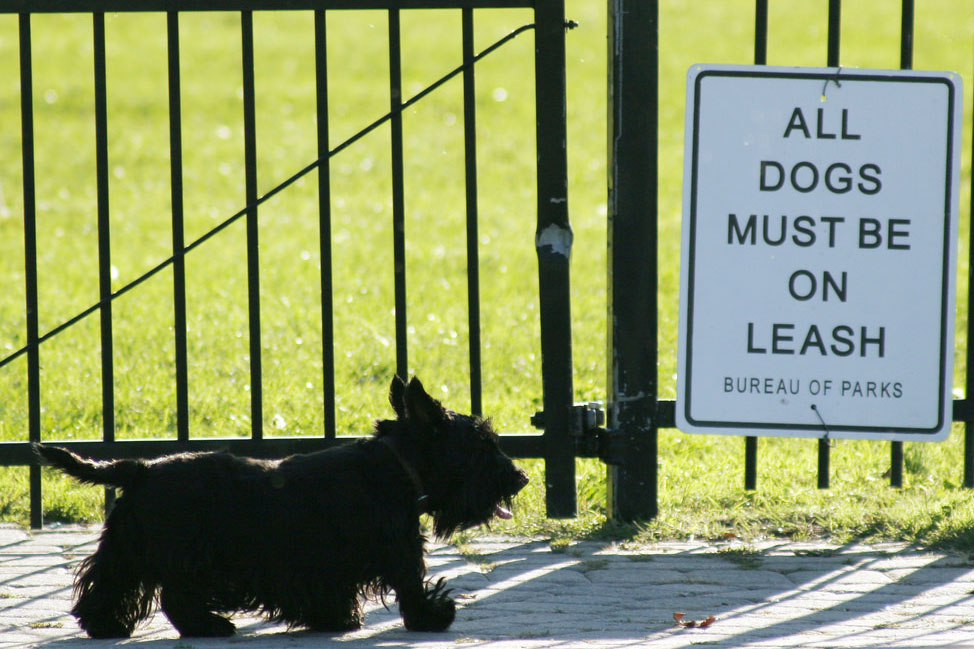
How to navigate your canine’s successful walk in the park.
Spring is the unofficial start of “Dog Park Season.” Many dog parents brave the weather and go all year long. The dog park diehards tend to be more dog savvy and recognize the benefits of regular canine socialization and the “dog rules” of the park.
Here are some tips to ensure that you and your dog have a safe and fun dog park experience:
- Always make sure your dog is spayed/neutered. An unaltered dog should never be in an off-leash social situation.
- They should be over four months of age and up to date on all of their vaccines. Older dogs should have a recent vet visit to make sure they are fit enough for play and socialization.
- Older dogs can be more prone to arthritis and hip issues, etc., and could risk further injury when playing. Bring your own water dish, since dog park water bowls can be a breeding ground for communicable diseases.
- Leave the toys at home. Dogs can become possessive over toys. Everything at the park is fair game, and toys are a potential trigger for dominant behavior.
- Do not introduce an on-leash dog to a pack of off-leash park-goers. This creates a guarding or a trapped response. Make sure you take off-the-leash dogs into a secure area, usually a double-door entrance, before heading into the park.
- Know your dog’s personality. If your dog is shy or fearful, ignore those who tell you to just let him work it out with the pack. These dogs tend not to read canine social cues very well and need limited and guided exposure to acclimate. They tend to do better in small groups and with leash-to-leash introductions. If you are even a bit unsure, don’t risk it. Enlist the help of a friend or dog trainer who has a dog that is stable and can match the energy level of your pup.
- Finally, know how to speak a little bit of Dog. Dogs communicate via body language. It is good to understand that a wagging tail doesn’t always mean they are happy. Every part of the dog’s body tells another dog — and us — what they are seeing and feeling. By understanding these movements, it will be easy to see if your dog is uncomfortable, or if another dog may have had enough. The website BarkPost has excellent and descriptive charts that will help you “speak your dog’s language.”
Joy Freedman is a dog behaviorist and obedience instructor. She can be reached at joyofdogs@aol.com or joyfreedman.com.

Jmore Editor-in-Chief Alan Feiler remembers Temple Emanuel's longtime spiritual leader, who passed away earlier this week at age 91.

Camp and youth group experiences have the ingredients for true, deep, lifelong transformation, writes Rabbi Jessy Dressin.

Proposed legislation in Israel would transfer authority of the entire Kotel to the Chief Rabbinate, writes Rabbi Robyn Fryer Bodzin.

In Italy, the Jewish Brigade's flag has unfairly become a flashpoint in today’s battles over Zionism and anti-fascism, writes Dr. Ginaluca Fantoni.