
During High Holiday services years ago, I encountered a young child flipping quietly through a “Where’s Waldo” book. The object of these popular books is to locate the character Waldo in a busily illustrated scene.
It immediately struck me as a perfect metaphor for the High Holiday season. We come to the synagogue, as we do each year, searching for something. Maybe we’re looking for community. Maybe we’re looking for forgiveness. Maybe we’re seeking out God. Whatever our motives, we’re asked to find what we’re looking for in the sanctuary over those holy days.
After the holidays passed that year, the image of “Where’s Waldo” stuck with me. I began to see it not as a metaphor for the season of repentance but rather a metaphor for Cheshvan, the month that follows our fall holidays, and this year corresponds with October.
It is the emptiest month on our calendar, thus earning the nickname “Marcheshvan,” the bitter month of Cheshvan. Indeed, we will need to wait well into the following month, Kislev, to arrive at our next holiday, Chanukah. During our fall holidays — Rosh Hashanah, Yom Kippur, Sukkot –it may be relatively easier to find what we are looking for, as our weeks are peppered with special occasions that invite us to pause and find guidance in tradition.
Yet, when they are over, we are at a loss. There is no designated time in Cheshvan for pausing, reflection or communal celebration. We must locate it ourselves from among the rush of our regular busy days. Cheshvan is like a “Waldo” illustration. It is filled with details, diversions and distractions, making it difficult to find that which we seek.
But there is opportunity provided in the absence of special occasions on this month’s calendar. After a rich season of holidays, the quiet of Cheshvan allows us space for reflection. The work of the High Holiday season does not end with the long blast of the shofar at the end of Yom Kippur. It is meant to stay with us throughout the year.
We are always struggling and striving with the issues of repentance, forgiveness and atonement. But what is more, the absence of holidays in Cheshvan helps us to recognize the awesomeness of Tishrei, the month which holds Rosh Hashanah, Yom Kippur and Sukkot. There are so many holy days in Tishrei, we might even come to a point of finding them burdensome. As we return to our normal patterns, our appreciation for our Tishrei experiences grows. The absence of prescribed holy days brings with it the potential to actualize the intentions of our prayers. The ever-present reality of the mundane helps us to identify and cherish the sacred.
The reality of Cheshvan comes with a certain sense of sadness. Knowing that our next festival holiday, Passover, is months away, was particularly daunting for our ancient ancestors who saw this time as the prelude to the long winter.
The minor holiday of Chanukah, accompanied by its festive lights, will not arrive for many weeks. But Cheshvan is not completely depleted of opportunity. If we seek designated time for pausing, we need look no further than the end of each week to find Shabbat, designed for this express purpose.
Our Shabbat observance may give us a glimpse of the experience provided by holidays — dedicated time and space for reflection, family and celebration. Just as the High Holidays remind us to incorporate themes of prayer, repentance and righteousness into our daily lives, Shabbat reminds us to cherish our sacred time with community. Beyond Shabbat, throughout this month of Cheshvan, and indeed, throughout the entire year, we can seek out moments to emulate the high points that our fall holidays provided. We can embrace community. We can find space for recognizing God in our lives.
We just might need to look a little harder.
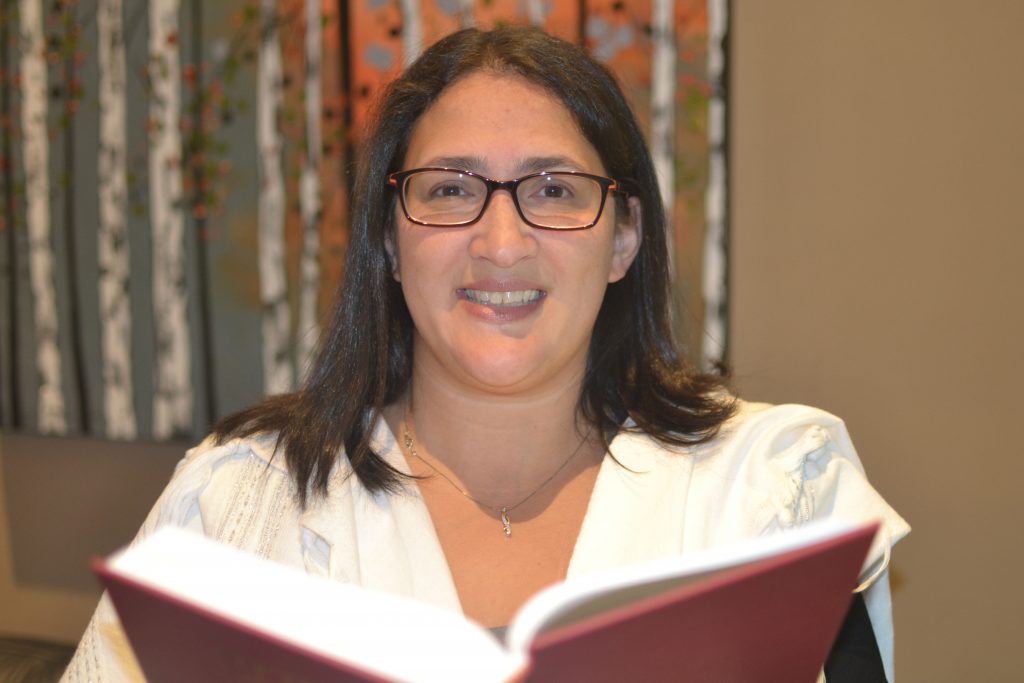
Rabbi Kim Blumenthal is the spiritual leader of Bet Chaverim Congregation in Columbia.
A former resident of Baltimore and central Florida, Ritt was active in the Soviet Jewry movement of the 1970s and 1980s.
For more than four decades, Goldman played a vital role in the supervision of elections in the city.
The 16-year-old sophomore succumbed to injuries sustained in a car crash last week in Cockeysville.
Schools in Montgomery County have recently experienced a wave of antisemitic incidents.