
This article was sponsored by and produced by the New Israel Fund, an organization that promotes democracy and equality in Israel. This article was provided by JTA.
By Libby Lenkinski
Standing in a sweaty South Tel Aviv bar a dozen years ago, I wanted to be anywhere else.
I was living in Israel at the time, and despite being a generally optimistic person, I had taken a real detour into despair. Israel was at war in Gaza, too many innocent people were dying and it didn’t seem like folks cared much, if at all.
That night, I hadn’t felt like going out but I let my friends drag me to a benefit concert. As I stood on the crowded dance floor, a dozen musicians took the stage. A redheaded accordionist started to play, and his bandmates jumped in with strings, drums and rap vocals in Russian, Arabic, Amharic and Hebrew.
I was mesmerized.
For a few brief moments, I could feel belonging and togetherness rather than division and fear. It was that band, System Ali, and their music that pulled me out of my despair and back into hope and action.
Fast-forward more than a decade. I now work at the New Israel Fund, and the redheaded accordionist is one of my closest friends. I actually call him my rabbi. On Zoom, we were talking recently about essential workers during the pandemic when he leaned in and said, “Who are they to tell me I’m not essential? How dare they decide that arts don’t count.”
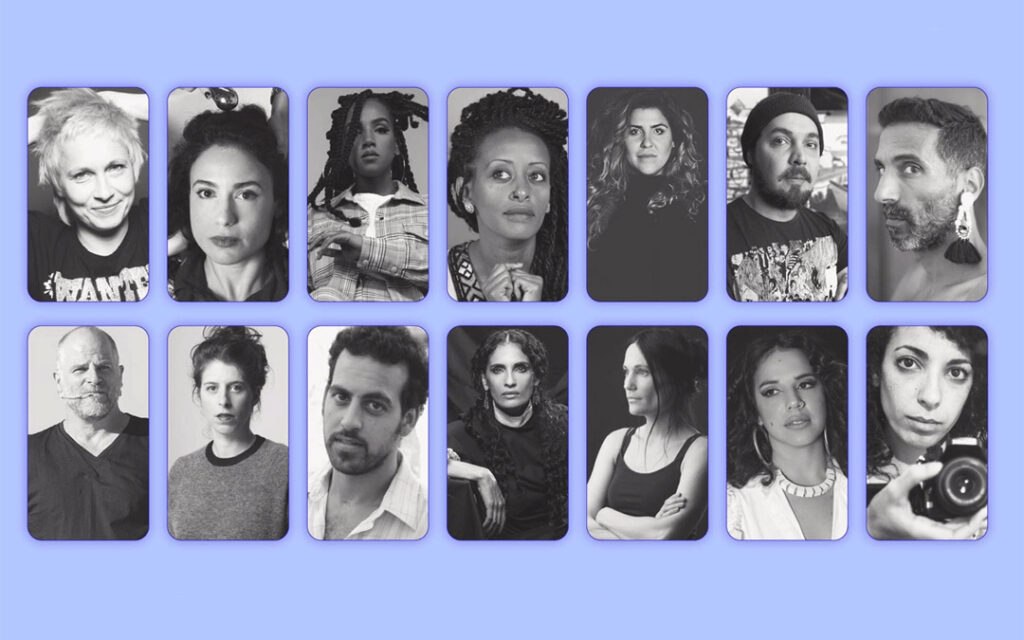
In that vein, here are 14 Israeli artists you should know who are essential and matter:
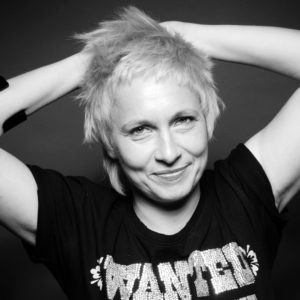
Musician, DJ, singer, composer broadcaster Ellyot Ben Ezer — As the soloist in the funk rock band Pollyana Frank, Ellyot began her career as a critic on issues of sex, gender, chauvinism and feminism in 1989. In June, Ellyot was listed as one the top 40 most influential people in the LGBT community.
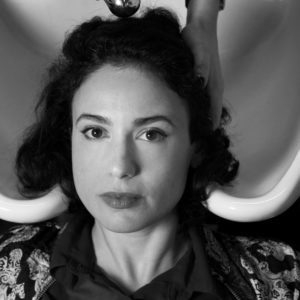
Director and filmmaker Iris Zaki — Iris makes films that question how communities are represented. Her creations bridge cultures, struggles, identities and communities.
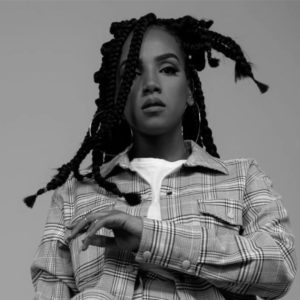
Rapper and singer Orit Tashoma — An artist of Ethiopian decent, Orit manages to find optimism in the deepest depths, speaking, rapping and singing about the challenges that face her community, from immigration to systematic racism.
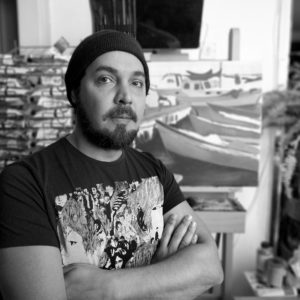
Painter Durar Bacri — A realist painter, Darur’s work juxtaposes the old and the new in South Tel Aviv, where he feels the most at home. In South Tel Aviv with its cultural mishmash, he feels he is an “other amongst others,” a feeling that comes across in his work.
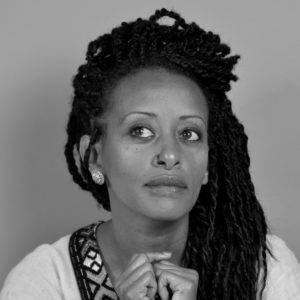
Choreographer Dege Feder — Dege founded the modern dance company Beta Dance, where she combines traditional Ethiopian dance with all kinds of contemporary styles. The result is innovative and unorthodox.
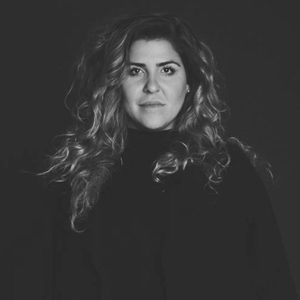
Writer, director and actress Bat-El Moseri — Bat-El, who grew up in a religious, underprivileged home in Bat Yam, is a Mizrahi LGBTQ artist whose creations express the variety of identities that she embodies. Last year, she won Israel’s Ophir Prize for Best Short Film for her film, “Ordinary Day.”
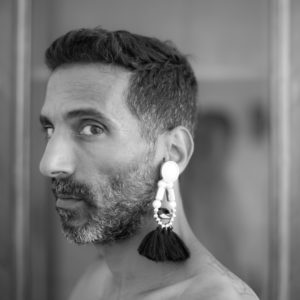
Spoken word artist and performer Yossi Zabari — Yossi’s videos are catchier than the Black Plague. A poet who has conquered the internet, he is also a theater actor, stand-up comic and proud gay father.
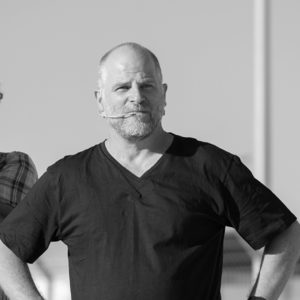
Holot Theater Director Chen Alon — The Holot Theater was created as an activist response to the prison-like Holot Detention Center, where refugees and asylum seekers in Israel were kept beginning in 2013. Based on the Theater of the Oppressed, theater and performance became a place to process personal and social issues connected to the lives of refugees in Israel.
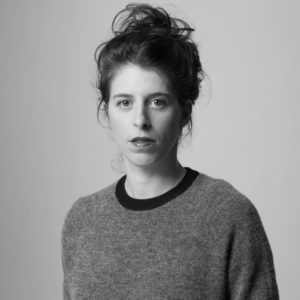
Choreographer and social activists Dana Yahalomi — Dana founded the ensemble Public Movement emsemble to create a “choreography of opposition.” The ensemble walks the fine line — or blurred boundary — between theater, street performance, interactive protest and much more.
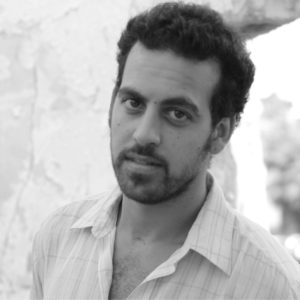
DJ and cultural entrepreneur Ram Mizrahi Spinoza — “Ramzi” is Ram Mizrahi’s Arab alter ego. He is a Jerusalem-based DJ, artistic director, writer and actor who founded his own record label dedicated to an Eastern Mediterranean identity that takes language as its unifier, rather than not religion or nationality. The artistic director of various Jerusalem-based festivals and happenings, Ramzi is also a theater actor for the Incubator Theater.
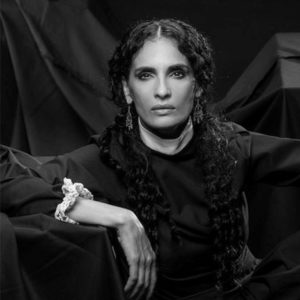
Artist and actress Raida Adon — Raida’s most recent performance, featuring video art and dance, was a solo show at the Israel Museum titled, “Me and My Soul.” A television and film actress, as well as a performer, she works out of a deeply held belief that art acts as a bridge.
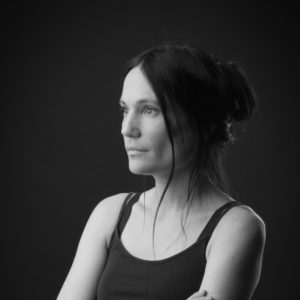
Director, writer and actress Einat Weizman — Einat’s last play, “Prisoners of the Occupation,” was written in collaboration with political prisoners and Palestinians. She is a groundbreaking artist, offering glimpses into the lives of Palestinians and the banality and drama of the impact Israel’s occupation has on their lives.
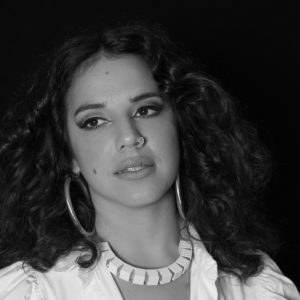
Singer Lala Tamar — Lala Tamar’s debut album is sung by Moroccan Jewish women entirely in Ladino. She collaborates with Arabic speakers of all kinds to revive, reinvigorate and create entirely new cultures.
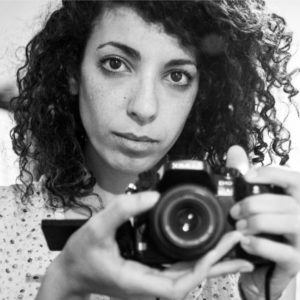
Documentary filmmaker Rana Abu-Fraiha — Half-Bedouin, half-Palestinian, Rana spent the last three years exploring through film her family’s life in the Jewish community of Omer near Beersheva. In 2019, was listed by Forbes as among the 30 most promising young men and women under 30.
Well before the pandemic began, we had been researching the connections between culture, narrative and social change in Israel. But the coronavirus crisis hit the arts and culture community particularly hard.
Israel’s government began bailing out large cultural institutions but offered no relief to the painter who relied on galleries being open, the DJ who depended on people coming out to dance or the choreographer who needed packed, in-person theaters. In fact, individual artists, like my redheaded rabbi, could do nothing but watch as Israel’s gig economy simply evaporated.
To help artists weather this storm, the New Israel Fund (nif.org) alongside the Nathan Cummings Foundation, set aside $25,000 for “essential artists relief.” We did this to help support a select group of artists, each of whom was struggling. These are artists who either tell untold stories and elevate underrepresented communities, build bridges across difference like language and identity, or are directly involved in activist movements working towards social justice, an end to Israel’s occupation, equality, democracy or other social and political issues.
More than 700 artists applied for just five grants. We upped the total grant to $42,000 and increased the number of artists to 14.
We know that the arts are essential and that artists are essential workers, nowhere more so than in Israel. It’s a country stuck in political and societal deadlock. Fissures and divides are deep and getting deeper.
The arts are one of the only places Israelis are forced to imagine a different world, to envision a different future. It is that spark of imagination — the spark that shakes, moves and challenges — that makes the arts an essential element for our movements, for society, for democracy and for all of our souls.
Libby Lenkinski is the vice president for public engagement at the New Israel Fund, an organization that promotes democracy and equality in Israel.
Pikesville residents David and Wendy Hefter recently joined Jewish motorcyclists from around the world to raise money for victims of the Oct. 7th terrorist attacks in Israel.
Enjoy some live music this fall, with a range of performances from The Ultimate Prince Tribute to Journey, classical and more.
For Aja Cohen, founder and chief creative officer of Transcendent Active, a modest activewear brand, the company is a reflection of her entire journey -- fashion, faith, movement, motherhood and identity.
Emma Snyder, owner of The Ivy Bookshop, offers recommendations for must-read titles for adults and children.