
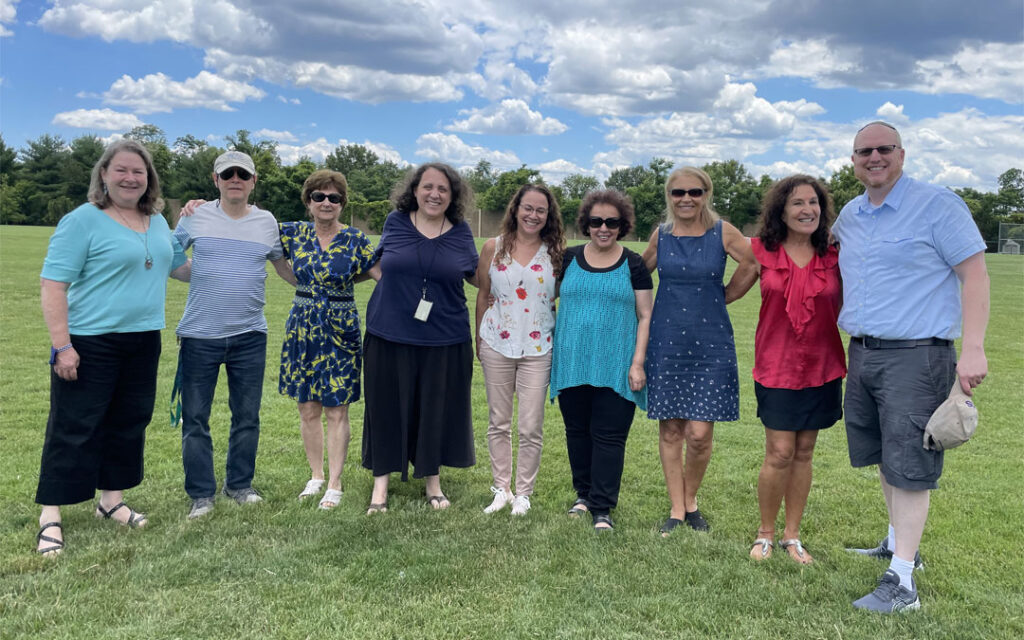
This article was provided by Krieger Schechter Day School.
By Rabbi Moshe Schwartz and Dr. Robyn Blum
How should a K-8 Jewish day school open in the fall of 2020? At Krieger Schechter Day School (KSDS) in Pikesville, MD, we knew that stakeholders would answer this question in diverse ways, and we would soon be faced with the enormous challenge of creating community buy-in for a high-stakes, emotionally-charged, even life-altering set of nuanced and textured decisions — in the context of fundamental, core disagreements about both values and practical considerations. From the beginning of the COVID-19 pandemic, as a matter of both philosophy and practicality, KSDS leadership was committed to hearing multiple perspectives and voices at every stage, and to actively making room for diversity of opinion and dissenting voices.
Research on decision-making over-whelmingly finds that disagreement can facilitate successful outcomes, and we believed that machloket l’shem shamayim — constructive disagreement for a higher purpose — would be essential to both our short-term success and our long-term health as a community. Ultimately, our collaborative and open decision-making process, actively welcoming a diversity of viewpoints, was complex, fraught, challenging — and successful.
So many questions were part of the larger decision of how to open. Could we fulfill our mission in a solely virtual manner? Was it ethical to gather students and teachers indoors, and risk direct and indirect exposure to others? When do students’ mental health and social wellbeing outweigh the potential risk of contracting the virus? How can schools respond equitably to students on campus and those attending school virtually? Could we regulate students’ and families’ outside-of-school behaviors?
In February 2020, we had already established a Health and Safety Committee, comprised of individuals with both medical and public health expertise and personal investment in the school’s success. Based on their early recommendations, we moved the entire school to virtual learning on March 12. Parents and teachers initially lauded our early intervention, but frustration immediately arose with the unrelenting synchronous online schedule. Both parents and faculty wanted us to address the emotional, physical, social, technological, and academic toll of this “new normal.” We quickly revised the schedule for Week Two that incorporated less screen time, consistent scheduling from day to day, and reduced work volume. By taking decisive action in response to feedback, the school set the expectation that the professional staff would respond nimbly both to changing public health information and to the needs of its stakeholders.
The academic year ended with huge questions about what would be necessary to open in fall 2020. In July, the administration presented three possible scenarios: fully at home (virtual), on-campus with appropriate restrictions, and a hybrid model. A group of teachers sent emails to the administration indicating that in order for them to support any reopening on campus, the school would have to address their list of questions and concerns. Opposition to re-opening in person also emerged among parents, reflecting specific concerns as well as their general anxiety and frustration. Through multiple town hall meetings with both faculty and parents, the school addressed questions and concerns with empathy and transparency. School mental health professionals were included in the meetings and in additional parent programs at which experts specifically addressed child and family mental health challenges.
On August 11, the KSDS board met to vote on whether to reopen for on-campus learning. Three teachers from the Faculty Steering Committee were invited to present and express their (unvetted) views. One veteran teacher included this in her remarks opposing opening in-person: “Rabbi Schwartz is allowing me to play Shammai to his Hillel tonight and present a dissenting point of view with thanks to the school for an incredibly transparent and inclusive process. [KSDS’] reopening plan is as detailed, comprehensive, and low-risk as it could possibly be and does everything in [its] power to mitigate risk…[but there are] metrics from the WHO and CDC that we fail to meet…I’m scared that if we return to the building this year, I’ll be contributing to the long-term illness of both strangers and loved ones.” While this and other dissent were given full airing, the board ultimately voted 14-2 to approve a reopening plan. Throughout the summer, we continued to refine our reopening plan, listening to and incorporating faculty and parent input via calls, letters, petitions, and additional town halls; we ultimately approved a hybrid, phased-in model, with a fully virtual option available for the entire school year.
A key factor in faculty willingness to teach in-person was the school’s commitment that families would be required to adhere to COVID-safety protocols outside of school hours. A draft ethical covenant proposed expectations for students and their families. We wrestled with how to make the document realistic yet strong enough to cultivate a sense of trust and safety in returning to campus. After listening to various perspectives, the KSDS professional leadership penned a final draft that, while enforceable, was less restrictive than the initial version, and focused on balancing the academic and socioemotional needs of the community with the goal of zero in-school transmission of COVID-19.
Conversations continued about next steps, such as adding more on-campus days and easing some restrictions (e.g. allowing mixing pods, singing, eating indoors). Stakeholders continued to disagree about how to maximize safety, learning, socioemotional well-being, and trust in the school and its policies. To a large extent, the opposing push and pull of disagreement around the restrictions helped frame the middle ground, a “safe zone,” and decisions were made accordingly. KSDS leadership, advised by the Health and Safety Committee, shared responsibility for these decisions, at each step acknowledging community members’ varied perspectives and communicating a thoughtful, deliberative, and collaborative approach. When we eventually returned all grade-levels to full-time, in-person learning in April 2021, the move was warmly received by teachers, students, and parents.
Throughout the KSDS COVID-19 story, in addition to the values of machloket (sacred disagreement) and pikuach nefesh (saving life), the following Jewish values shaped our approach as a community.
Kavod (respect, honor)
No approach to hearing and validating a multiplicity of voices can succeed — or, indeed, can occur — without an underlying sense of kavod for the opinions and feelings involved, and for the people who have them. Throughout our process, we acknowledged divergent individual and family priorities regarding physical and mental health, and provided flexibility and multiple options for teaching and learning — letting individuals retain autonomy over personal health-related decisions (and feel respected in making them) while prioritizing collective well-being and safety. Teachers were given the option to teach entirely virtually — even to students who were present on campus. Each trimester, students had the option to attend classes virtually on any day, or to become a “permanent” Zoomer for any reason. Choices across the spectrum, from fully virtual to an eventual full return to campus, were met with empathy, support, and understanding. Most importantly, perhaps, we not only tolerated but explicitly valued diversity of opinion and dissent as expressions of a multi-faceted community.
Dan l’kaf zechut (giving everyone the benefit of the doubt) and al tadeen et chaverkha ad she’tagiya lim’komo (do not judge another until you are in their place)
In a time of heightened crisis, with high stakes and strong opinions on matters of life and death, these two values were at times challenging to prioritize, yet were essential to keeping our community working together. Each person had a different assessment of and threshold for risk, and given that individual choices affected others’ safety, personal choices sometimes increased conflict and fear. We developed the ethical covenant to address these very concerns and allay fears about others’ lax adherence to safety protocols. Our overall goal was to build a shared sense of good intentions and a commitment to shared practices, to bind the community together and generate a growing sense of trust over time.
Understandably, even with the ethical covenant in place, many families still felt uneasy, citing the loss of total control over their own exposure risk as the primary factor in their continued unwillingness to come to campus, or being generally skeptical about whether all school families would act within the ethical covenant with the same level of caution that their family would. When we investigated specific accounts of possible ethical covenant violations, the behaviors in question were often in line with our policy but had been taken out of context and were ultimately clarified by a benign and acceptable explanation. This process both reflected and fostered the importance of being mindful before jumping to conclusions and assuming good intentions, even while asking necessary questions.
A spirit of dan l’khaf zechut also had to be purposefully cultivated regarding communication about possible exposures. Parents and staff clamored for full transparency, wanting to be informed about anyone with a possible COVID exposure or COVID-positive case who may have had contact with anyone in the building. But we were mindful of protecting privacy, because of both our legal obligations and our Jewish and ethical obligations. How much to share, with whom, and in what ways became a balancing act. When dissenting voices asked for greater transparency (e.g., “I cannot allow someone else to make assumptions about what I will feel is safe for me”), the school had to acknowledge the fear and loss of control that was underlying the request. At the same time, we also had to make our own strong request for trust in the school, the Health and Safety Committee, and the developed protocols for communication, and explain that some information would simply not be shared. In essence, the administration asked parents and staff to give the school the benefit of the doubt, to trust that we were balancing many important considerations and that we would not hide anything that would put anyone in danger.
Anavah (humility)
The swiftness and severity of the spread of COVID-19 awakened us to our powerlessness relative to a viral force of nature. We watched as our fellow citizens, including our own community members and family members, suffered disease, pain, grief, and loss. As we came to terms with living with the pandemic, anavah guided all that we did at KSDS.
Friendly critics have reminded us to be realistic and humble in our expectations of ourselves and others. When we heard that the first class schedule for virtual learning was completely overwhelming, we had to reassess our expectations. We would make mistakes throughout the entire process; we would need to do our best to make constant mid-course corrections. By being transparent about our misjudgments, those who expressed dissent were reminded of the human limitations and, hopefully, aware of the humility of the KSDS leadership.
A major component of anavah was the recognition that no one person can respond to a crisis alone. The emphasis that KSDS has placed on collaborative leadership since the beginning of COVID — reflected in our administrative teams, Board committees, teacher teams, and even the involvement of retired faculty with expertise in planning virtual experiences — has privileged a multiplicity of voices over any one individual’s. Humility, including the sense that there can be no egos at stake during this crisis, has enabled us to welcome the contribution of many possible voices and actors. Constant consultation among professionals and lay people who care deeply about KSDS has been key to our successful response to the pandemic crisis.
Collaborative leadership and building a culture of responsiveness to all stakeholders proved instrumental in fostering the trust and cooperation necessary for the success of the 2020-2021 academic year. This process has had the added benefit of reinforcing for all of us at KSDS why we are so devoted to our school. Ultimately, providing space for disagreement and diverse voices not only ensured the safe operation necessary for us to fulfill our educational mission, but enhanced the value of this precious institution for all of its stakeholders. While our next crisis will hopefully not be as monumental as a pandemic, our response will still benefit from and demand from us highly collaborative leadership, active openness to a diversity of opinions and needs, and willingness to pivot and adapt. These stances are both expressions of core Jewish values and keys to our organization’s ongoing health and success.
Rabbi Moshe Schwartz is Head of School and Dr. Robyn Blum is Principal of Krieger Schechter Day School in Pikesville, Maryland.
Students from Krieger Schechter Day School and the Cardinal Shehan School pay tribute to teachers with a video performance of "Lean On Me."
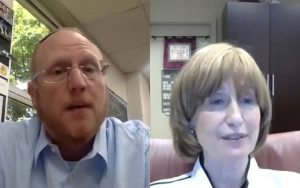
Rabbi Moshe Schwartz, Head of School at Krieger Schechter Day School, and Dr. Zipora Schorr, Director of Education at Beth Tfiloh Dahan Community School, joined "The Upside" to discuss their reopening plans amid the COVID-19 pandemic.