
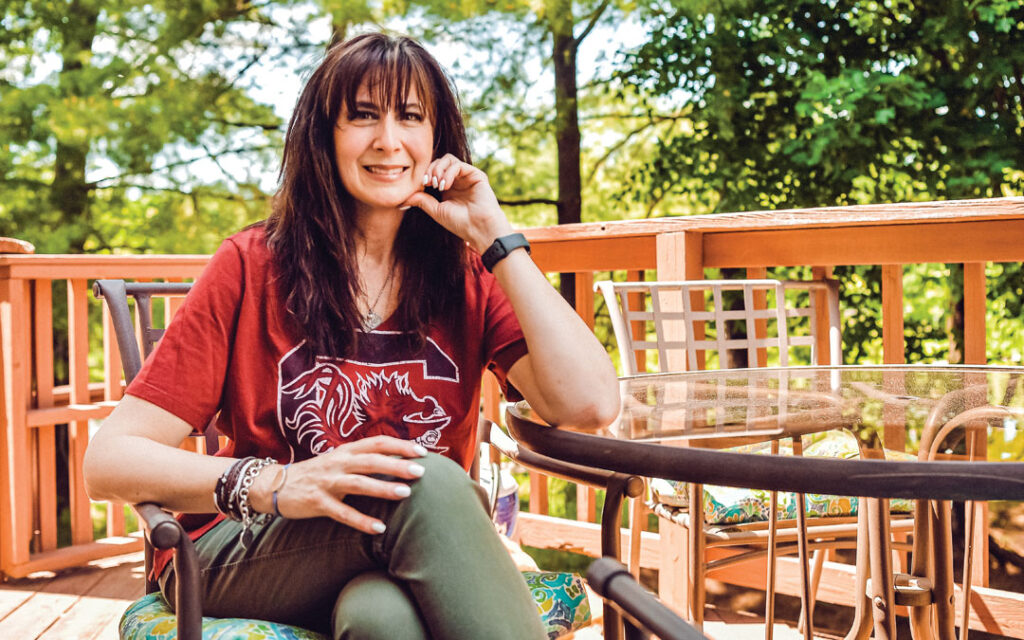
Educator Jill Caplan-Silverman learned how to up her game during the pandemic.
“Technology is just a tool,” Bill Gates once said. “In terms of getting the kids working together and motivating them, the teacher is the most important.”
During an academic year in which technology was imperative, teachers made all of the difference. Educators like Jill Caplan-Silverman have done everything in their power during the pandemic to ensure students’ success.
“This year, learning came full circle,” says Caplan-Silverman, a speech pathologist for Baltimore County Public Schools. “And not just with the kids and the curriculum, but with the teachers. We have all learned a lot and continue to learn a lot from this traumatizing year. Through all the really difficult times, I feel like my students and I have had a really great year. I’m proud of myself.”
When schools went virtual in March 2020, Caplan-Silverman, a Pikesville resident, didn’t know what to expect. What she did know was she needed to learn a new method of teaching.
“I took all my therapy supplies home with me,” she says. “However, we had never been digital, so last March was tough and I cried more tears than an ocean. Students didn’t know what to do, teachers didn’t know what to do, administrators didn’t know what to do and the government didn’t know what to do.
“But the digital and social media community of therapists was such a blessing and offered free resources that turned out to be more exciting than the tangible toys I was previously using.”
Caplan-Silverman took 80 hours of continuing education to step up her game and become the best possible virtual teacher.
“Some say virtual learning is unsuccessful, but I’ve found the complete opposite,” says Caplan-Silverman, who serves on the Maryland Board of Audiologists, Hearing Aid Dispensers and Speech-Language Pathologists. “Out of my caseload of 40, everyone made progress and most of my students are thriving. The kids love the virtual elements I’ve introduced, so much that they show up on Google Meet on days that aren’t their therapy days and ask to stay.”
Some virtual therapies Caplan-Silverman is now utilizing help children with articulation, lisps and social language.
“It’s been a beautiful thing to see the progress. Some of the kids have made dramatic progress,” she says.
Although Caplan-Silverman loves watching her students succeed, it’s the relationships that have come out of this period she says she will cherish most.
During a normal school year, Caplan-Silverman speaks to students’ parents twice a year. But while everyone was virtual, she texted with parents multiple times a week and really got to know students’ families.
And her students got to know her three children and her parents.
“My father would come over on Wednesdays to have lunch with the kids,” Caplan- Silverman says. “And my children were home during this time so the students would see my sons and daughter walk in and out. Ordinarily, my students wouldn’t know my children, my parents or my dog other than through seeing photographs. But the dog has sat next to me through all of this. We’ve built strong relationships and dependability on each other.”
As schools resume in-person education, Caplan-Silverman says she is excited to return to the classroom but will continue to incorporate virtual tools into her therapy sessions.
“There is definitely a time and place for virtual instruction to be part of the dynamic of teaching,” she says. “I’m not going back to only using tangible toys when there are new, innovative therapy tools the kids have grown to love.”
And the families Caplan-Silverman works with are grateful for all the success they are seeing.
“Everyone is so gracious and appreciative,” she says. “It’s been a beautiful thing to see how everyone cares. You used to feel like no one cared, and now it’s very clear people have a great appreciation for what you do and what you have taught their children under the circumstances.”
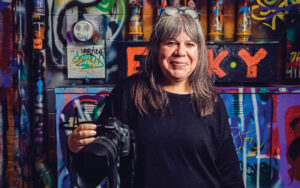
Robyn Stevens Brody employed her skills as a photographer to persevere during the pandemic.