
By Greg King
Not long ago, we here at Sol Levinson & Bros. funeral home helped a father whose young son passed away suddenly and tragically in an accident. The man’s wife was also severely injured, and her prospects for survival did not look promising, leaving him to raise their children by himself and to pick up the broken pieces of his family’s life.
As we helped the family navigate the unfamiliar family room setting where they greet friends and family offering condolences, we witnessed, in this very personal and singular moment of their lives, something universal to all families: the multi-faceted grief that a family goes through.
We saw a father standing silent, his two older children sobbing and barely able to stand, a 13-year-old boy sitting on a sofa, desperately trying to hide his tears and refusing to recognize the people trying to comfort him, and a 4-year-old girl, seemingly more concerned with the candy in the small dish next to her.
A tragedy like this is all-consuming for a family. As funeral directors, we witness an abundance of grief. However, we are all too aware that a family’s grief is not universal. Each member of this family will grieve differently based on their age, life circumstances and other factors.
A child’s grief does not have to come from a profound loss like that of a young sibling or parent. The natural and inevitable loss of a grandparent or beloved pet can trigger significant grief that, when left unnoticed or unaddressed, can lead to negative behaviors affecting their emotional, physical and mental well-being, with relationships with their family and friends, as well as their educational progress.
Donna Kane, grief specialist for Jewish Community Services, asserts that “grief endures and changes over time, but never disappears. … There will be many points in a child’s life that they may need support to work through their sadness and grief, well into adulthood.”
According to Judi’s House, a nationwide childhood grief resource center, an estimated 1 in 14 children experience the loss of a parent prior to their 18th birthday. This statistic alone is alarming, but does not speak to the myriad other sources of grief and mourning a child could potentially experience. What is made clear by this statistic is that a significant number of children will experience the loss of a loved one at some point prior to adulthood.
As parents, educators and counselors, our duty is to identify our children’s suffering, provide them with the tools to cope with loss, and guide them through the process of grief and the growth and strength built upon healthy healing.
Every day, while working with bereaved families, we see the different facets of grief in action. The family described above captures the uniqueness of our grief at different stages of life. A young child, often without the ability to grasp the true nature of their loss and its impact on their life beyond the day-to-day, may not demonstrate any of what we determine as “typical” grief reaction. Their grief may be displayed in how and what they do while at play.
Also, they may display regression of behaviors, such as bed-wetting or loss of language. As children get older, grief manifests itself differently. Much like the 13-year-old boy whose brother tragically passed away, an adolescent may become insular, unwilling to allow their true feelings to betray them. However, that young man may display many tell-tale signs of unresolved grief as time moves on, such as failing to turn in school assignments or suddenly losing interest in activities that previously engaged him. These red flags can be easily missed if we are not paying attention, but it is our responsibility to look for these signs and provide the necessary support they need.
Grief is never simple and never the same from one child to the next, but as a Jewish community we are extremely lucky to have a strong network of support to help guide children through the mourning process in a healthy and productive way. Support begins in the home, but thankfully parents can readily reach out to the various resources we have right here within our community.
To bring this difficult but necessary topic to the forefront, JCS, Krieger Schechter Day School and Sol Levinson will host a virtual program on the evening of Oct. 14, “Children and Grief: Building a Toolbox for Resilience and Understanding”, featuring Donna Kane, Rabbi Moshe Schwartz, head of school Krieger Schechter Day School, Dr. Sarah Spinner Block, and Matthew Levinson, president of Sol Levinson & Bros., to help parents arm themselves with the proper tools to reach their children during exceedingly difficult times. We hope you can join us for this invaluable program so we, as parents and educators, can be prepared with the necessary tools to help our kids when they need us most.
For information, visit jcsbalt.org/grief-toolbox/.
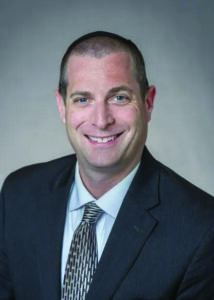
Greg King is a funeral director at Sol Levinson & Bros.
A former resident of Baltimore and central Florida, Ritt was active in the Soviet Jewry movement of the 1970s and 1980s.
For more than four decades, Goldman played a vital role in the supervision of elections in the city.

The 16-year-old sophomore succumbed to injuries sustained in a car crash last week in Cockeysville.
Schools in Montgomery County have recently experienced a wave of antisemitic incidents.