
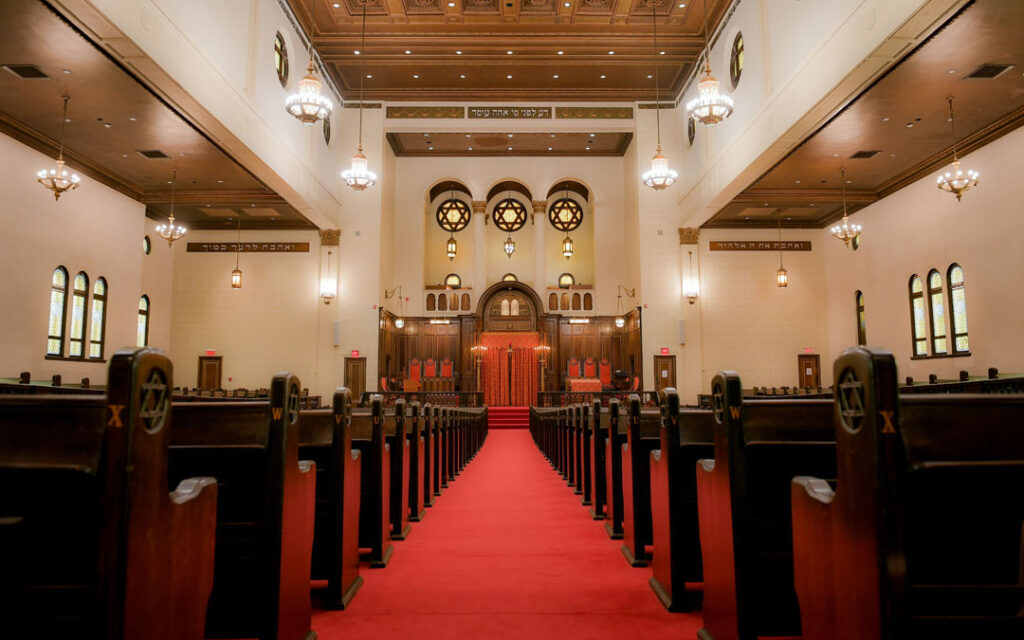
The prayer Hineh Ma Tov is a fan favorite at many synagogues. There are dozens of different musical arrangements of these words, including the “traditional” which many people love singing at the beginning of a service.
This song is viewed as words of welcome as we begin our prayers. “Hineh ma yov u’mah na-im shevet achim gam yachad” — How good and how pleasant it is that brothers dwell together.
A few weeks ago, a congregant at Bolton Street Synagogue reached out to discuss a specific word in this prayer. The word that we sat down and addressed was achim, which is often translated as “brothers.” Now as you might know, Hebrew is gendered and that means there is no specific word for “siblings.” Achim can also be translated as siblings.
However, some liberal congregations in recent decades added the word achayot, which means sisters. This was the first step to becoming a more inclusive and welcoming community.
As I sat down with my congregant, we thought about the changing landscape in the world and Jewish community. As we reflect upon gender diversity and non- binary individuals in our community, do these words create a place of belonging for the entirety of our Jewish community?
Many synagogues, including Congregation Sha’ar Zahav in San Francisco, also add kulano (all of us) to share the breadth of our community. This is a way to make sure everyone belongs and feels they are seen and heard.
But the question I had went back to the origins of this prayer. Hineh Ma Tov isn’t a prayer written by the rabbis. It’s found in our Tanakh, the Jewish Bible; Psalm 133:1, to be exact.
Are we modern Jews allowed to change the words of the Bible? What can be our role in modernizing and updating our liturgy?
I would answer emphatically, “Yes, of course!” Our rabbis, from the very beginning, played with biblical verses. In prayerbooks of old, the rabbis only included verses of the Bible that were meaningful and left off troubling sections. As we moved into the 20th century, the Reform movement also changed or adapted words of specific prayers to make these prayers theologically relevant to those praying today. We even change translations at times to make the words more palatable.
That doesn’t make this easy. Many in our Jewish community know the words of Hineh Ma Tov like the back of their hands. They are like a familiar blanket that is warm and comforting.
How do we make those who love these traditional words feel that their prayerbook hasn’t changed, while making sure that all feel that they belong?
Hineh Ma Tov is a prayer about brotherhood or sisterhood. It’s a prayer that speaks about siblings joining together and creating a community. Does adding kulano change the original intent of the prayer? Perhaps using a word like mishpacha (family) might be a better fit!
A few weeks ago, as we began our Kabbalat Shabbat service on a Friday evening at Bolton Street Synagogue, we started with the singing of Hineh Ma Tov. We began with the original, achim, but quickly moved to verses that included achayot and kulanu. As we move forward, we’d like to reflect upon the use of mishpacha and chaverim (friends), and perhaps even yeladim (children) during religious school services.
It’s important to build upon the traditional liturgy, but also reflect upon all those that make up our broader community. The words that we use in our services matter. We want to make sure our tradition stays vibrant, meaningful and welcoming. We should find new approaches to make sure all of our voices are heard and everyone feels they are seen.
How good and how pleasant it is when we all join together in prayer and community!

Rabbi Andy Gordon is spiritual leader of Bolton Street Synagogue in Roland Park.

Bolton Street Synagogue's Rabbi Andy Gordon writes about how his congregation will shift gears this year to observe the High Holiday season.
In our day and age, many of us will celebrate the holiday by gathering at Purim parties AND by drinking a lot of alcohol.

Jewish tradition is deeply connected to the land. At the very beginning of the Torah, Adam and Eve, those first human beings, are commanded by God "to till and to tend" this world of ours.