
By Ben Abrams, Seventh Grade, Krieger Schechter Day School of Chizuk Amuno Congregation
There are some things human beings simply cannot do. They can’t detect bombs with their noses or smell dangerously low blood sugar levels in humans.
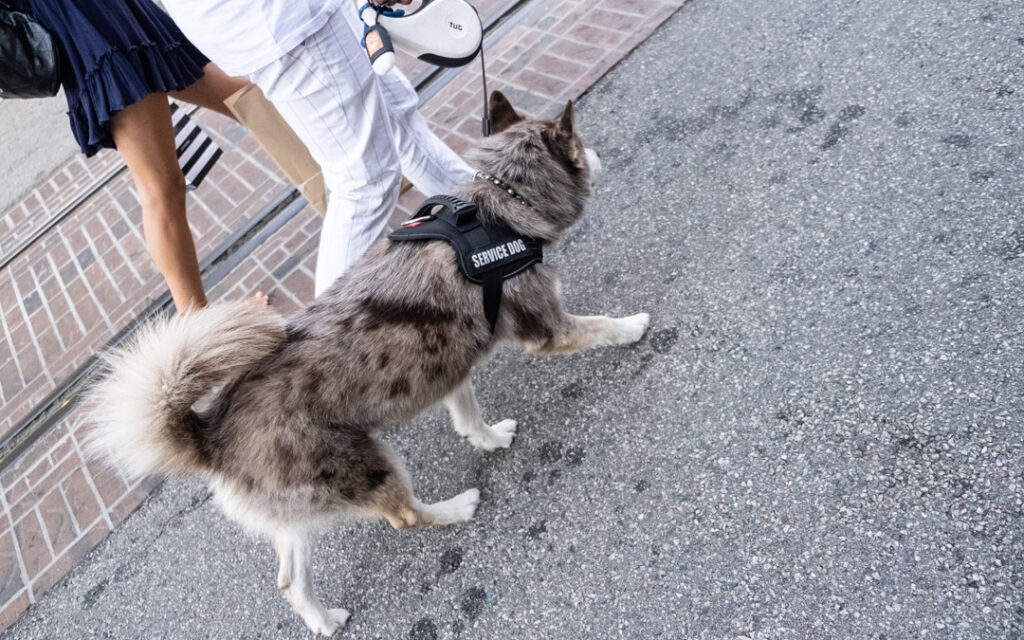
For these tasks, we have service dogs. These dogs can do anything from helping the blind and deaf to executing search and rescue missions. They help the disabled and work with the police to solve crimes.
Service dogs can do anything they are trained to do. These dogs rise above to help the world with every sniff.
According to the American Kennel Club, service dogs can improve people’s health, lower stress levels and even increase happiness. In the 1920s, most service dogs were German shepherds that were trained to guide blind people. Also, around the same time, dogs were trained to be on the police force and army,
Today, many breeds of dogs are trained to do hundreds of different tasks. In some cases, they serve as people’s lifelines and ensure they lead safe and productive daily lives.
According to “The History of Service Dogs and the Protections They Have,” service dogs have been around since ancient Rome. Images from antiquity show a blind man being led by his dog. European wood carvings and Chinese scrolls from the 1st-century depict similar images. While little is known about early service dogs, we know that they existed and helped.
According to an article posted on History.com, many soldiers during World War I were blinded for life on the battlefield by mustard gas. In response, a doctor named Gerhard Stalling trained many dogs to help these blind veterans.
Before 1990, the only legal service dogs in America were dogs that helped the blind and diabled. Service dogs for other needs and disabilities only became legal in the United States when the Americans with Disabilities Act was passed in 1990. This law redefined a service dog as one that can assist with any disability.
Deborah Honick raises puppies for Guiding Eyes For The Blind, a nonprofit that raises and trains service dogs. According to Honick, “People who have a specific disability can have a dog trained to help them with that disability.” There really is a service dog for anyone who needs it.
Honick explains that service dogs are treated “like gold because these dogs are changing the person’s life.” These dogs are gifts that are truly treasured. Dogs help humans live, and they change their lives.
To train these dogs, Honick explains that they use lots of treats and positive reinforcement. There is nothing unnatural about the way they are trained to service people. Quite the opposite, these dogs are loved and treated like family.
Ben Abrams is a seventh grade student at the Krieger Schechter Day School of Chizuk Amuno Congregation.

Jmore Juniors Noah S. and Eli S. take a look at the differences between the Jewish communities of Baltimore and Chicago.

Madeline L., a seventh grade student at Krieger Schechter Day School, writes about the phenomenon that has been Starbucks over the past half-century.

An eighth grade student at Krieger Schechter Day School, Jmore Juniors writer Micah B answers an array of questions from his peers.

Jmore Junior Eitan Beck writes about the pros and cons of having electric cars in the future.