

Four decades ago, social worker Dorothy A. Miller coined the term “Sandwich Generation” to describe women in their 30s and 40s who were “sandwiched” between young children and aging parents, holding primary caregiving responsibilities on both ends.
The term became so popular that it was added to the Merriam-Webster Dictionary in 2006. Since then, considerable research and discussion about the “Sandwich Generation” has focused on Baby Boomers, people born from 1946 to 1964. The research found that people were living longer because of advances in science and medicine, women were getting married and having children later in life, and young adult children were moving back home because of a bad economy and difficulty finding employment.
All these truths brought on increased caregiving responsibilities for women in that “Sandwich Generation.”
Today’s “Sandwich Generation” — Generation X (followed very closely by Millennials) — face many of the same challenges as their parents once did:
- Handling financial stress;
- Making difficult decisions affecting the dynamic of the relationship with their parents;
- Feeling pulled in multiple directions;
- Worrying about the uncertainty of the future.
I recently listened as a 72-year-old daughter shared feeling guilty and overwhelmed while facing many sleepless nights thinking of her caregiving responsibilities. In a good week, she does her 102-year-old mother’s laundry and brings it to the long-care facility where she lives. At the same time, she cares for her 48-year-old daughter who lives with her, recuperating after major surgery. Finally, recognizing she needed to problem-solve, she arranged for a laundry service to do not only her mother’s laundry but hers as well!
For “Sandwich Generation” caregivers, it is important to know when support is needed beyond what you can provide, for your own mental health and the overall health of the family.
Taking a moment to consider the following will greatly benefit all involved:
Ask for help and communicate needs. What can and cannot be feasibly handled by you, the primary caregiver? It’s important to clearly identify your needs and recognize you can’t do it all on your own. Make a list and be willing to be flexible. Can other family/friends take on responsibility? Can an outside service be called on?
Take a break. Schedule time during the day to take a walk or meet a friend. Some caregivers will say, “I take a break when I go grocery shopping or walk to the mailbox.” My response is “OK, we need to have a talk about what we consider a break.” This could mean hiring someone to come cook and clean or hiring a nurse a few hours a week. If funds are an issue, ask a spouse or friend to help you and try to be flexible with their schedule.
Accept reciprocated support among the generations. Often, both the older adult parent and the “Sandwich Generation” caregiver’s child want to be helpful. This may look like grandparents helping with homework and child care, and grandchildren developing a closer relationship with grandparents and helping them with simple tasks.
Join a support group. Many communities offer gatherings and groups for primary caregivers where they can share experiences and learn about new resources and coping skills.
Being a caregiver is not a situation we are often prepared for. Although the seed may be planted within one’s mind, the actual planning over time may not happen until there is a crisis (even a small one). Understanding and identifying the needs of the “Sandwich Generation” caregiver is critical, not only for the wellbeing of the caregiver but on the entire family structure.
We forge many relationships throughout the course of our lives, but only one is featured in the Ten Commandments: the mitzvah to honor one’s parents. From the moment we’re born to the day that we die, there is no bond that is closer, deeper or more complex.
Whereas it might be a lot of work for one to juggle work and family, it also comes with blessings. Taking care of your parents is the greatest reward you can ever give back to them for raising you and seeing you through all the years.
In addition, one learns to be selfless if you are taking care of your parents. You might never be able to see the magnitude of what you’re doing, but it’s quite big and so are the rewards.
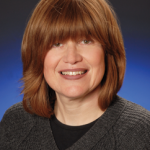
Deborah Schwartz, LCSW-C, is a clinical therapist at Jewish Community Services.

A former resident of Baltimore and central Florida, Ritt was active in the Soviet Jewry movement of the 1970s and 1980s.
For more than four decades, Goldman played a vital role in the supervision of elections in the city.

The 16-year-old sophomore succumbed to injuries sustained in a car crash last week in Cockeysville.

Schools in Montgomery County have recently experienced a wave of antisemitic incidents.