
Years ago, when the Jewish community was dealing with the Nation of Islam’s Louis Farrakhan and his incendiary, hateful rhetoric, I covered a rally on Pratt Street. The NOI’s Khalid Abdul Muhammad was speaking at the World Trade Center not long after making headlines with a speech in which he branded Jews “bloodsuckers” and the pope “a no-good cracker.”
Jewish and Black activists alike were in attendance to show their support or disdain for Muhammad. There was a great deal of tension in the air, but I’ve never forgotten interviewing one young African American man there. He was polite and respectful throughout our conversation, but you could tell he was seething underneath. He could barely look me in the eye when I asked questions.
“Look, I’m not interested in hearing about your pain,” he said out of the blue, referencing the Holocaust. “I just don’t want to hear it from you all. My people have their own pain. I’m not interested in talking about the Holocaust and your pain. No one is.”
Sometimes, I wish that were true.
I feel like every time I read a news report, someone is saying something patently false, ridiculous or offensive regarding the Holocaust, from anti-vaxxers to those who are seemingly obsessed with Anne Frank. For an event that took place more than seven decades ago and of which some people have the audacity (and stupidity) to challenge whether it actually happened, the Holocaust still gets its share of ink.
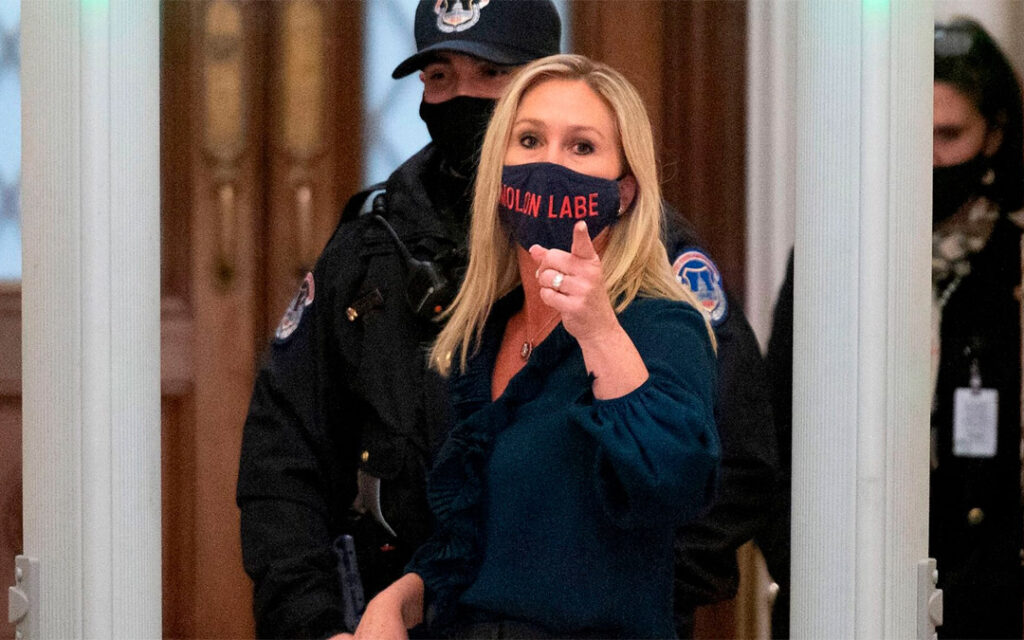
There are the obvious examples like Rep. Marjorie Taylor Greene (R-Ga.) and her infamous citing of “Nancy Pelosi’s gazpacho police,” attempting to invoke the name of Nazi Germany’s secret police. (As my kids might’ve said years ago when they were little, “Epic fail!”)
Meanwhile, Washington Commanders defensive tackle Jonathan Allen recently tweeted that among those in the afterlife with whom he’d like to enjoy dinner and pick their brain is Adolf Hitler. Later, he posted, “I tweeted something that probably hurt people and I apologize about what I said. I didn’t express properly what I was trying to say and I realize it was dumb!”
No kidding, Jonathan. Maybe a few too many slams to the noggin?
Of course there’s Whoopi Goldberg’s comments on “The View” in which she argued the Holocaust wasn’t about race at all, despite the Nazis’ ideology that Jews and others were inferior “vermin.” This came after a Tennessee school board absurdly banned the graphic novel “Maus,” which deals with the Holocaust.
Whoopi, who’s no dope or antisemite, was suspended for two weeks by ABC for her remarks.
Let’s not forget British-Irish comedian Jimmy Carr, who in a recent Netflix special somehow joked about the hundreds of thousands of Roma who perished at the hands of the Nazis.
As Rabbi Joseph Telushkin once wrote, “Words are powerful enough to lead to love, but they can also lead to hatred and terrible pain. We must be extremely careful how we use them.” Amen to that.
Perpetuating the memory of the Holocaust is a sacred obligation. Education, programming and discussions of the Shoah are essential, especially with the loss of survivors every single day.
But the thoughtless, offhanded trivialization, mean-spirited references and crude exploitation of the Holocaust for political and monetary gain or cheap laughs must end. With Yom HaShoah, or Holocaust Remembrance Day, to be observed in late April, we owe it to survivors, their families and others not to in any way diminish or make light of what Hannah Arendt famously called “the banality of evil.”
Sincerely,
Alan Feiler, Editor-in-Chief
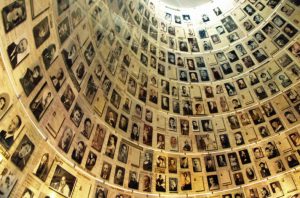
Commemorations of the Holocaust must transcend the past to include concerns about the present and future, writes Menachem Z. Rosensaft.

Someone needed to tell Donald Trump that his appearance at a UFC fight over the weekend was not a good look, writes Michael Olesker.

Journalists bear a responsibility to go beyond the headlines and social media posts to understand the past and present, writes New York University student Lucia Alonso.
The Trump administration's invoking of religion is reminiscent of the words and actions of one of history's most brutal Crusaders, writes Michael Olesker.