
By Madeline L., Seventh Grade Student, Krieger Schechter Day School of Chizuk Amuno Congregation
Since 1971, Starbucks has been an international phenomenon. The chain of coffeehouses was founded on Mar. 30, 1971, when Jerry Baldwin, Gordon Bowker and Zev Siegl opened the first Starbucks in Seattle. By 1980, Siegl left the business to pursue a different career path.
In 1982, Howard Schultz joined the company as director of retail operations and marketing. This new hire helped Starbucks expand its brand, and by 1989 the company established 55 stores around the world. Thirty years later, Starbucks now has approximately 32,660 stores around the world, including in the United States, China, Canada,and Japan. According to the website Statista, in 2021 alone the Starbucks company grossed approximately $24.6 billion.
According to Lily M., a seventh grade student at Krieger Schechter Day School, Starbucks’s “huge selection of drinks from cold to warm” is the reason it is so popular. She also said she usually goes to Starbucks to spend time with friends and enjoy the drinks.
“My favorite drink is the dragon drink,” Lily said, “a sweet and delicious drink that has small pieces of dried dragon fruit mixed in”. Lily also notes that Starbucks offers decaffeinated options as well, which is why many younger customers like it.
According to the website Rewind and Capture, the name Starbucks was Bowker’s idea. It was inspired by Bowker’s favorite book, “Moby Dick” by Herman Melville. Starbuck was a character in the book who was known for his kind nature and reasonable approach.
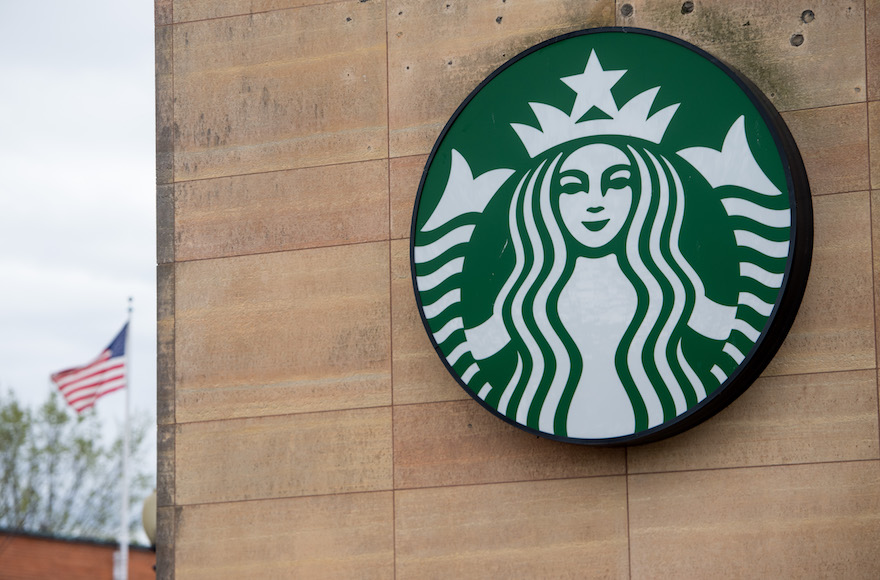
Also, in 1971, Terry Heckler, a designer and sketch artist, unveiled the Starbucks logo. His original inspiration was based on a two-tailed siren from a 16th century Norse woodcut. While many think that the Starbucks logo is a mermaid, it is actually a siren, which is a mythological creature said to be half bird and half human.
According to Starbucks, the company first launched its app in 2014 with the capacity to pay and order mobily. In 2018, they made it their goal to stop using disposable plastic straws by the year 2020. Also in 2020, Starbucks announced its new aspiration to become “resource positive [by] giving more than we can take from the planet.”
During COVID-19, Starbucks took extra safety precautions, some of which included: cleaning their supplies more frequently, making payments without direct contact, the choice to pick up an order without entering the store and social distancing measures. Throughout the entire experience Starbucks did their best to keep everyone safe.
Starbucks has come up with many new ideas and approaches to their business over the past 50 years and hopes to expand their business for many more years to come.
Madeline L. is a seventh grade student at Krieger Schechter Day School of Chizuk Amuno Congregation

Jmore Juniors Noah S. and Eli S. take a look at the differences between the Jewish communities of Baltimore and Chicago.

An eighth grade student at Krieger Schechter Day School, Jmore Juniors writer Micah B answers an array of questions from his peers.

Jmore Junior Eitan Beck writes about the pros and cons of having electric cars in the future.

Arguably more than any other time in modern history, trends are more prevalent and pervasive, writes Lily M., a seventh grade student at the Krieger Schechter Day School.