
Hooray, it’s May! That means it’s time to sow vegetable and flower seeds and transplant seedlings.
But what are the best ways to go about these projects? Read on to get all the dirt (pun intended).
Veggies Sown Directly in Soil
Some vegetables do quite well when planted directly in good quality, rich, well-drained garden soil. These include snap beans, beets, carrots, swiss chard, leaf and romaine lettuce, cucumbers, kohlrabi, potatoes, pumpkins, radishes, summer squash, sweet potatoes (sprout slips) and watermelon.
Follow directions on the seed package for planting depth, seed spacing, space between rows, days to germination, space after thinning and days to maturity.
Veggies Sown in Outdoor Containers
The easiest seeds for container gardening are beets, carrots, radishes and leaf lettuce that can be sown in a wooden box with dimensions 18 inches length x 12 inches width and 6 inches in depth. The box requires drainage and a mesh to retain the potting soil. An old wooden wine case works perfectly. Place it in the sun and water.
Transplanting Annual Flower Seedlings from Indoors to Outdoors
Flower seeds are best sown in March or April indoors for late May planting. However, if you’re just getting started, you can find garden centers and nurseries that carry a wide selection of annuals in 4 and 8-inch pots. Even better, save money by purchasing four and six-pack plants and transplant them yourself.
Before planting, the transplants should be acclimated to nighttime temperatures. To do so, place the annuals outside in a sheltered area for a few hours each day for three days. This essential process is called “hardening-off” and prevents plants for getting sunburned or suffering from chill and wind damage.
Seeds and Seedlings Galore
There are so many annuals to choose from. Before choosing your plants, consider height, width, color, sun exposure and space in your garden. Sketching or at least planning your garden ahead of your trip to the garden center is a wise idea.
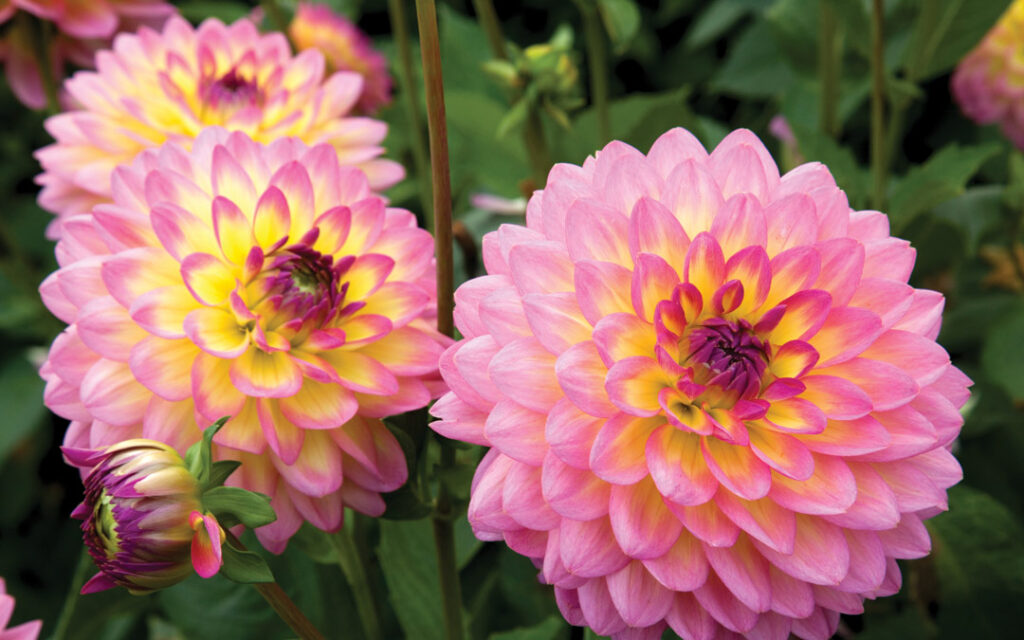
Featured Flower of the Month: Dahlia
While dahlias are not frost hardy in Maryland, they can be perennial if protected from freezing temperatures with winter storage.
Dahlias come in a wide range of blossom colors, flower shapes and sizes, and their stems can grow from 1 to 5 feet. They make excellent cut flowers. Dahlias can be purchased as tuber clumps or annual seeds. Place 5 inches of potting soil in an eight-inch pot and cover the tuber crown with two inches of soil. Don’t forget to water.
And be patient not impatient (sorry, another awful pun). It may take a week or two for the seeds to sprout (germinate) and show the first signs of green growth.
Want to know more? These are some excellent spring planting resources:
❚ University of Maryland Extension, “Vegetable Planting Calendar for Central Maryland” which gives dates of direct sow, planting of seeds indoors, transplant seeds outdoors and when to harvest.
❚ “Crockett’s Flower Garden,” James Underwood Crockett, Little. Brown and Co., Boston / Toronto, 1975
Rebecca Brown began her career as a horticulturalist more than 25 years ago and studied at the New York Botanical Gardens. She has been a University of Maryland, Baltimore County master gardener for eight years and is a backyard beekeeper.
Norman Cohen is a retired chemist. He has been gardening for 39 years and has been a University of Maryland, Baltimore County master gardener for 13 years. Cohen also provides gardening education to the public at local farmers markets.
Looking for an environmentally responsible way to add texture and color to your landscape? Ground cover plants just might be the solution.