
Over this long, hot summer, my wife and I took a day trip to Gettysburg, just to get away and soak up all that historic hamlet a little more than an hour’s drive from Baltimore has to offer.
Since we’ve visited the battlefields there in the past, we didn’t tour those sacred grounds on this quick excursion. Instead, we relegated ourselves to “downtown” Gettysburg’s surplus of stores, curiosity shops, Civil War paraphernalia emporiums and assorted eateries. Great way to spend an afternoon.
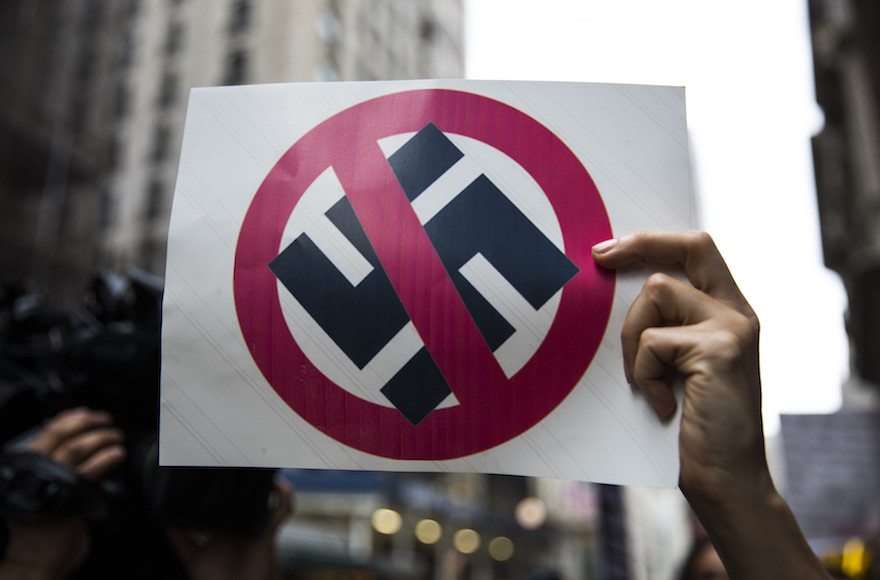
While snooping around an antiques shop on Gettysburg’s Baltimore Street, I noticed a glass case brimming with shelves of Nazi memorabilia — helmets, medals and ephemera bearing the swastika and other despicable symbols of the Third Reich. Naturally, it stopped me cold in my tracks and I immediately gave a heads-up to my wife, daughter of a Holocaust survivor. She glanced over and said, “Oh, lovely,” before moving along.
Of course, the irony of seeing reminders of Hitler and Nazi Germany in the town where the tide of American freedom was turned around was not lost on me. Still, I’ve seen Nazi relics in other shops over the years, much like I’ve intermittently noticed reminders of slavery and the Jim Crow era in a number of tchotchke joints. Not that I’ve ever shelled out any shekels for these heirlooms of hate. But I must admit to being a bit intrigued and wondering, “Who’s buying this stuff?”
I once interviewed a white Jewish woman in her Pikesville residence and couldn’t help noticing shelves in her breakfront devoted to Black Americana — vintage mammy and butler salt-and-pepper shakers, postcards of stereotypical Black children in cottonfields and watermelon patches, examples of “Sambo art.” When I pointed out these were items many people would find hateful, hurtful and abhorrent, she seemed stunned. “This is part of our history,” she said. “It’s part of who we are. We can’t run away or ignore it.”
I understand what she was trying to say. At the same time, I get why some folks feel profiting from this painful legacy is obscene, and you don’t want to glorify or perpetuate it in any fashion.
This issue recently came to a head when an auction house in the Cecil County town of Chesapeake City made international headlines by selling Hitler’s watch for a cool $1.1 million, in addition to other Nazi memorabilia. I wasn’t shocked when learning the timepiece was sold to a Jewish buyer, according to Bill Panagopulos, president of Alexander Historical Auctions.
Panagopulos was criticized by several international Jewish groups for “giving succor to those who idealize what the Nazi party stood for.” In his defense, the auctioneer said, “What we sell is … tangible, real, in-your-face proof that Hitler and the Nazis lived and also persecuted and killed tens of millions of people. To destroy or in any way impede the display or protection of this material is a crime against history.”
That might be a bit much, coming from a guy who just made a million bucks off of Hitler’s watch. But in an essay written years ago, preeminent Black scholar Dr. Henry Louis Gates Jr. explained why he collects racist historical memorabilia: “First, to understand why and how they came into being and were used to demean and delimit our people as human beings and as citizens, and second so that we can keep this sort of thing from being used against our people and any other subjugated people ever again, to paraphrase the defiant assertion of many Jewish people in relation to the Holocaust.”
No doubt, this debate will rage on for years to come.
Sincerely,
Alan Feiler, Editor-in-Chief

Michael Olesker pays tribute to WJZ’s retiring Marty Bass, a longtime fixture on local TV screens.

The Orioles' weak defense plays a major role in the nightly carnage, writes Michael Olesker.

Jmore Publisher Scott Rifkin, M.D., reacts to President Donald Trump's latest poll numbers and the real force behind the growing decline of the Trump movement.

Last weekend's Flower Mart once again demonstrated that there's nothing to fear about downtown Baltimore, writes Michael Olesker.