
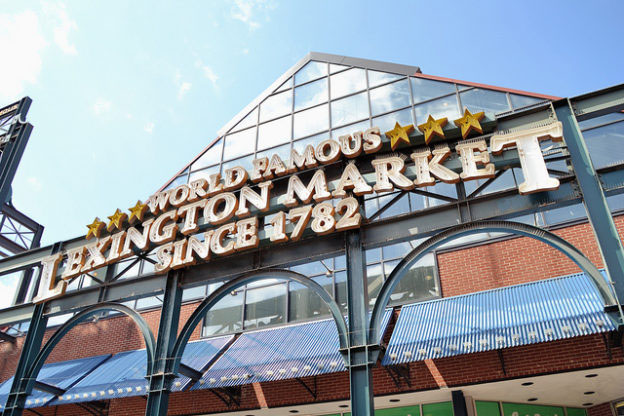
The old Lexington Market is dead and gone, so cherish your memories of the joint when it was a scruffy and bustling melting pot, and let’s move on.
After two years and $45 million worth of construction, they opened the new place Monday, Oct. 24. It says “Lexington Market” right there on the building, so it must be true. But it’s nothing like the old place.
The original market opened in 1782 and, for most of the ensuing 140 years, felt like a gathering place that reflected the working-class unpretentiousness, and the ethnic and racial mix, of Baltimore.
As someone who’s been going to Lexington Market since the early 1960s, I’m not certain what the new place is supposed to reflect, but it looks more like faux Harborplace than a public market.
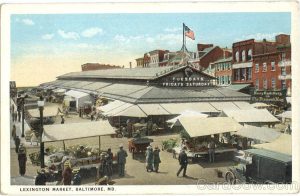
In fairness, this week’s debut is what they call a “soft opening.” No politicians taking bows, no whistles and balloons. If anything, the sound was construction workers with their hammers and drills.
Only a handful of the new market’s stalls were open. In the old days, there were close to a hundred places to buy food and drink and other goods. At completion, the new place will have 45 vendors.
There’s an area reserved for Faidley’s Seafood, which has always felt like the heart of the market to many longtime customers. When Faidley’s does reopen, it’ll be a rare trace of local tradition and flavor.
The new place has two floors, and it’s just south of the old building, which is now “permanently closed,” according to signs on the doors. There’s a long, steep staircase at its center of the new building, which may present a problem during crowded hours.
But there are two other problems. It’s at least 20 years now that the market has endured an unfair perception that it’s not safe to go there, even though the inside has always felt secure, and the cops say crime inside is low.
It’s what’s just outside that’s intimidating. There’s drug dealing on nearby streets. There have been nearby drug rehab places whose clients gravitate to the market and create an atmosphere intimidating to some people. There was a nearby police shooting some years back that was televised every night for more than a week and stayed in people’s minds.
But here’s a brand-new problem: Dominating the entire interior now is a huge painting of Baltimoreans, maybe 50 or 60 people in all. It’s quite lovely as a work of art.
But it’s intended as an image of the market’s customer base — and of Baltimore itself, which is an American city with all kinds of people, from all kinds of backgrounds who make up its diverse population.
But every person in the painting is Black. There’s not a White face, nor Asian nor Latino. Don’t these people belong in a public market as symbols of a city’s bountiful mix?
There’s a familiar sign in the painting: “Stop Shooting, Start Living.” It’s a hopeful slogan to many, but is this the place to remind visitors of the city’s appalling homicides?
If such a painting’s intended as a reflection of Baltimore’s population, then Black people would be infuriated and hurt if those depicted were all White faces. And they’d be right.
When Whites arrive at the new market, and see all Black faces in this enormous painting, it will send a clear, unfortunate message to them: this doesn’t feel like we’re being asked to join in.
Michael Olesker’s latest book, “Boogie: Life on A Merry-Go-Round,” was recently published by Apprentice House. It’s the life story of Baltimore legend Leonard “Boogie” Weinglass, an original “Diner” guy who grew up to create the Merry-Go-Round clothing chain and contribute millions to charity.

A Norfolk native, Frankle worked at Sinai Hospital, Camp Airy and privately for five decades.
Esther Greenberg, Leora Match, Kathlleen St. Villier Hill and Ben Gershowitz will be recognized for the contributions to the community.

Dara Bunjon talks with award-winning author Monica Saigal (Bhide) about her "Modern Spice" cookbook, "Papa's Butter Chicken" children's book, and more.
For more than five decades, Dr. Rosenstein was known by local families as a trusted and caring physician for their children.