
It’s not easy trying to squeeze in every historic nook-and-cranny and tchotchke shop in one of Europe’s grandest cities in less than 50 hours. But during a recent layover in Lisbon on my first trip ever to “The Continent,” I found myself faced with that conundrum.
All I previously knew about the Portuguese capital was what my dad once told me he learned while visiting there as a Merchant Marine — that Lisbon suffered a major earthquake and tsunami that leveled most of the city. (Imagine my surprise when learning not long ago that this calamity, which took an estimated 30,000 lives, happened not during my father’s lifetime but all the way back in 1755.)
But it’s amazing how much ground you can cover as an intrepid traveler with the right amount of enthusiasm, curiosity and caffeine. And anyone who’s visited Lisbon knows it’s worth it.
There’s plenty of Lisbon I’d still like to see, of course. But staying in the Alfama — the city’s ancient district brimming with narrow, cobbled streets, steep hills and colorful houses — my family and I saw a great deal in a short window of time.
Like good turistas, we took a cruise along the Tagus River and saw the city’s major points of interest. We schlepped to Lisbon’s Mercado da Ribeira, and visited the azulejo tile and sardine emporiums in the Baixa district.
We enjoyed the quaint, atmospheric cafes, as well as the city’s breathtaking panoramic views and the haunting Fado music playing in the streets. And of course, we noshed on pasteis de natas, those iconic, heavenly Portuguese egg custard tarts.
“They’ve really got a good thing going on here,” I said to my wife, noting the vitality and fellowship among Lisbonites in the streets and cafes.
But as with most of my travels, I found myself at some point seeking out the Jewish dimensions of my journey. At best, Portugal has a dubious record when it comes to Jews.
Some Portuguese diplomats (like Aristides de Sousa Mendes) demonstrated incredible bravery and rescued untold numbers of Jews during the Holocaust. More than 50,000 Jewish refugees passed through Lisbon to safety during World War II.
But then there’s that whole matter of the Inquisition in which the Jews of the Iberian Peninsula were coerced to either convert to Catholicism, emigrate … or die. An estimated 40,000 Jews are believed to have perished during the Portuguese Inquisition. Many of the Jews in Portugal had immigrated from Spain to escape that country’s cruel campaign against the Jews.
Converting wasn’t always enough. A particularly horrifying episode came on April 19, 1506, when a “New Christian” (or Jewish convert) reportedly voiced his skepticism about claims of a miracle happening in Lisbon. Mobs proceeded to build a pyre on Sao Domingos Church square and burned at the stake between 2,000 to 4,000 “New Christians.”
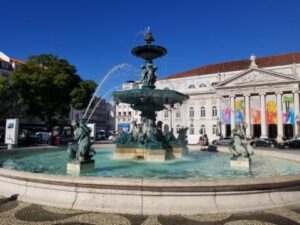
Maybe it sounds rather morbid, but I just had to see that wretched spot with my own eyes (yes, my family members are good sports). Walking today by Sao Domingos and nearby Rossio Square — with its baroque fountains and charming cobblestone plaza — such madness seems absolutely unfathomable.
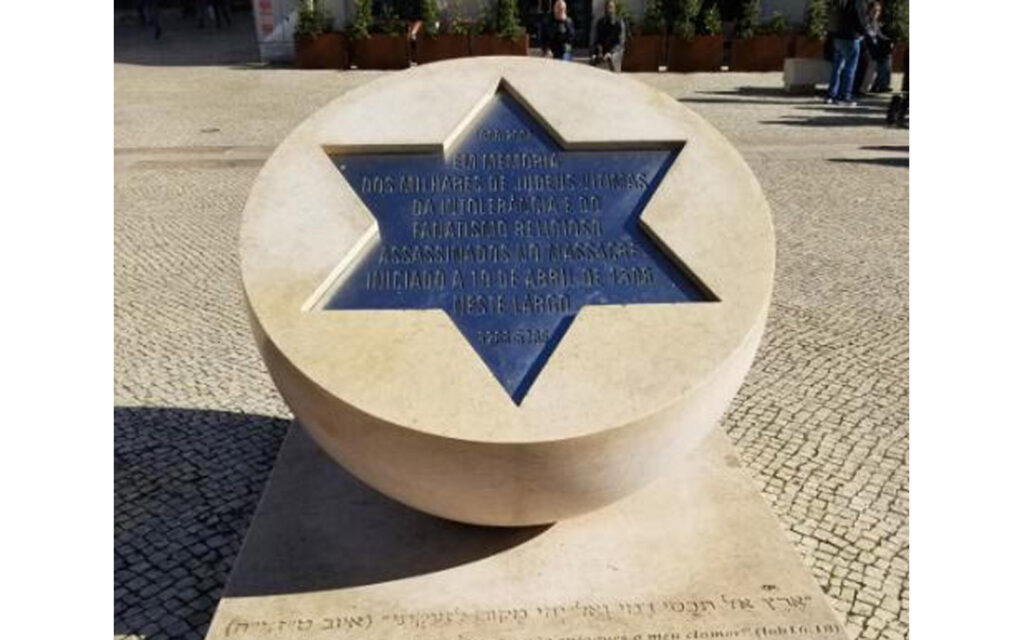
I read the inscription on a stone memorial there embedded with a Star of David: “In memory of the thousands of Jews who were victimized by intolerance and religious fanaticism, killed on the massacre that started … on this square.”
Looking around at the stunning, pristine architecture and the faces of passersby oblivious to what took place here, I could hear the anguished cries of thousands of Jewish souls. Under my breath, I chanted the Shema and wondered how these horrors occurred in such a seemingly civil setting.
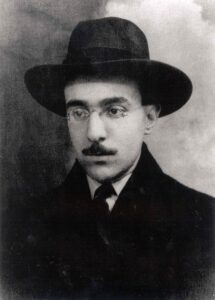
“The world is one big confusion, like voices in the night,” wrote the great 20th-century Portuguese poet Fernando Pessoa (who was reportedly himself of Jewish descent).
It’s not always easy being a Jewish tourist. Sometimes, you just have to let yourself enjoy the adventures and thrills of travel while still grappling with the not-so-joyful past.
Sincerely,
Alan Feiler, Editor-in-Chief
Michael Olesker pays tribute to WJZ’s retiring Marty Bass, a longtime fixture on local TV screens.

The Orioles' weak defense plays a major role in the nightly carnage, writes Michael Olesker.

Jmore Publisher Scott Rifkin, M.D., reacts to President Donald Trump's latest poll numbers and the real force behind the growing decline of the Trump movement.
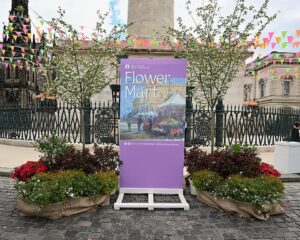
Last weekend's Flower Mart once again demonstrated that there's nothing to fear about downtown Baltimore, writes Michael Olesker.