

About two years ago when installed as president of Pikesville’s Beth El Congregation, David Harrison admits feeling a bit perplexed.
“I said, ‘Really? I’m the president?!” he recalls.
Harrison knew there were plenty of congregants in his synagogue community to consult with about his new role and its responsibilities. At the same time, he wanted to compare notes with other individuals who found themselves in the same situation. So Harrison turned to the ACHARAI Presidents’ Circle for support and counsel.
Established in 2018, the circle is a program of Na’aleh: The Hub for Leadership Learning, an agency of The Associated: Jewish Federation of Baltimore. The interdenominational group of local synagogue presidents and board chairs meets once a month to discuss the unique challenges they face.
Many circle members are graduates of Na’aleh’s ACHARAI Leadership Fellows Program — formerly ACHARAI: the Shoshana S. Cardin Jewish Leadership Institute — which trains lay leaders to be presidents and board chairs of Jewish organizations. The circle was formed because ACHARAI graduates sought the same type of camaraderie and guidance they experienced in their fellowship cohorts.
Currently, the circle includes leadership representation from Beth Tfiloh, a modern Orthodox synagogue; Conservative congregations Chizuk Amuno, Beth El, Beth Israel and Beth Am; and Bolton Street Synagogue and Har Sinai-Oheb Shalom, which belong to the Reform movement.
“This is a group where we can share things like the workload and the hours, and how do you do this [job] on a more interpersonal level?” says Harrison. “Jokingly, I call it ‘group therapy,’ but that’s kind of what it is. It’s a group of people where we’re in a unique situation together.
“Working with this group has made me feel more comfortable in the role.”
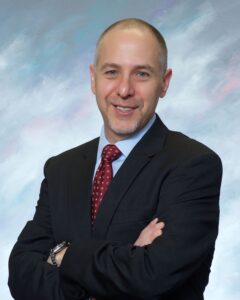
Neil Sweren, Beth Tfiloh’s chair of the board, is also a member of the circle. He says sharing concerns with others grappling with similar challenges is extremely beneficial.
“Whether they’re congregational issues, engagement issues, contractual issues [or] recruiting clergy, it gives us a forum to talk about some of the challenges that we’re facing,” he says. “And almost every time someone brings up a challenge, everyone else has either already dealt with it or is currently dealing with something similar. Having some other people to give you insight into how things have been done and how they’ve been successful is really helpful.”
Beyond the support he has received from the circle, Sweren says he appreciates the opportunity to commune with leaders from other congregations and denominations.
“It doesn’t matter if you’re an Orthodox congregation, Reform, Conservative, whatever your level of observance, it doesn’t change the challenges,” he says.
The circle was particularly essential to members during the pandemic, says Harrison.
“We all had very similar issues that we had to deal with — ‘Are we in person?’ ‘Are we masking?’ ‘What are we telling people?’ It was universal,” he says. “We were able to share best practices and talk about what we were doing.
“Everyone wants to know what the other shul is doing,” Harrison says. “We were able to stay on the same page pretty much. And I think that was a comfort to our congregants, but also to our community to know that we’re in this together.”
Beth Gansky, facilitator of this year’s circle, says she believes the program is relatively unique in Jewish organizational life.
“I think it goes back to the fact that Baltimore has a strong culture of lay leadership,” says Gansky, Na’aleh’s former director of leadership innovation. “ACHARAI is now finishing our ninth cohort of lay leaders who are leading organizations. We’ve created, I think, a common language. We have created trust. We’ve helped people understand that leadership is a shared activity. I think that people just understand that there’s value to this.”
In addition to their collaborative work, circle members are working with Associated agencies on community-wide events, including the “Generations, Conversations and Community” gathering on May 9 presented by AgeWell Baltimore. AgeWell Baltimore, an Associated Centennial initiative, is a network of coordinated services for older adults, their loved ones and caregivers through The Associated, CHAI, CHANA, Jewish Community Services and others.
The idea for the program came from a conversation between Harrison and Sweren about the challenges faced by many people when trying to support aging family members.
“We took it back to the Presidents’ Circle and said, ‘Would your congregations be interested in participating in something like this if we could get it going?’” says Sweren. “And they all said, ‘Yes, we would. We think it’s necessary. We would love to do that.’ Beth connected us with some of the Associated agencies. Through that process, we ended up getting connected with AgeWell Baltimore, who looped in the other agencies, and now we have a committee [chaired by Harrison and Sweren] that is working on this AgeWell Baltimore synagogue partnership.”
Sweren and Harrison hope that the program is the first of many such community conversations.
“We hope to have professionals and individuals in the community help us turn this into something meaningful,” says Sweren.
Andrea Hendler, director of leadership innovation for Na’aleh, says hearing Sweren and Harrison discuss collaborative programs such as the AgeWell Baltimore partnership makes her feel the late Baltimore-based Jewish activist and philanthropist Shoshana Cardin “is sort of smiling down from above. This is the perfect example of why ACHARAI was created. In many ways, it’s like a ripple effect of Baltimore’s and Shoshana Cardin’s investment in developing leadership for this community. I think this just really speaks volumes about the kind of community Baltimore is.”
For information, visit naalehbaltimore.org.
The donation will be directed to help foster research conducted by faculty at the University of Maryland School of Medicine and to advance innovative treatments.

Scholar Izabella Tabarovsky will speak at the “Generations of Courage” program on Apr. 26 at The Associated's Goldsmith campus.
A Baltimore native and Pikesville resident, Freedman had the distinction of being the longest-serving employee in the history of the State of Maryland.

House Bill 661 is the culmination of a collaborative effort led by Del. Sarah S. Wolek (D-16th), Del. Jared S. Solomon (D-18th) and Sen. Shelly L. Hettleman (D-11th).