
By Max J. Eber
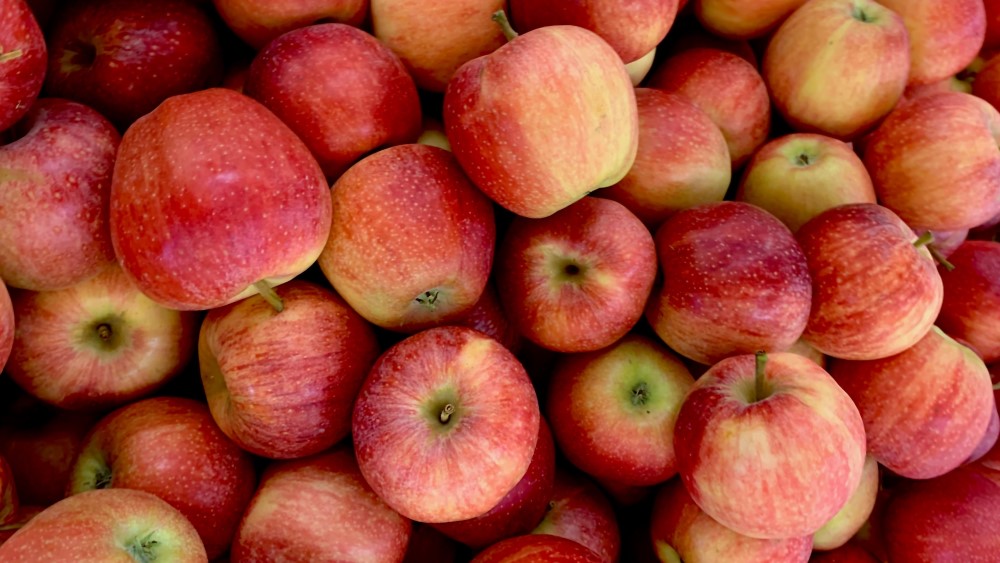
I’ve always been an apple eater. They’re my favorite fruit.
One of the best photos of myself is at the age of 3 standing on a dirt road at a former local farm, waving at the camera. Clutched in my other hand is a half-eaten apple, and I’ve hardly been without one or another type of apple ever since.
But as the High Holiday season and fall approach, I crave apples even more, above anything else.
Everyone has their favorite apple, from the “familiar faces” like MacIntosh, Golden Delicious, and of course, Honeycrisp, to the more peculiar-named Ginger Gold, Winesap, Black Limbertwig and Winter Banana (what a name!), which also grace farm stands and local farmer’s markets. Each named variety represents an array of possible flavors and textures, be it pure and sweet, tart, tangy, crisp, dry-grained, utterly soft and spiced.
Apples are indeed the queen of versatility among fruit and rightfully loved for it. But I have also learned something else. Over time, I’ve found that apples are one of my most accessible routes for connecting to my Jewish heritage, family and traditions.
Apples symbolize hope, desire, sweetness, all “very good things,” a la Martha Stewart, and Ashkenazi Jews have had a longstanding relationship with the fruit, symbolically and culinarily.
Adam and Eve’s (incorrect) iconography aside, between eating apple-laden charoset at Passover, dipping apples in honey along with other apple-themed desserts at Rosh Hashanah, not to mention regional dishes and the decoration of the sukkah — Jews have far more of an identity interwoven with the round fruit than we may realize, something I only noticed after becoming a steward of my family’s own Jewish apple dishes.
Thus, I’ve found my September cravings aren’t just for the apples themselves; it also means making and reaffirming Jewish connections. Ones I’ve come to cherish and want to share here with others.
Charoset
While it’s a spring dish, charoset is a dish that outgrows its representative role and is truly loved (and judged) by others, as everyone makes it differently.
I recall two things about my grandmother Sandy’s — known as Bobbie instead of Bubbe because she wanted to be “different” — Passover charoset: One, it was moderately blitzed, not quite the paste of other families, but not quite chunky either. And two, I always wanted more of it.
After my grandmother passed, being the apple enthusiast of the family, I was eventually given the maker role.
Charosets are subjective; I prefer to keep mine chunkier, using two to three varieties of apples, one tart or tangy, like Granny Smith, Jonathan, an early-picked Mutsu (Crispin) or Pink Lady (Cripps Pink), and one to two sweet (Honeycrisp, Fuji, Gala and its many variations, among others).
I mix these with pan-toasted (with butter) pecans and walnuts, juice-soaked raisins, both white and black, topped with gobs of honey, grape or pomegranate-grape juice and or wine, and the customary cinnamon spices, with the addition of powdered ginger and a hint of nutmeg or mace. Occasionally dried cherries, pomegranate arils and a few spoonfuls of quince preserves appear in variation.
It’s decidedly desserty, jokingly dubbed strudel filling-ready, but it’s a crowd-pleaser and brings to mind my grandparents every time I make it.
MAKES 10-20+ servings, according to crowd
- 3-7 apples, depending on size: half tart, half sweet
- 1-2 16 oz. bag of pecans or walnuts, halved
- 1 8 oz. bag of pecans or walnuts, chopped
- 1 cups juice and or wine of choice, with an extra 1/2 cup aside
- 1-2 cups raisins (I like doing both purple and yellow)
- Drizzle of honey of choice, to your preference
- ground cinnamon, to taste
- 1-2 tsp ground ginger, or to taste
- 1/2 tsp nutmeg or mace, or to taste
OPTIONAL:
- 1 tbsp butter for pan
- 1 8 oz. bag of dried cherries
- 1/2 cup pomegranate arils
- 1-2 tbsp quince preserves
1) Soak your raisins and or dried cherries in 1/2 cup of your favorite juice; I like grape-pomegranate blends. Cherry juice is a tart and unique alternative.
2) If desired, roughly chop your pecans and/or walnuts further, then optionally pan toast over medium heat; either dry or add 1 tbsp of butter. Stir for 3-5 minutes, until golden and fragrant. Remove from pan and place aside to cool.
3) Wash, peel, core, and chop your apples to medium to fine size. Sometimes I leave a little skin on for texture.
4) Mix your chopped apples, soaked raisins, and or cherries with chosen juice and listed spices to taste. Easy on the nutmeg or mace.
5) Drizzle honey and optional quince preserves to taste and mix.
6) Fold in toasted nuts.
7) Optional: Top with and or mix in pomegranate arils.
Chill in the fridge; to me, it tastes better cold.
Variation: Spiced Apple Salad
When tasked with making a fresh fruit salad for breaking the fast on Yom Kippur, I eventually created a twin sister dish to my spring charoset recipe — a spiced apple salad. Essentially, the same recipe except with larger apple wedges (skin half on), and raisins are swapped with fresh fresh-cut black and green grapes.
Optional additions include fresh blackberries, strawberries and firm persimmon or Korean pear slices. It stands up on its own as a side fruit salad but can quickly adapt as a topper for cake, ice cream and a base for parfaits or a trifle.
Rosh Hashanah Dipping Apples
Dipping apples at Rosh Hashanah is a serious business, and learning which varieties are better for dipping and don’t brown is vital. Apples like Empire, Cameo, Cortland, Granny Smith, freshly picked Mutsu (Crispin), Honeycrisp and Pink Lady (Cripps Pink) are good firmer or larger apples that don’t tend to brown too badly and/or keep their shape nicely for dipping.
Try pairing tarter apples with various types of honey, such as a regional wildflower, orange blossom, sweet and marshmallowy foamflower, or even malty and dark buckwheat.
Jewish Apple Cake
Have you ever heard of “Jewish Apple Cake”? I’m sure many readers make their own type of apple cake around Rosh Hashanah, but surprisingly the term is used for autumnal apple cakes that aren’t even remotely Jewish.
Likely at some point inspired by or borrowed recipes of cakes made around Rosh Hashanah by actual Jews, the term “Jewish Apple Cake” can mean it’s made without dairy, but often it’s just a name and, in my opinion, usually code for being an outstanding cake.
While admittedly my own family did not have a set recipe for a Rosh Hashanah apple cake, I long ago adopted Chef Dorie Greenspan’s “Double Apple Bundt Cake” from her book “Baking, From My Home to Yours” (Harvest) as a base for a cake that has since become a family favorite and tradition.
A new connection. Very much not a “Jewish Apple Cake” in origin, I amended the recipe, which requires grated apples, to have half-grated and half-chopped apples instead, to stud the cake with apple pieces. I also add a dash of vanilla to the batter. The good thing about this recipe is that you’re encouraged to make it a day or two ahead and let it rest. It gets even better a day or two later.
“Not A Jewish Apple Cake” Jewish Apple Bundt Cake
Adapted from Dorrie Greenspan’s “Double Apple Bundt Cake” from “Baking From My Home to Yours“
Makes 12 servings
- For the cake:2 cups all-purpose flour
- 2 tsp. double-acting baking powder
- 1/2 tsp. baking soda
- 1/2-1 tsp. teaspoon cinnamon
- 1/2 tsp. vanilla extract
- 1/4 tsp. freshly grated nutmeg
- 1/4 tsp. ground ginger
- 1/4 tsp. salt
- 1 1/4 sticks (10 tablespoons; 5 ounces) unsalted butter at room temp.
- 1 1/2 cups sugar
- 2 large eggs
- 1 cup apple butter, spiced or plain
- 2-3 small to medium apples, peeled, cored. 1 grated, 1-2 chopped
- 1 cup pecans (or walnuts), chopped
- 1/2 cup raisins
For the icing, optional:
- 1/3 cup confectioners’ sugar
- About 2 tablespoons freshly squeezed orange or lemon juice
1) Center a rack in the oven and preheat the oven to 350 degrees F. Butter a 9- to 10-inch (about 12-cup) bundt pan. If not nonstick, dust the interior with flour. Do not place the pan on a baking sheet.
2) Whisk the flour, baking powder, baking soda, spices, and salt.
3) With a stand mixer equipped with a paddle attachment or in a large bowl with a hand mixer, beat the butter and sugar on medium speed, scraping the bowl for 3 minutes or until the mixture is smooth, thick, and pale.
Add the eggs one at a time and beat for about 1 minute after each addition; you’ll have a light and fluffy batter.
Reduce the mixer speed to low and stir in the apple butter – it will likely curdle the batter. Staying on low, add the grated and chopped apples and mix to blend.
Add the dry ingredients, mixing until they disappear into the batter; then, using a rubber spatula, fold in the nuts and raisins.
Turn the batter into the pan, level the top of the batter, and slide the pan into the oven. Bake the cake for 50 to 55 minutes, or until a knife inserted into the center of the cake comes out clean. Transfer the pan to a rack for 5 minutes before unmolding and allowing the cake to come to room temperature. Wrap and refrigerate for up to a day or two ahead of time to blend flavors.
To make optional icing:
- Put the sugar in a small bowl and stir in a squirt or two of orange or lemon juice.
- Keep adding the juice until you have an icing that falls quickly from the tip of a spoon. Drizzle icing over the top of the cake.
Storing:
At room temperature, the cake will keep for up to 4 days and up to 2 months in the freezer.
Max J. Eber is a Baltimore-based freelance writer.

Dara Bunjon talks with award-winning author Monica Saigal (Bhide) about her "Modern Spice" cookbook, "Papa's Butter Chicken" children's book, and more.
It doesn't get much easier than this cucumber and purple cabbage salad from Elite Jakob, perfect for a warm spring day.

Dara Bunjon talks sustainable farming, chocolate, and more with farmer, chef, educator and chocolatier Mark Mills of Chocolates and Tomatoes Farm in Middletown.

Dara Bunjon talks with cook, writer and television host Monti Carlo about her new cookbook, "Spanglish: Recipes & Stories," and more.