

One of the main purposes of the Passover seder is to remind us that God can help us today just like God helped Am Yisrael many years ago in Egypt.
The Yachatz part of the seder, when we break the matzah, takes this concept to the next level by teaching that many times our future redemption is hidden in our very moments of brokenness and struggle.
During the Yachatz ritual, we break the middle matzah in two and raise the smaller piece for “Ha Lachma,” the chanting of the bread of affliction text. We then put aside the larger piece for tzafun, a later part of the seder.
Breaking the matzah at the beginning of maggid (the seder’s storytelling portion) hints at our times of brokenness. When we begin the seder, we are broken, we experience ourselves as enslaved in Egypt. Nevertheless, it is at this very moment that we bring to mind our future redemption.
We hide the bigger piece of matzah and eat it later on as the afikomen. The afikomen points to redemption because the afikomen is eaten today in place of the Passover sacrifice, the main symbol of God’s salvation.
Hiding the afikomen during Yachatz, therefore, alludes to our redemption being hidden, embedded, even in our toughest moments, during our brokenness. The larger of the two pieces is hidden because the future redemption may be even larger than we might have expected.
This is the deeper symbolism of Yachatz. Even when things are tough for us in our lives and we are feeling down, God is right there with us. God has a plan.
We can’t always see this bigger plan. It may be hidden, like the afikomen. Many times, it will take seeing the full picture to understand how this is true.
Similarly, in our seder we eat the afikomen only after reliving the full redemptive process through maggid and the matzah and maror. Nevertheless, we realize later on that God’s redemption was there all along, that God loves us and has a plan for us.
This is one of the more important lessons we can take away from the Passover seder. (Based on a lesson from Rabbi Yosef Zvi Rimon’s Pesach Haggadah: Shirat Miriam, p. 21.)
Pesach kasher vesameach!

Rabbi Dr. Eli Yoggev is the associate rabbi at Pikesille’s Beth Tfiloh Congregation. This column originally appeared in The Times of Israel.
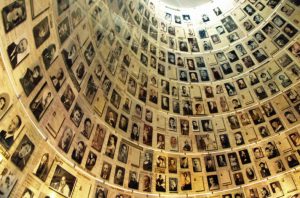
Commemorations of the Holocaust must transcend the past to include concerns about the present and future, writes Menachem Z. Rosensaft.

Someone needed to tell Donald Trump that his appearance at a UFC fight over the weekend was not a good look, writes Michael Olesker.

Journalists bear a responsibility to go beyond the headlines and social media posts to understand the past and present, writes New York University student Lucia Alonso.
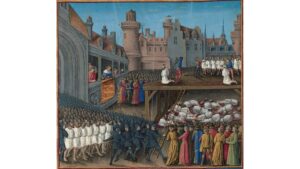
The Trump administration's invoking of religion is reminiscent of the words and actions of one of history's most brutal Crusaders, writes Michael Olesker.