
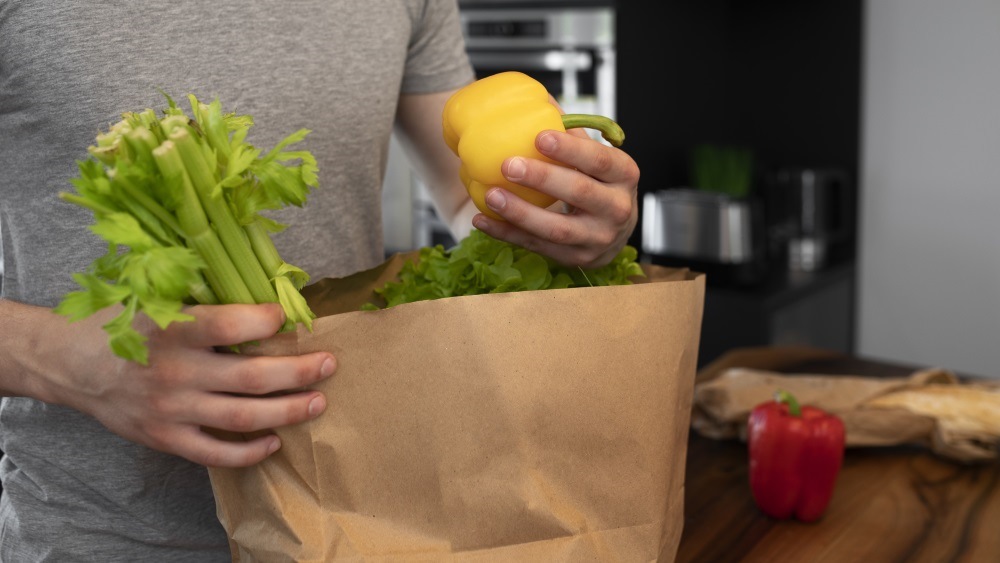
At the turn of the last century, my great-grandfather Max Strull ran a little grocery on the Lower East Side of New York City, assisted there by some of his daughters and plagued by occasionally kvetchy customers.
I think of Max now when I go to my local grocery store or hear the familiar laments over today’s awful prices.
“In the grocery store, we sold three pounds of onions for a nickel,” my grandmother Ruth told me. “And a customer comes into the store one afternoon and she looks at the price and complains, ‘Every day, the cost goes up.’”
Such customers drove Max crazy. But today, the cost of all food goes up in multiples of the old price of onions.
Nobody’s happy about this, except maybe Donald Trump. In grocery prices, he sees a political opening. If voters are sufficiently upset with hundred-dollar tabs for a few bags worth of items, maybe this will help propel the ex-president back into the White House.
Last week, the Democrats had a fine time at their convention. The speeches were long on idealism but short on specifics, especially concerning the economy. There was plenty of vague talk of protecting working families, but a delicate verbal dance performed when it came to high prices and how to lower them.
And where else are we reminded of this on such a regular basis as when we stock up for the week’s groceries?
The government reports we’re now spending about $4 for a gallon of milk and $3 for a loaf of bread. A single bagel at a local bagel shop goes for $1.40. Some of us remember the six-cent bagel. Fruits and vegetables are up 21 percent, which includes onions. A pound goes for $1.99. You may notice this is higher than the nickel Max Strull charged for three pounds.
Well, years pass and prices go up. Trump intends to blame the Democrats for this. But what’s the price on political impact?
We’re told the Republicans want to focus on two prime areas of sensitivity as we approach November’s presidential election: immigration and inflationary issues such as food prices.
And some of us, having watched last week’s Democratic National Convention, find ourselves wondering about American values at such a time.
Which weighs more: the cost of food or a sense of morality?
Yes, it’s painful every time we go to the store. We can measure the pain in dollars. But how do you measure the impact of an immoral man such as Trump who is already facing scores of felony convictions and sexual assault cases, millions of dollars in financial fraud convictions, and allegations involving political corruption and attempts to overthrow the government — all of which have been held up by high court weirdness?
In the aftermath of last week’s Democratic convention, we ask ourselves a simple question: What’s the price of food against this kind of routine madness from a man who wants to run the country again?

A former Baltimore Sun columnist and WJZ-TV commentator, Michael Olesker is the author of six books, including “Journeys to the Heart of Baltimore” (Johns Hopkins University Press) and “Michael Olesker’s Baltimore: If You Live Here, You’re Home” (Johns Hopkins University).

Dara Bunjon talks with cook, writer and television host Monti Carlo about her new cookbook, "Spanglish: Recipes & Stories," and more.
At a time of economic uncertainty, Yossef's Laffa-Milia, a new kosher restaurant in Owings Mills is thriving.
Michael Olesker pays tribute to WJZ’s retiring Marty Bass, a longtime fixture on local TV screens.
This lemon and dill salmon recipe from Elite Jakob celebrates the delicious colors, aromas and tastes of spring.